A project to build an Ethiopian Calendar app reveals that the world uses multiple calendar systems, highlighting the importance of designing software that respects this cultural diversity and doesn't rely on a single calendar.
Have you ever thought about how your phone or computer knows what day it is? We often take calendars for granted, assuming everyone uses the same one. But a recent project, building an Ethiopian Calendar in Flutter, shines a light on a fascinating truth: the world doesn't run on just one calendar system!
This app, called Zemen, helps users convert dates between the Ethiopian and Gregorian calendars, track holidays like Enkutatash, and even lists fasting days, all offline. What makes the Ethiopian calendar unique? It has 13 months! Twelve months are exactly 30 days long, followed by a short 13th month called Pagume, which has 5 days (or 6 in a leap year). A leap year happens every four years, similar to the older Julian calendar. Its new year, Enkutatash, usually falls on September 11th. Interestingly, the Ethiopian calendar is about seven to eight years behind the Gregorian one.
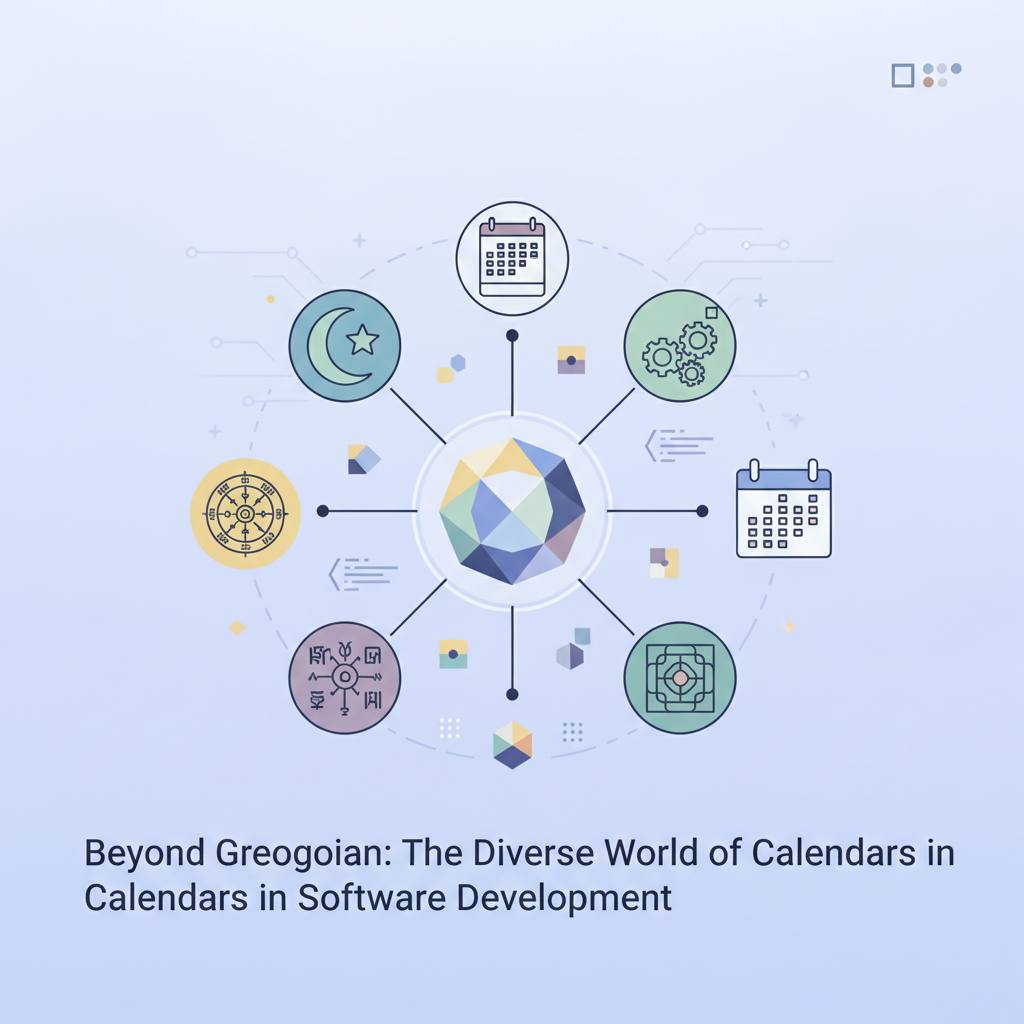
Most of the software we use daily is built with the Gregorian calendar in mind. This works fine for many parts of the world, but it creates a challenge for developers who want to create truly global applications. Imagine trying to schedule an event or calculate someone's age in a system that doesn't recognize their native calendar! This is where the core concept comes in: understanding that timekeeping is culturally diverse.
Developing an app like Zemen requires a specialized 'calendar engine.' Instead of relying on standard date libraries that often only support the Gregorian system, the developer had to build a custom engine from scratch using Dart. The news hook explains that the Ethiopian calendar's regularity—most months having a fixed length—actually made the underlying math for conversion simpler, using exact integer calculations. This shows that even seemingly complex cultural differences can have elegant technical solutions.
The lesson here for anyone interested in technology is vital: good software development means being aware of and respecting diverse cultural practices, including how different communities measure time. It's not just about displaying a date; it's about accurately processing and interacting with information that holds cultural significance. So, next time you see a calendar, remember the fascinating variety hidden beneath its dates!
This app, called Zemen, helps users convert dates between the Ethiopian and Gregorian calendars, track holidays like Enkutatash, and even lists fasting days, all offline. What makes the Ethiopian calendar unique? It has 13 months! Twelve months are exactly 30 days long, followed by a short 13th month called Pagume, which has 5 days (or 6 in a leap year). A leap year happens every four years, similar to the older Julian calendar. Its new year, Enkutatash, usually falls on September 11th. Interestingly, the Ethiopian calendar is about seven to eight years behind the Gregorian one.
Most of the software we use daily is built with the Gregorian calendar in mind. This works fine for many parts of the world, but it creates a challenge for developers who want to create truly global applications. Imagine trying to schedule an event or calculate someone's age in a system that doesn't recognize their native calendar! This is where the core concept comes in: understanding that timekeeping is culturally diverse.
Developing an app like Zemen requires a specialized 'calendar engine.' Instead of relying on standard date libraries that often only support the Gregorian system, the developer had to build a custom engine from scratch using Dart. The news hook explains that the Ethiopian calendar's regularity—most months having a fixed length—actually made the underlying math for conversion simpler, using exact integer calculations. This shows that even seemingly complex cultural differences can have elegant technical solutions.
The lesson here for anyone interested in technology is vital: good software development means being aware of and respecting diverse cultural practices, including how different communities measure time. It's not just about displaying a date; it's about accurately processing and interacting with information that holds cultural significance. So, next time you see a calendar, remember the fascinating variety hidden beneath its dates!