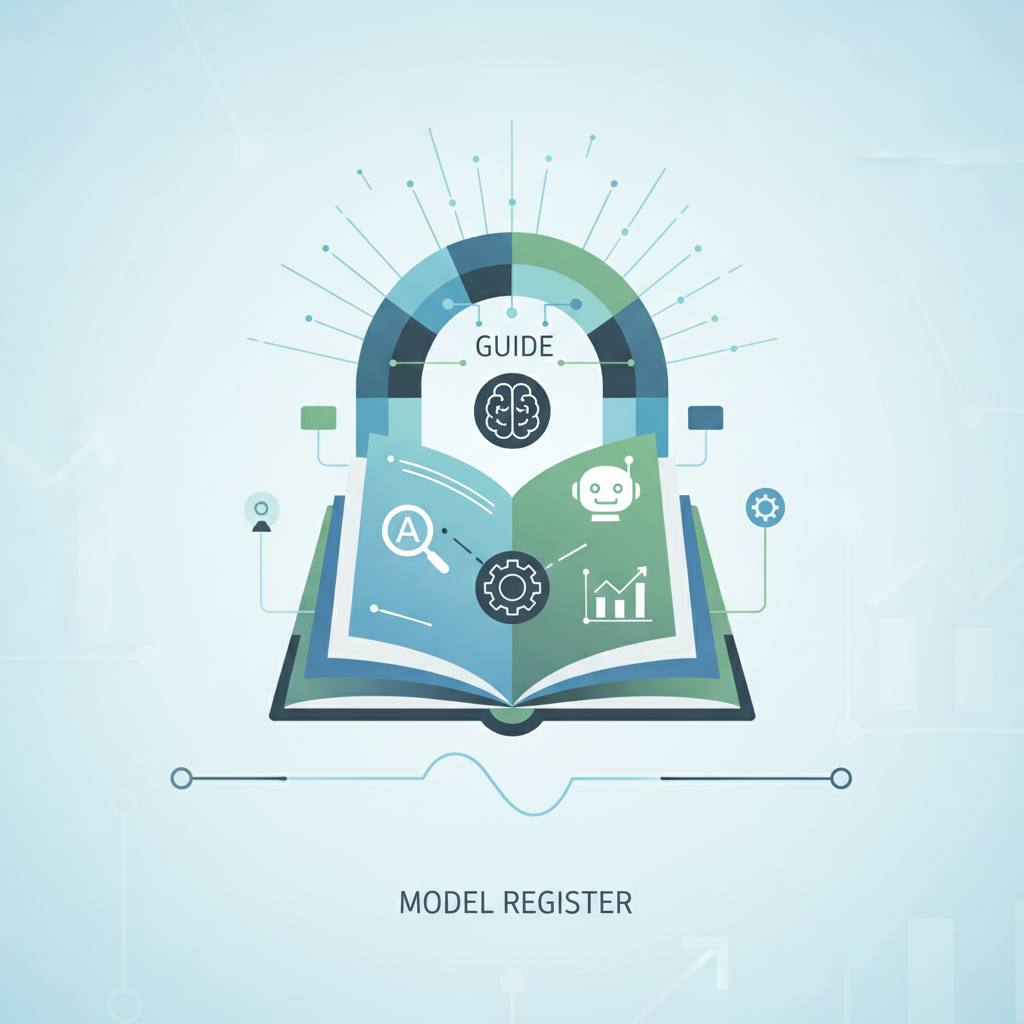
A Model Register is an organized list of AI models used in a system, detailing aspects like their license, size, and reason for selection, ensuring transparency and accountability in AI deployment.
Have you recently heard about the CodeNinja Atoms engineering blog discussing 'The Model Register'? The name might sound complex, but the concept is simple and incredibly vital in today's AI world. Imagine you're a chef with a collection of recipes. Each recipe is an AI 'model'. Some are for soup recipes (data analysis), others for baking bread (generating images), and so on. Each model performs a specific intelligent task after being trained on large amounts of data.
Now, picture this chef keeping a highly detailed recipe book. This isn't just a list of recipes; for each one, it includes: the recipe's name (the model's name), its precise ingredients (details of the model's architecture), the recipe's origin or license for use (the model's license: Is it your own recipe, or did you get it from a cookbook, and what are the terms for using it?), its size (how much space the model occupies), and why this particular recipe was chosen for this meal over another (the reason for selecting the model). This detailed book is precisely what a 'Model Register' is. It's a centralized list of every AI model used within a particular system, along with all these important details.
Why is it important? First, for transparency and accountability: a Model Register helps companies and developers understand every intelligent component in their systems. Second, for legal compliance: it ensures that models are used correctly and legally, especially concerning licenses. Does the license permit commercial use of the model? Are there specific restrictions? The news hook highlighted that no model in these registers carries a license with commercial use restrictions or conditions that would create legal issues, providing greater freedom for operators. Third, for informed decisions: when a system needs updating or a model needs changing, the register provides the necessary information to make informed decisions. For instance, the register explains why a specific GLM model was chosen – perhaps for its power or its flexible license allowing internal commercial use. Fourth, for security: knowing a model's origin and details is crucial for security. A Model Register isn't just a technical document; it's an essential tool for managing and deploying AI solutions responsibly and effectively. It ensures we're not only using the best tools but also using them the right way.
Now, picture this chef keeping a highly detailed recipe book. This isn't just a list of recipes; for each one, it includes: the recipe's name (the model's name), its precise ingredients (details of the model's architecture), the recipe's origin or license for use (the model's license: Is it your own recipe, or did you get it from a cookbook, and what are the terms for using it?), its size (how much space the model occupies), and why this particular recipe was chosen for this meal over another (the reason for selecting the model). This detailed book is precisely what a 'Model Register' is. It's a centralized list of every AI model used within a particular system, along with all these important details.
Why is it important? First, for transparency and accountability: a Model Register helps companies and developers understand every intelligent component in their systems. Second, for legal compliance: it ensures that models are used correctly and legally, especially concerning licenses. Does the license permit commercial use of the model? Are there specific restrictions? The news hook highlighted that no model in these registers carries a license with commercial use restrictions or conditions that would create legal issues, providing greater freedom for operators. Third, for informed decisions: when a system needs updating or a model needs changing, the register provides the necessary information to make informed decisions. For instance, the register explains why a specific GLM model was chosen – perhaps for its power or its flexible license allowing internal commercial use. Fourth, for security: knowing a model's origin and details is crucial for security. A Model Register isn't just a technical document; it's an essential tool for managing and deploying AI solutions responsibly and effectively. It ensures we're not only using the best tools but also using them the right way.