Traditional web scrapers frequently fail due to website updates, but a new approach combining headless browsers with Large Language Models (LLMs) creates self-healing, reliable data extraction tools.
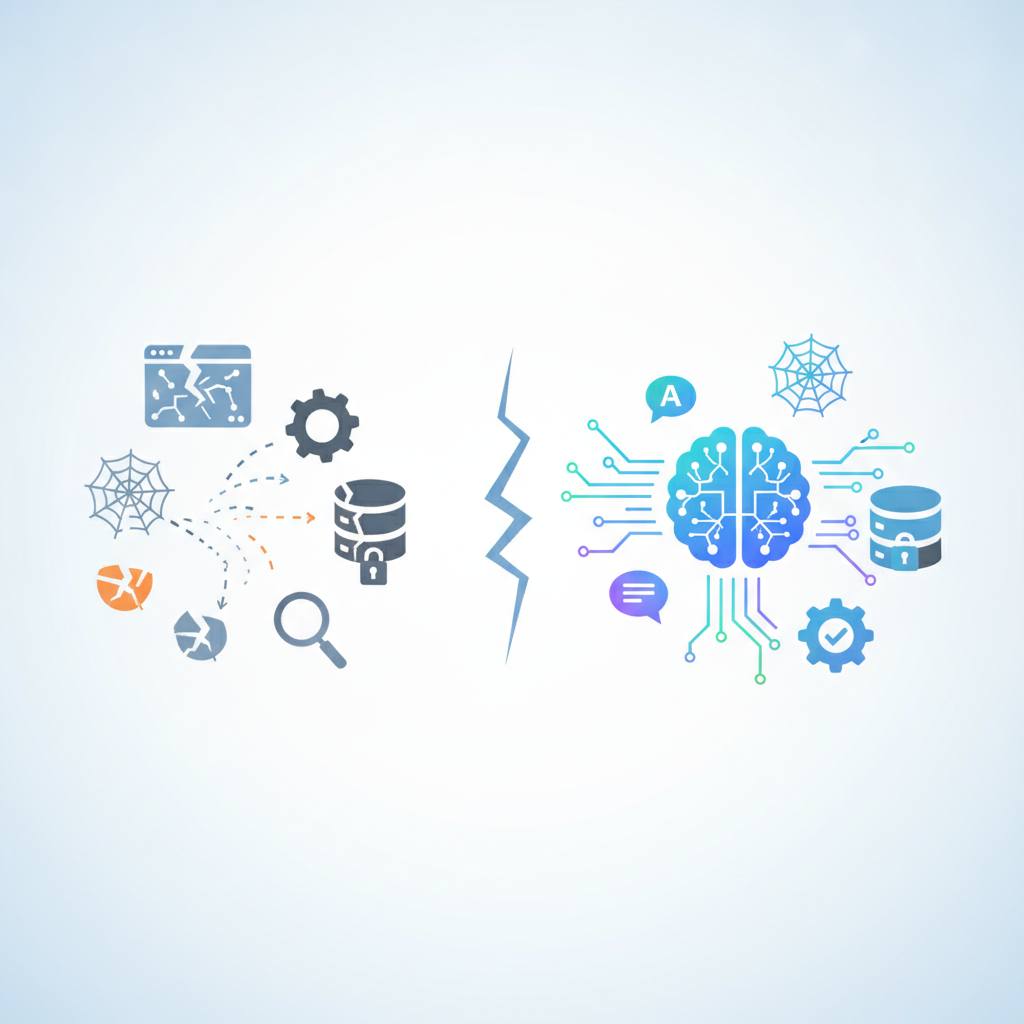
Hey WondTech readers! Are your web scraping tools constantly breaking? You've come to the right place. Traditional web scraping has long relied on brittle methods like CSS selectors and XPath expressions. The problem is, as soon as a website makes a minor frontend change — perhaps altering CSS class names or tweaking the element hierarchy — these scrapers immediately crash, leading to immense frustration and wasted time.
But we've got some great news! There's a smarter, more resilient way to get the job done. Developers can now combine headless browser automation (like Playwright) with Large Language Models (LLMs) for structured data extraction. This means you can build automated scrapers that don't break whenever a website updates its design. Instead of searching for rigid CSS class names, the language model can read the semantic HTML structures, understand the content's meaning, and then extract clean, typed JSON objects that conform to predefined schemas.
These powerful models have a deep understanding of natural language, pricing conventions, product specifications, and even address formats. When provided with clean, semantic markup, an LLM can accurately extract entity relationships that would previously require dozens of fragile and error-prone regular expressions. A modern LLM web scraping pipeline follows clear operational steps: First, dynamic page rendering occurs with Playwright navigating to the URL, executing client-side JavaScript, and waiting for the page to fully load. Second, aggressive DOM pruning cleans the often massive raw HTML document by stripping out unnecessary scripts, styles, and images, significantly reducing its size. Finally, this cleaned HTML snippet is passed to a fast language model alongside a Zod or JSON schema for precise data extraction. This new generation of scrapers is truly a massive leap towards more stable and reliable data collection.
But we've got some great news! There's a smarter, more resilient way to get the job done. Developers can now combine headless browser automation (like Playwright) with Large Language Models (LLMs) for structured data extraction. This means you can build automated scrapers that don't break whenever a website updates its design. Instead of searching for rigid CSS class names, the language model can read the semantic HTML structures, understand the content's meaning, and then extract clean, typed JSON objects that conform to predefined schemas.
These powerful models have a deep understanding of natural language, pricing conventions, product specifications, and even address formats. When provided with clean, semantic markup, an LLM can accurately extract entity relationships that would previously require dozens of fragile and error-prone regular expressions. A modern LLM web scraping pipeline follows clear operational steps: First, dynamic page rendering occurs with Playwright navigating to the URL, executing client-side JavaScript, and waiting for the page to fully load. Second, aggressive DOM pruning cleans the often massive raw HTML document by stripping out unnecessary scripts, styles, and images, significantly reducing its size. Finally, this cleaned HTML snippet is passed to a fast language model alongside a Zod or JSON schema for precise data extraction. This new generation of scrapers is truly a massive leap towards more stable and reliable data collection.