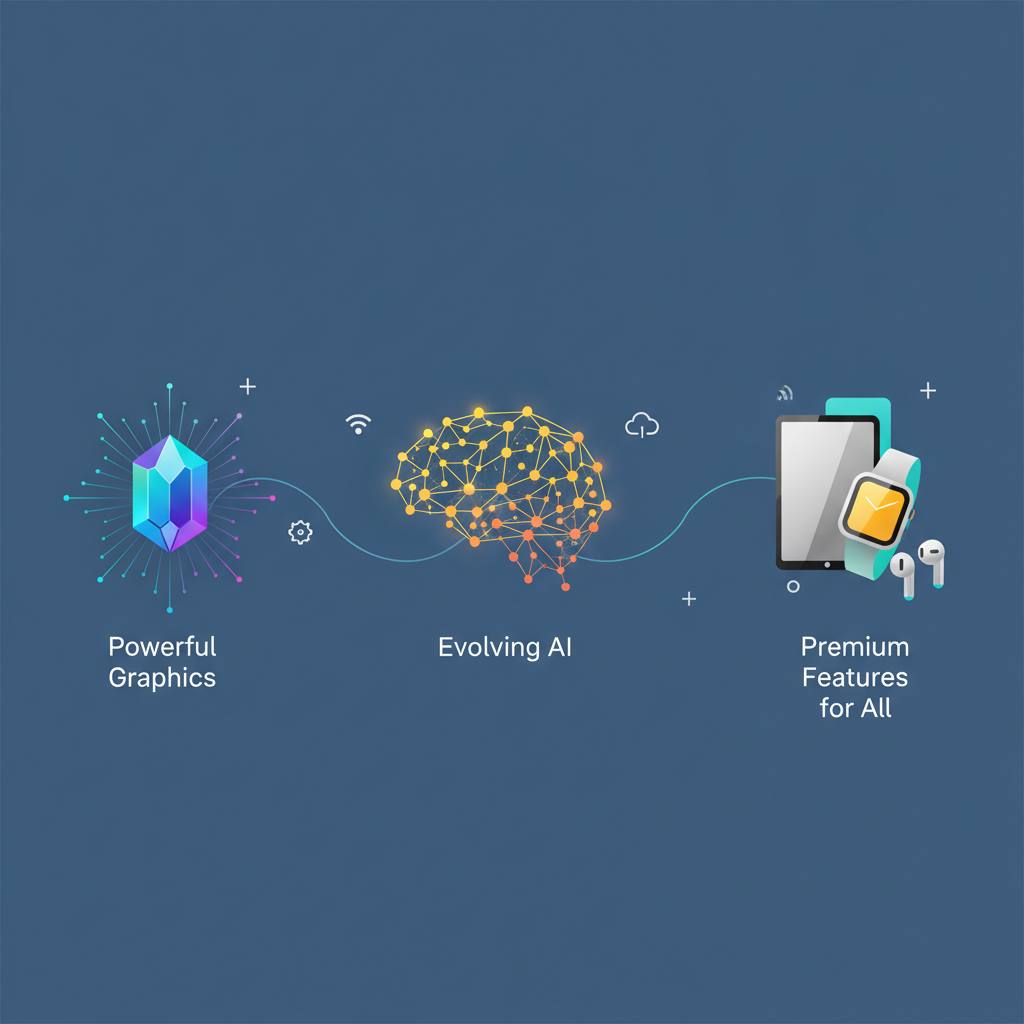
Expect advanced visual experiences on diverse devices, a dynamic and competitive market for AI services, and high-end features becoming standard in more accessible hardware.
Today's tech news paints a clear picture of where innovation is heading. We're seeing three key trends that will shape our digital experiences in the near future.
First, powerful graphics are becoming more accessible. Microsoft's new Automatic Super Resolution (Auto SR) technology, now available on devices like the Xbox Ally X and certain Windows PCs, demonstrates a significant leap. This upscaling tech means you can expect sharper, smoother visuals without needing the most expensive hardware. Crucially, its effectiveness in handheld mode suggests that gaming and demanding applications will deliver impressive performance on smaller, more portable devices. This trend will continue, allowing a wider range of users to enjoy high-quality visual content, from games to creative tools, on devices they already own or can more easily afford. The line between premium and mid-range visual experiences will blur further.
Second, the market for AI services is in constant motion. Recent shifts in pricing for AI infrastructure providers like Fal.ai, LangChain, and Modal show that companies are still figuring out the best value propositions. We'll likely see continued adjustments, with some services becoming more affordable due to competition, while specialized or enterprise-level AI solutions might see different pricing structures emerge. This dynamic environment means more innovation in how AI is delivered and consumed, and ultimately, a broader integration of AI capabilities into everyday software and tools. Expect more flexible pricing models and an ongoing push to make AI more cost-effective for developers and businesses alike.
Finally, advanced hardware features are no longer exclusive to top-tier models. The launch of the Poco X8s in Europe, featuring a telephoto camera in a compact, mid-range phone, is a prime example. This suggests a continued movement of previously premium functionalities — like advanced camera systems or high-refresh-rate screens — into more mainstream and budget-friendly devices. Consumers can look forward to getting more 'bang for their buck' across various product categories. This democratization of hardware capabilities will enable richer user experiences on a wider array of devices, from phones to laptops, without requiring users to break the bank.
In essence, technology is evolving to be more inclusive. We're moving towards a future where high-quality experiences, whether visual, computational, or hardware-based, are not just for a select few but are becoming standard for everyone.