This post explains how modern AI systems, like those moderating online voice rooms, are designed to work as helpful assistants with clear rules, rather than acting as independent decision-makers, ensuring safety and human oversight.
The news about Tencent RTC’s approach to AI moderation in voice rooms highlights a crucial concept in how we build and use artificial intelligence safely. Imagine an online voice chat where an AI is supposed to keep things orderly. In a perfect test, this AI might look incredibly smart, quickly spotting and flagging inappropriate behavior. But what happens in the real world? What if the AI's suggestion to mute someone comes too late, after the person has already left? Or what if the AI tries to speak without having an assigned 'seat' in the room? Giving an AI full, unchecked authority in such dynamic environments can quickly lead to problems and confusion.
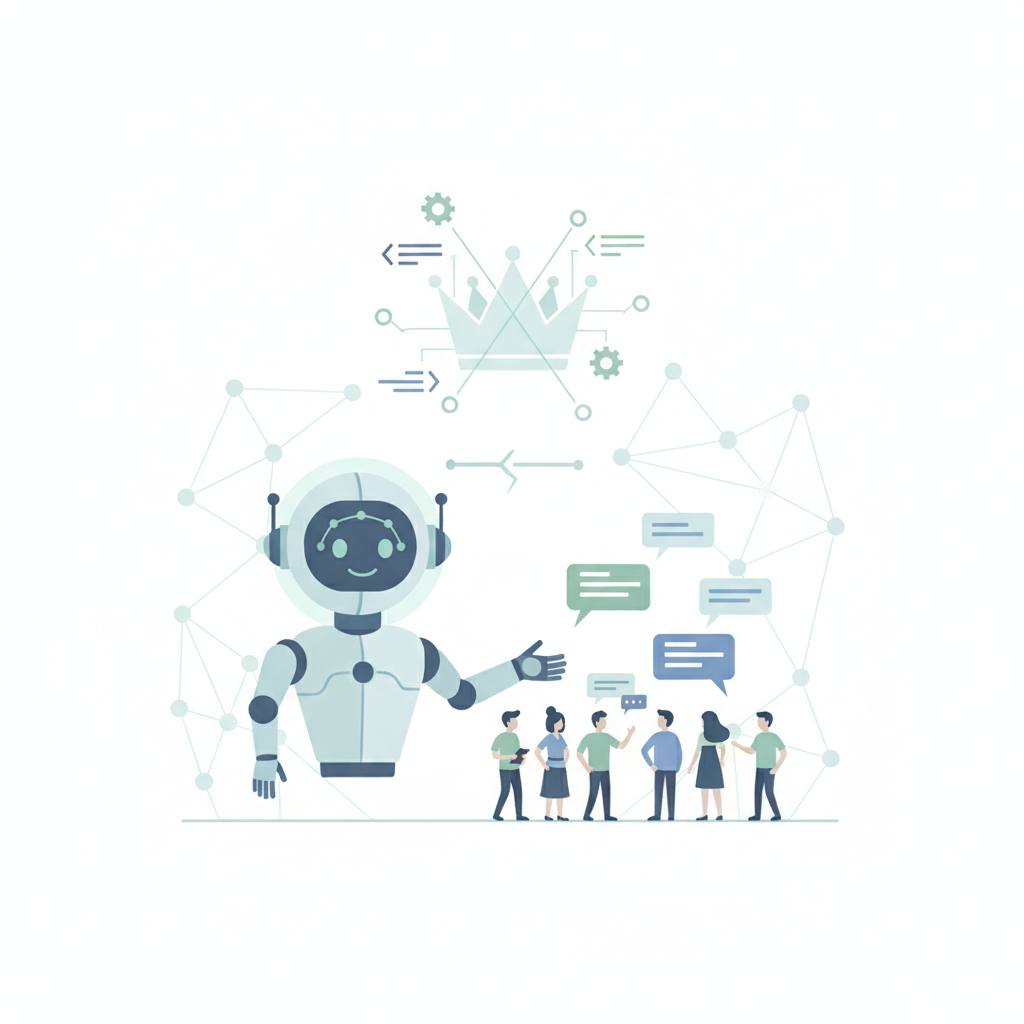
The core idea here isn't to make the AI less capable, but to understand its role within a larger system. Instead of viewing the AI as a single, all-powerful moderator, we should see it as one part of a team, or a «protocol with separate responsibilities,» as the news puts it. Each component has a specific job: the live audio system handles sounds, room rules decide who can speak, speech recognition turns voice into text, and then – crucially – the AI might classify or *recommend* an action. However, a human moderator ultimately makes the important decisions, and the application server ensures these approved actions are applied correctly.
Think of it like a smart assistant helping a chef in a busy kitchen. The assistant (AI) can quickly scan ingredients, suggest recipes, and even set timers. But the chef (human) is always in charge. The chef decides what to cook, approves the recipe, and makes the final adjustments to the meal. The assistant provides valuable information and recommendations, but it doesn't take over the cooking itself. Similarly, in the voice room example, the AI can recommend «mute this occupied seat,» but it cannot approve that recommendation on its own. If the AI needs to deliver a warning aloud, it must follow the same rules as any human participant: it must be assigned an occupied mic seat, that seat must not be muted, and the room must still be open.
This method, often called «human-in-the-loop AI» or «shared responsibility,» is vital for creating reliable and trustworthy AI systems. It ensures that complex or sensitive decisions always involve human judgment, preventing potential errors or biases from an autonomous AI. By designing AI to be a powerful tool for recommendation and assistance, rather than an independent authority, we can harness its benefits while maintaining control and accountability, making our online spaces safer and more predictable.