Liquid AI's LFM3 shows that small AI models can outperform larger ones on specific tasks, fitting on your device and running efficiently. This breakthrough highlights the power of specialized, compact AI for everyday applications.
Can you believe that an AI model weighing in at just 1 GB can beat another model five times its size on certain tasks? That's precisely what LFM3, Liquid AI's newest model, is achieving. We often think of powerful Artificial Intelligence as needing huge computers and massive cloud servers, but LFM3 is challenging that entire notion.
Why does the size of AI matter? Imagine you want to run a smart assistant directly on your phone or laptop. If that assistant needs too much storage or processing power, you simply can't run it locally. This means every request you make has to travel to a distant server over the internet, which can slow things down and raise privacy concerns.
This is where efficient local models like LFM3 come into play. These models are specifically designed to be:
1. **Small and Compact**: At around 1 GB, they can run directly on your device, whether it's a phone or a laptop.
2. **Memory and Power Efficient**: They use significantly fewer resources, making them ideal for personal devices.
3. **Specialized and Smart**: Instead of trying to be good at everything (like a general encyclopedia), they focus on excelling at very specific tasks (like an expert in a particular field). LFM3, for instance, is brilliant at 'agent tasks,' where the AI performs complex actions on your behalf, such as browsing the web or automating routines.
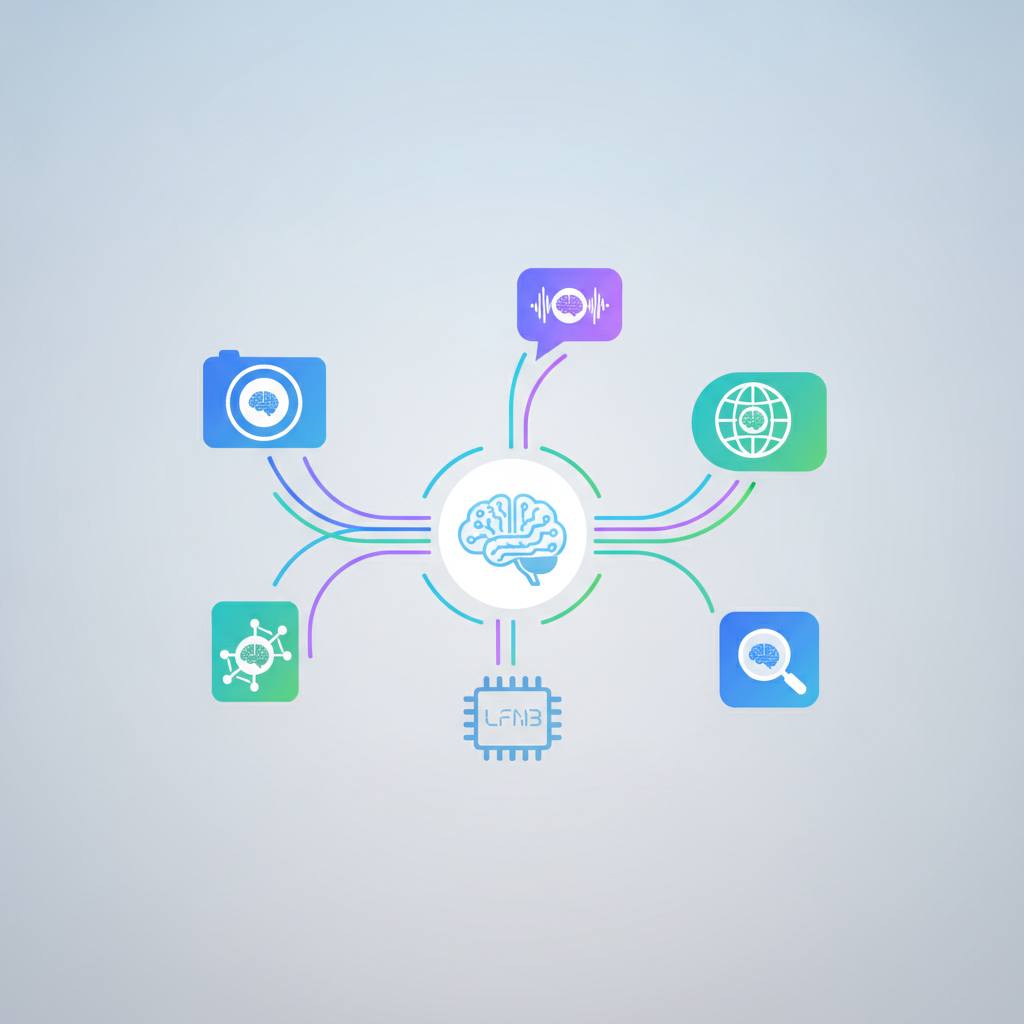
How does LFM3 achieve this? LFM3 uses what's called a 'tri-hybrid architecture.' Think of it like an AI having several different 'ways of thinking' about information. LFM3 cleverly combines these methods to figure out what's most important and how to process it with the fewest resources possible. It also uses techniques like '4-bit precision,' meaning it stores information using less digital detail, yet remains accurate enough for its tasks. This is similar to using a limited color palette to paint a clear and beautiful picture.
In essence, LFM3 demonstrates that the future isn't just about bigger, more powerful AI, but also about smaller, smarter, and more specialized AI. This opens the door for powerful AI experiences that are accessible to everyone, right on their personal devices.