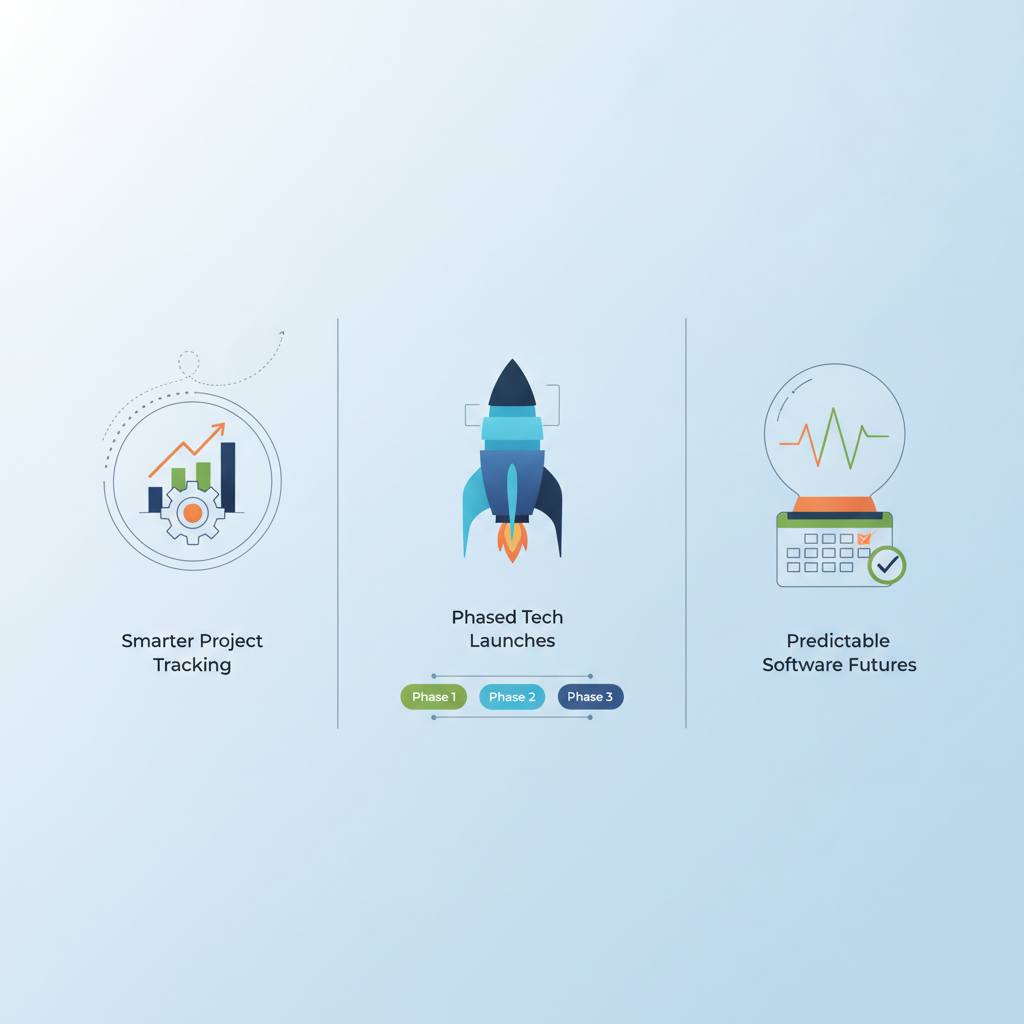
We're seeing a push for project management tools that accurately reflect work status, a cautious, phased approach to new hardware releases, and a more predictable path for software language evolution. These trends point towards greater realism and stability in tech development and deployment.
The tech world is always moving, but recent insights suggest a push towards greater realism and predictability across several fronts. For software development and project management, we're seeing a clear need to move beyond simple 'Done' checkboxes. The challenge of carrying unfinished work across weekly cycles, where mobile verification might still be pending, highlights a crucial gap. Marking an item 'Done' merely to close a cycle distorts the true state of a project. We predict a growing demand for project management tools that offer more nuanced states – perhaps 'Verification Pending' or 'Partially Complete' – ensuring that release modules genuinely meet their delivery conditions. This shift will help teams maintain an accurate view of progress, reducing the risk of overlooked steps and fostering more transparent workflows.
In hardware, the launch strategy for Samsung's Android XR glasses offers a glimpse into the future of complex device rollouts. The initial limited release to South Korea and the US, with other regions following later, isn't just about market testing; it's a strategic approach to managing the introduction of cutting-edge technology. We expect this phased rollout model to become standard for new, high-concept hardware. Companies will increasingly leverage targeted initial launches to gather specific user feedback, refine products based on real-world usage, and streamline supply chains before a broader global release. This cautious approach minimizes risks and optimizes the user experience from day one.
Finally, the evolution of programming languages, exemplified by Java's JEPs, points to a future of enhanced stability and predictability. The high likelihood of a JEP shipping once it becomes a candidate, supported by independent research, signals a mature and transparent process. We anticipate that other major programming languages will adopt similar structured approaches, perhaps even integrating AI-driven analysis to further streamline proposal assessment and accelerate feature adoption. This predictability empowers developers, allowing them to plan their projects with greater confidence, knowing that the tools and features they rely on are evolving through a well-understood and reliable pipeline. Together, these trends paint a picture of a tech landscape that values accuracy, strategic deployment, and stable progress.