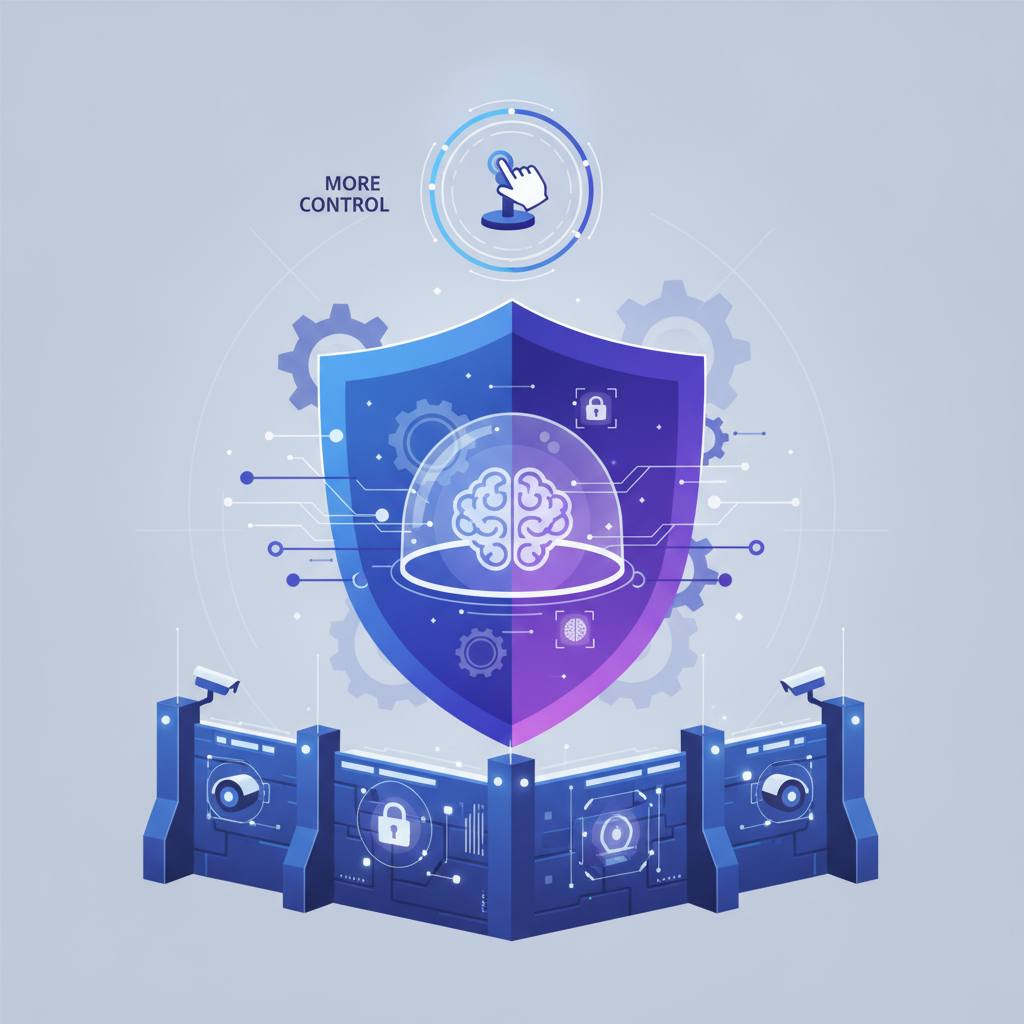
The future of AI security is moving towards more granular control over data access, implementing multi-layered defenses for AI agents, and bolstering secure remote access. User understanding of security configurations will become paramount.
Today’s tech news highlights a crucial theme: as AI tools become more integrated into our daily lives, securing them is rapidly evolving. We’re seeing a clear push towards greater control over what AI agents can do and a more robust approach to protecting against threats.
Take, for example, the different versions of ComfyUI MCP servers. The choice between wider features, official support, or minimal local file system exposure shows that developers are already thinking about specific security profiles. We predict this trend will accelerate. Future AI applications will offer very fine-grained permissions, allowing users and administrators to precisely dictate which local resources — files, ports, system processes — an AI can access. This isn't just about 'on' or 'off' access; it will be about specifying *exactly* what paths an AI can read from or write to, and which ports, if any, it can interact with. This will be critical for balancing powerful AI capabilities with user privacy and system integrity.
Then there’s the ‘defense-in-depth’ strategy used by Android AI agents like StareBrain. Before any risky action, such as making a payment or deleting data, two independent checks are performed. This 'zero-trust' approach, where neither layer fully trusts the other, is a blueprint for the future of AI agent security. Expect to see this become a standard practice. AI systems, especially those handling sensitive information or initiating real-world actions, will employ multiple, distinct security layers. These layers will operate independently, providing redundancy and significantly reducing the risk of a single point of failure leading to a compromise.
Finally, the issues with SillyTavern remote access, including unpatched Node.js vulnerabilities and critical configuration settings, underscore a persistent challenge. The rapid pace of AI development often means security patches and best practices can lag. Looking ahead, the industry will need to prioritize 'secure by default' configurations. Users will receive clearer, simpler tools and guidance to understand and manage their AI applications' security settings, particularly for remote interactions. We will see more automated vulnerability scanning and patching integrated directly into AI platform deployments, moving towards a future where keeping AI tools secure is less of a manual burden and more of an inherent part of their operation. This collective push for granular control, layered defenses, and proactive vulnerability management will shape how we safely interact with increasingly intelligent systems.