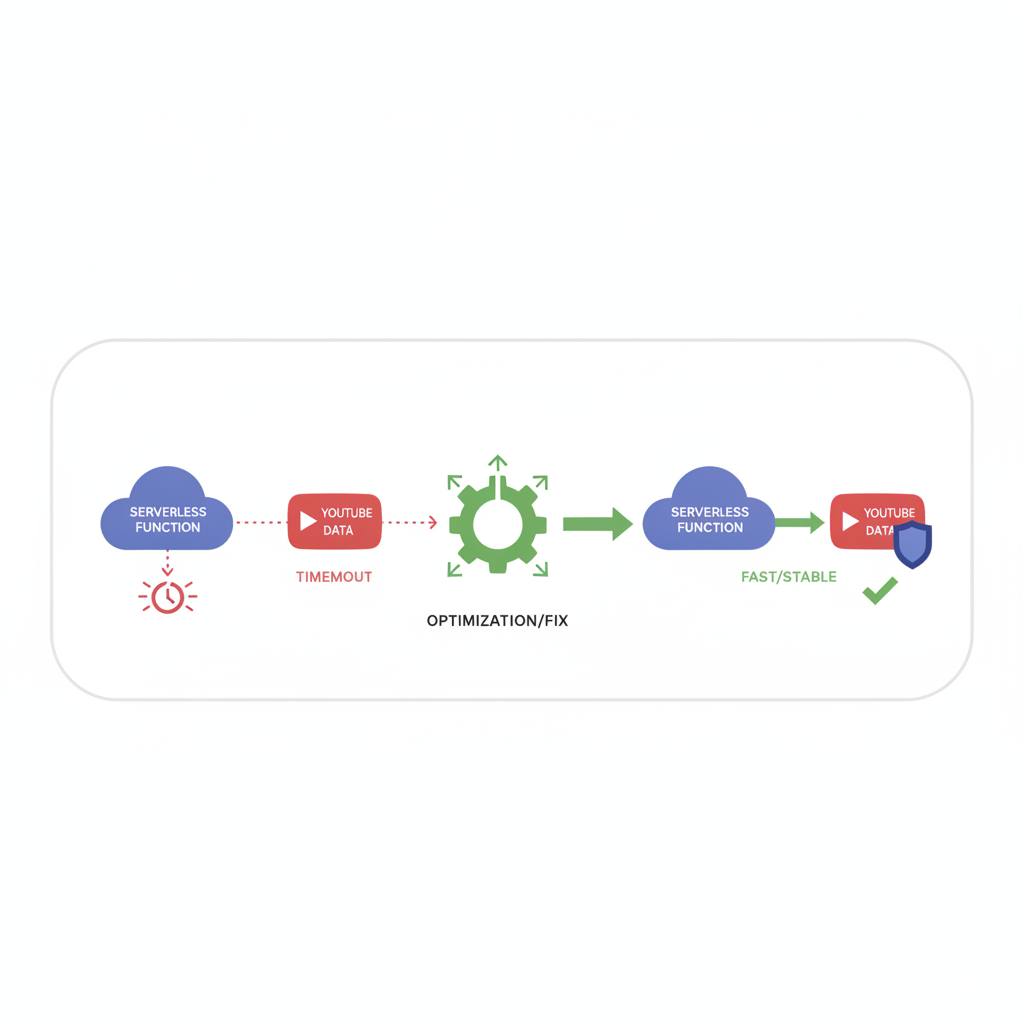
Developers using Next.js serverless functions often hit timeout limits when fetching large amounts of data, like YouTube creator metrics. A new approach combines chunked requests with strict timeouts to keep things running smoothly.
Ever run into frustrating timeouts with your Next.js serverless functions, especially when pulling data from external APIs like YouTube's? If so, you're not alone. A recent experience highlighted a common challenge for those building web applications that rely on continuous data collection.
The team behind PulseROI, a platform tracking marketing campaigns for Indian D2C brands, encountered a significant hurdle. Their Vercel cron jobs, designed to fetch YouTube engagement rates and view counts for over 50 creator handles, frequently stalled. Half of their requests would time out or hang past the 25-second mark. Their initial, seemingly straightforward approach involved using `Promise.all` with native fetch calls. While clean and short in code, this method completely collapsed under production load.
Why did it fail? Three main issues stood out. First, if just one YouTube API call was slow or throttled, the entire batch of requests would halt. Second, there was no limit on how many requests fired at once, leading to 50+ simultaneous calls that instantly triggered Google's API rate limits. Third, a crucial defensive timeout was missing. When Vercel approached its execution limit, the function would simply die mid-process, losing any unsaved data.
To resolve these persistent timeouts, PulseROI completely revamped their data ingestion strategy. They moved away from firing all requests at once and instead adopted a 'chunked concurrency pool.' This means breaking down the large list of creator handles into smaller groups and processing them in controlled batches. Alongside this, they implemented a 'strict timeout wrapper' using `Promise.race` paired with a 20-second hard abort controller. This ensures that no single request can hang indefinitely, forcing it to complete or fail within a set timeframe.
What does this mean for you? If your Next.js application relies on serverless functions to gather extensive data from external APIs, this solution offers a clear path to prevent similar timeout issues. It shows the critical importance of careful API call management—especially when dealing with many requests—to ensure your data collection processes are not only efficient but also consistently reliable. This strategy helps keep your background jobs running smoothly, under tight time limits.