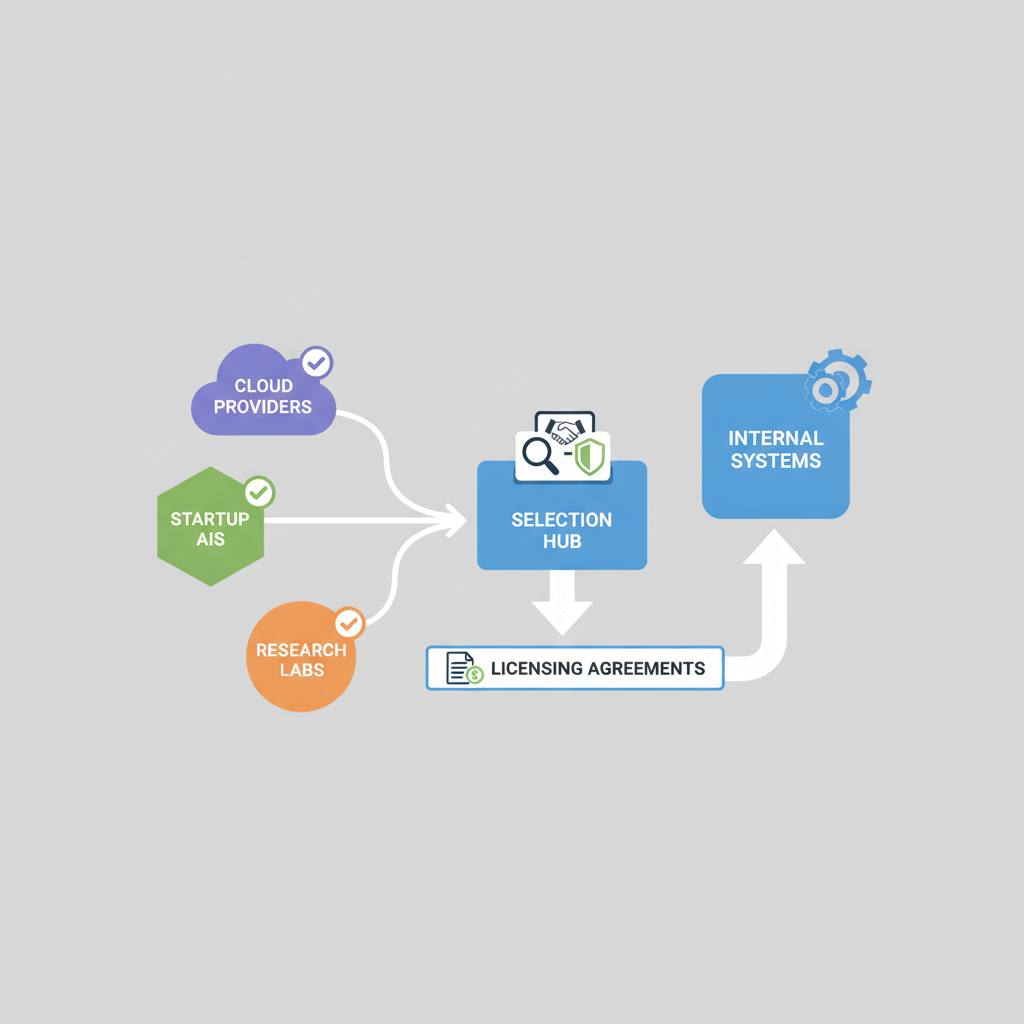
New insights reveal that companies are very deliberate about registering and licensing the AI models powering their internal systems, balancing performance needs with careful legal considerations to maintain control.
WondTech has spotted some interesting patterns in how companies are registering and licensing the AI models they use in their internal systems. This offers a peek into the thoughtful choices behind integrating advanced AI, and what it might mean for your own AI projects.
A 'model register' is basically a detailed list. It names every learned component an AI operation will run, including its license, size, and why it was chosen. We're talking about sixteen different open system designs here, and the findings are quite telling.
First, it's notable that four of these sixteen designs had an empty register. But this wasn't an oversight; it was a deliberate choice, and the original papers fully explain why. This tells us that even *not* using a model can be a strategic decision.
Perhaps the most important discovery is about licensing. None of the designs used licenses that would restrict how the operator uses the model, trigger revenue sharing, or impose copyleft rules on their own code. The golden rule here is 'weight ownership,' meaning operators keep full control over their own work.
Delving deeper, five of the designs specifically opted for powerful, 'frontier class' open weight models, all from the same GLM family. These models are self-hosted on serious hardware — think eight 141 GB HBM class GPUs per node. Their choice came with a bespoke license tailored for internal commercial use, requiring attribution but crucially, without revenue triggers. This setup was chosen for its 'strongest open agentic model' capabilities, allowing complex internal operations without triggering security review processes.
On the other hand, other designs, particularly those for utilities or cooperatives with strict auditors, went with a slightly older GLM model (version 5.2) under a straightforward MIT license. This choice allowed them to gain necessary AI functionality without the complexities of custom licenses, proving that sometimes, simplicity and broad compatibility win.
The clear takeaway? Companies aren't just blindly adopting AI. They're making highly strategic decisions about which models to use and under what terms, carefully balancing cutting-edge performance with legal freedom and operational ease. If you're incorporating AI, consider how these real-world approaches could inform your own strategy regarding model selection, hosting, and licensing to ensure it truly serves your specific needs without unintended strings attached.
A 'model register' is basically a detailed list. It names every learned component an AI operation will run, including its license, size, and why it was chosen. We're talking about sixteen different open system designs here, and the findings are quite telling.
First, it's notable that four of these sixteen designs had an empty register. But this wasn't an oversight; it was a deliberate choice, and the original papers fully explain why. This tells us that even *not* using a model can be a strategic decision.
Perhaps the most important discovery is about licensing. None of the designs used licenses that would restrict how the operator uses the model, trigger revenue sharing, or impose copyleft rules on their own code. The golden rule here is 'weight ownership,' meaning operators keep full control over their own work.
Delving deeper, five of the designs specifically opted for powerful, 'frontier class' open weight models, all from the same GLM family. These models are self-hosted on serious hardware — think eight 141 GB HBM class GPUs per node. Their choice came with a bespoke license tailored for internal commercial use, requiring attribution but crucially, without revenue triggers. This setup was chosen for its 'strongest open agentic model' capabilities, allowing complex internal operations without triggering security review processes.
On the other hand, other designs, particularly those for utilities or cooperatives with strict auditors, went with a slightly older GLM model (version 5.2) under a straightforward MIT license. This choice allowed them to gain necessary AI functionality without the complexities of custom licenses, proving that sometimes, simplicity and broad compatibility win.
The clear takeaway? Companies aren't just blindly adopting AI. They're making highly strategic decisions about which models to use and under what terms, carefully balancing cutting-edge performance with legal freedom and operational ease. If you're incorporating AI, consider how these real-world approaches could inform your own strategy regarding model selection, hosting, and licensing to ensure it truly serves your specific needs without unintended strings attached.