The rapid evolution of programming languages, the rise of Infrastructure as Code, and the critical nuances of AI API integrations point to a future demanding greater automation, precision, and smarter development practices. We predict a convergence where these areas will increasingly depend on each other for efficient and reliable systems.
Recent developer experiences with modern language releases, such as Java 26, show that programming languages are not standing still. Developers expect continuous improvements that offer practical benefits, moving beyond simple feature lists to real-world impact. This signals a future where core programming skills remain vital, but the tools supporting them are always evolving to make developer lives easier and code more efficient. We'll see more languages, or even older ones, adopting features that streamline complex tasks and enhance overall performance.
Hand-in-hand with language evolution is the transformation of infrastructure management. The shift from manual cloud configuration or complex scripts to Infrastructure as Code (IaC) solutions like Terraform is a powerful example. It’s no longer about just managing servers; it’s about treating your entire IT environment like code. This dramatically reduces human error, speeds up deployment, and makes disaster recovery a minor inconvenience, not a major project. WondTech predicts that IaC will quickly become the universal standard for all serious operations, extending beyond traditional cloud environments to encompass edge computing and hybrid setups. Manual infrastructure changes will become an anomaly, almost a historical relic.
Then there's the nuanced world of AI integration. The distinction between an 'OpenAI Responses API' and a 'DeepSeek response API,' where a crucial field like 'reasoning_content' can be silently dropped, highlights a growing challenge. As AI models become integral to applications, developers must move beyond surface-level understanding. The prediction here is not just about more AI, but about smarter AI integration. Future tools will need to offer deeper inspection, validation, and abstraction layers to manage the subtle differences and potential pitfalls across various AI providers. We anticipate an increased demand for specialized integration frameworks that ensure data integrity and expected model behavior, preventing silent failures.
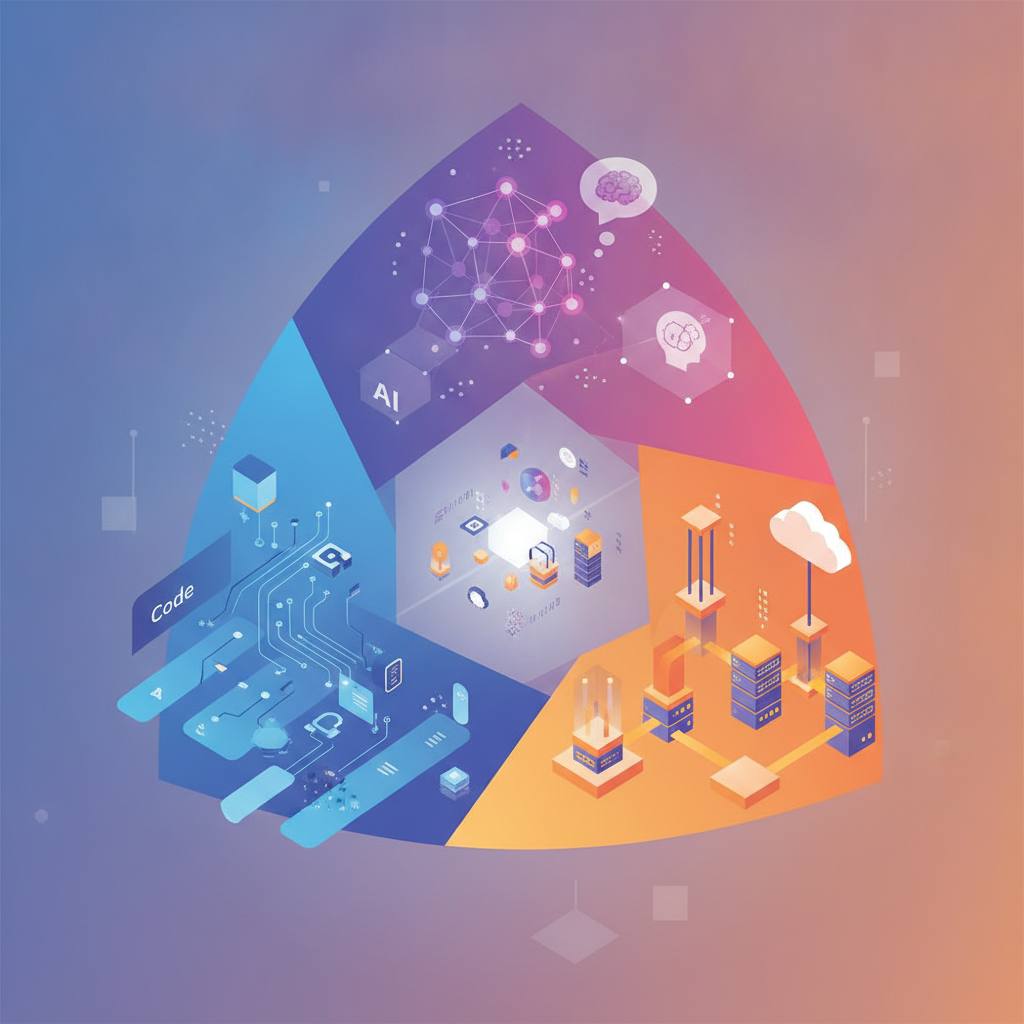
Together, these trends paint a picture of a future where efficiency, automation, and precision are paramount. Programming languages will continue their practical evolution, IaC will solidify as a foundational practice, and AI integration will demand rigorous, nuanced approaches. The successful development teams will be those who master the art of seamlessly connecting these evolving components, ensuring robust, reliable, and intelligent systems from code to cloud to AI.
Hand-in-hand with language evolution is the transformation of infrastructure management. The shift from manual cloud configuration or complex scripts to Infrastructure as Code (IaC) solutions like Terraform is a powerful example. It’s no longer about just managing servers; it’s about treating your entire IT environment like code. This dramatically reduces human error, speeds up deployment, and makes disaster recovery a minor inconvenience, not a major project. WondTech predicts that IaC will quickly become the universal standard for all serious operations, extending beyond traditional cloud environments to encompass edge computing and hybrid setups. Manual infrastructure changes will become an anomaly, almost a historical relic.
Then there's the nuanced world of AI integration. The distinction between an 'OpenAI Responses API' and a 'DeepSeek response API,' where a crucial field like 'reasoning_content' can be silently dropped, highlights a growing challenge. As AI models become integral to applications, developers must move beyond surface-level understanding. The prediction here is not just about more AI, but about smarter AI integration. Future tools will need to offer deeper inspection, validation, and abstraction layers to manage the subtle differences and potential pitfalls across various AI providers. We anticipate an increased demand for specialized integration frameworks that ensure data integrity and expected model behavior, preventing silent failures.
Together, these trends paint a picture of a future where efficiency, automation, and precision are paramount. Programming languages will continue their practical evolution, IaC will solidify as a foundational practice, and AI integration will demand rigorous, nuanced approaches. The successful development teams will be those who master the art of seamlessly connecting these evolving components, ensuring robust, reliable, and intelligent systems from code to cloud to AI.