As leap seconds near their end and personal computing devices and supercars evolve, we are heading towards a future where technology is deeply integrated and demands extreme timing precision. Systems will become more robust, vehicles more astounding, and computing more fluid.
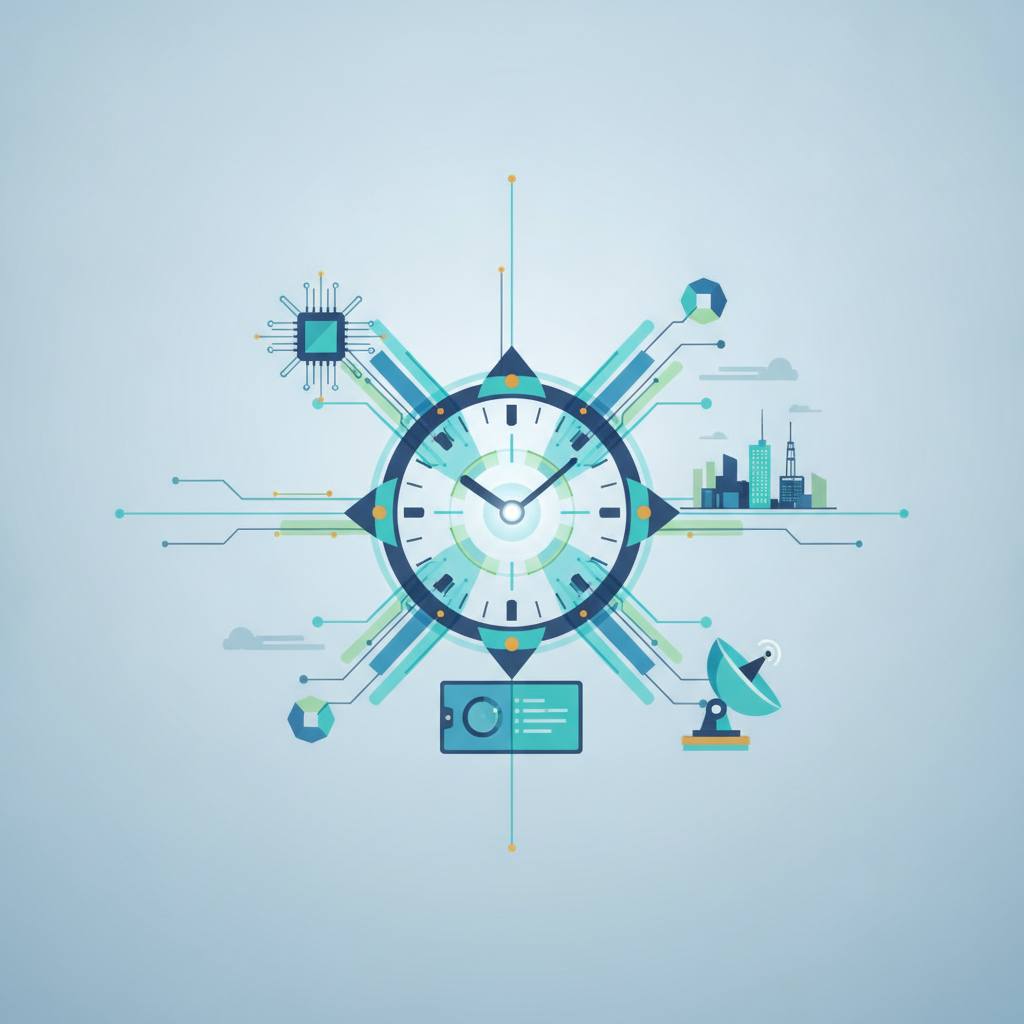
The world of technology is accelerating, and recent news paints a picture of a future built on extreme precision and seamless integration. With the International Bureau of Weights and Measures (BIPM) announcing the abolition of leap seconds after 2027, we're witnessing the dawn of a new era in time synchronization. This isn't just a technical adjustment; it underscores the urgent need for unified, reliable global time systems. Companies running trading platforms, GPS-based services, or blockchain nodes will need to significantly upgrade their infrastructure and software. We anticipate massive investment in new tools and solutions to 'future-proof' these systems, making them more resilient and ready for upcoming challenges. Accurate time synchronization will be the backbone of a future characterized by consistent data and instantaneous operations.
At the same time, developments in personal computing, such as Apple's plans to unveil touchscreen MacBooks and OLED iPad minis, point to a future where devices blend seamlessly. There won't be a clear dividing line between a laptop and a tablet. These devices will offer unparalleled flexibility, allowing users to switch between work and entertainment modes effortlessly. The powerful M6 chip in the MacBook Pro confirms that high performance won't be confined to stationary desktops but will become a standard for mobile devices too. We expect this trend to spur other manufacturers to introduce more versatile and integrated computing solutions, making the user experience smoother and more adaptable.
Finally, Tesla, with its Roadster that flew and hit 60mph in under a second, shows us that the boundaries of what vehicles can do are expanding dramatically. While flying cars for the mass market might be distant, these demonstrations push the limits of engineering and design. They signal a future for vehicles that aren't just about traditional transportation but offer entirely new experiences. We predict these innovations will influence the development of more efficient batteries and advanced propulsion systems, potentially paving the way for specialized mobility solutions that include unique capabilities. It's an invitation to think of cars not just as a means of getting around, but as multifaceted technological platforms that change our understanding of movement and speed.
At the same time, developments in personal computing, such as Apple's plans to unveil touchscreen MacBooks and OLED iPad minis, point to a future where devices blend seamlessly. There won't be a clear dividing line between a laptop and a tablet. These devices will offer unparalleled flexibility, allowing users to switch between work and entertainment modes effortlessly. The powerful M6 chip in the MacBook Pro confirms that high performance won't be confined to stationary desktops but will become a standard for mobile devices too. We expect this trend to spur other manufacturers to introduce more versatile and integrated computing solutions, making the user experience smoother and more adaptable.
Finally, Tesla, with its Roadster that flew and hit 60mph in under a second, shows us that the boundaries of what vehicles can do are expanding dramatically. While flying cars for the mass market might be distant, these demonstrations push the limits of engineering and design. They signal a future for vehicles that aren't just about traditional transportation but offer entirely new experiences. We predict these innovations will influence the development of more efficient batteries and advanced propulsion systems, potentially paving the way for specialized mobility solutions that include unique capabilities. It's an invitation to think of cars not just as a means of getting around, but as multifaceted technological platforms that change our understanding of movement and speed.