Google's new Gemini-3-Flash model is a quick and smart AI that understands text, images, and videos. This post explains what makes 'Flash' AI special and how models like it learn from different kinds of information at high speed.
You might have heard about Google's new AI, Gemini-3-Flash, which is designed to be super fast and efficient. But what exactly does that mean for us, and what makes a 'Flash' AI model special? Let's break down the two main ideas behind models like Gemini-3-Flash: being 'multimodal' and being 'flash.'
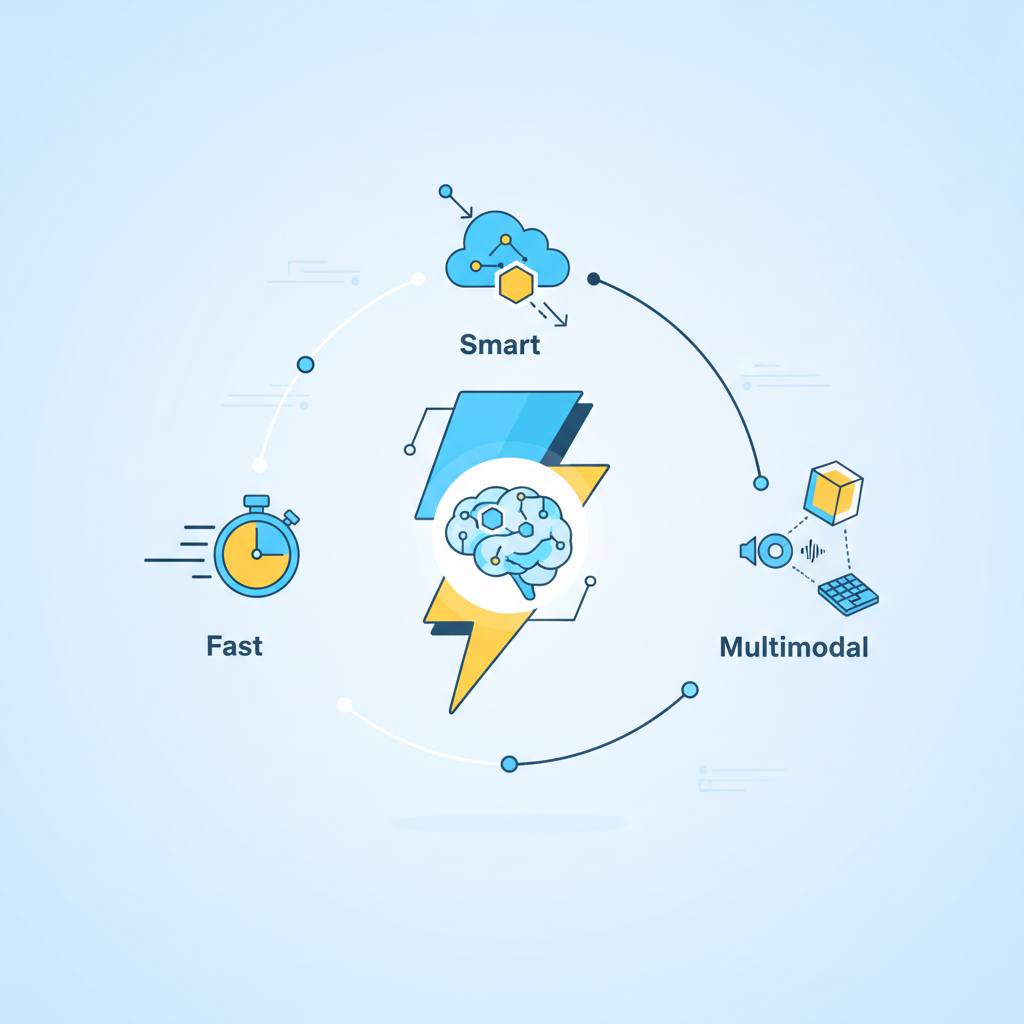
First, imagine a smart assistant who can not only read your emails but also understand the pictures you send, watch short videos, and even listen to your voice notes – all at once, to get the full picture. That's what 'multimodal' AI means. Traditional AI models often specialize in one type of data, like just text. But a multimodal model, like Gemini-3-Flash, can process different kinds of information together. If you're having trouble with an app, you could send a text explaining the issue and a screenshot of the error, and the AI would understand both inputs simultaneously. This makes interactions much more natural and effective, just like talking to a human who can see and hear.
Now, let's talk about the 'Flash' part. Think of 'Flash' AI as a brilliant, quick-thinking expert. It's designed to give you very intelligent answers, but very, very quickly. In the world of AI, there's often a balance between how deeply an AI can 'think' (which can take time) and how fast it can give you an answer. Gemini-3-Flash makes a deliberate choice to prioritize speed and efficiency without sacrificing its intelligence too much. It's still a frontier-class model, meaning it's highly advanced. But for tasks like real-time customer support, where getting a helpful answer in a few seconds is crucial, the 'Flash' approach is perfect. It can handle your questions, understand context, and even troubleshoot problems at speeds that keep response times under 2-3 seconds, making it feel almost instant. This balance of speed and smarts means you get quick, useful help without long delays.
First, imagine a smart assistant who can not only read your emails but also understand the pictures you send, watch short videos, and even listen to your voice notes – all at once, to get the full picture. That's what 'multimodal' AI means. Traditional AI models often specialize in one type of data, like just text. But a multimodal model, like Gemini-3-Flash, can process different kinds of information together. If you're having trouble with an app, you could send a text explaining the issue and a screenshot of the error, and the AI would understand both inputs simultaneously. This makes interactions much more natural and effective, just like talking to a human who can see and hear.
Now, let's talk about the 'Flash' part. Think of 'Flash' AI as a brilliant, quick-thinking expert. It's designed to give you very intelligent answers, but very, very quickly. In the world of AI, there's often a balance between how deeply an AI can 'think' (which can take time) and how fast it can give you an answer. Gemini-3-Flash makes a deliberate choice to prioritize speed and efficiency without sacrificing its intelligence too much. It's still a frontier-class model, meaning it's highly advanced. But for tasks like real-time customer support, where getting a helpful answer in a few seconds is crucial, the 'Flash' approach is perfect. It can handle your questions, understand context, and even troubleshoot problems at speeds that keep response times under 2-3 seconds, making it feel almost instant. This balance of speed and smarts means you get quick, useful help without long delays.