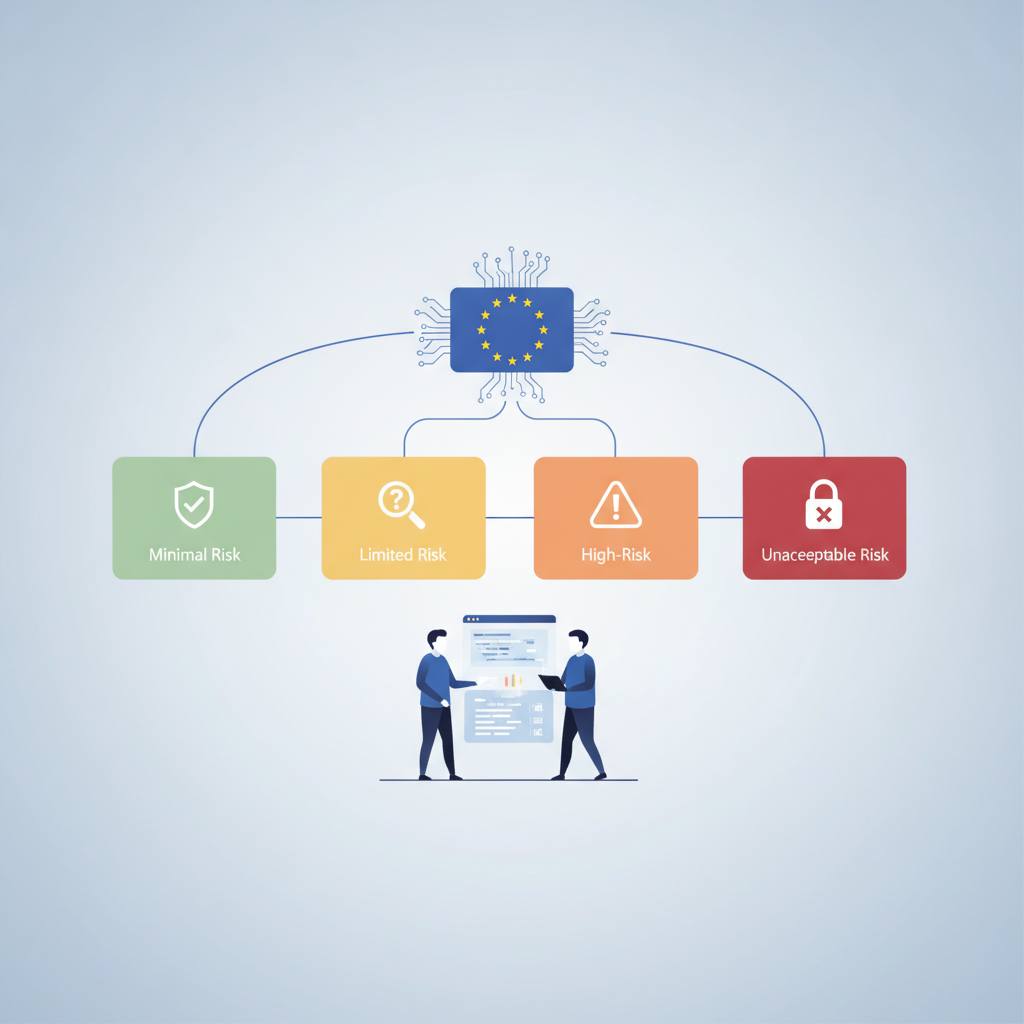
The European Union's new AI Act (Regulation 2024/1689), which came into force on August 1, 2024, introduces a four-level risk framework for AI systems. This framework dictates how AI systems can be used and the level of compliance and transparency expected from developers and businesses.
The European Union has officially implemented its new AI Act, which is a big deal for anyone working with artificial intelligence. This new law, Regulation (EU) 2024/1689, came into effect on August 1, 2024, and it sets up a clear, four-level system to categorize AI based on its potential risks. For developers, vendors, and businesses using AI, understanding these categories is crucial because they determine what you can do with your AI system and the rules you'll need to follow.
The goal of this tiered approach is to avoid applying the same regulatory burden to every AI use case. Instead, the Act reserves its strictest treatment for systems that present the greatest risk, while leaving minimal-risk systems without additional sector-specific obligations under the AI Act beyond general law.
Let's break down the four levels and what they mean for you:
* **Unacceptable risk**: Simply put, these practices are banned outright. If your AI system falls into this category, it simply cannot be used.
* **High risk**: These systems face the strictest requirements. Think AI used in critical areas like medical devices, managing essential infrastructure, or employment. If your AI is high risk, you’ll need to do thorough conformity assessments and have strong risk management plans in place.
* **Limited risk**: AI systems in this category have specific, but less demanding, rules. The focus here is on transparency. Users need to know they are interacting with an AI, and there might be other oversight requirements in relevant cases.
* **Minimal risk**: Good news for most AI systems! The vast majority of AI applications, like spam filters or video games, fall into this group. For these, the AI Act doesn't add any special new rules beyond general existing laws. You still need to follow general legal principles, but no extra AI-specific burdens from this Act.
It's important to remember that these risk levels aren't about how sophisticated your AI model is. Instead, they’re about how the AI is used and its potential impact on people. You can't just call your AI 'low risk' and be done with it. Businesses need to actively evaluate their systems against the Act’s framework to understand their obligations accurately.
The goal of this tiered approach is to avoid applying the same regulatory burden to every AI use case. Instead, the Act reserves its strictest treatment for systems that present the greatest risk, while leaving minimal-risk systems without additional sector-specific obligations under the AI Act beyond general law.
Let's break down the four levels and what they mean for you:
* **Unacceptable risk**: Simply put, these practices are banned outright. If your AI system falls into this category, it simply cannot be used.
* **High risk**: These systems face the strictest requirements. Think AI used in critical areas like medical devices, managing essential infrastructure, or employment. If your AI is high risk, you’ll need to do thorough conformity assessments and have strong risk management plans in place.
* **Limited risk**: AI systems in this category have specific, but less demanding, rules. The focus here is on transparency. Users need to know they are interacting with an AI, and there might be other oversight requirements in relevant cases.
* **Minimal risk**: Good news for most AI systems! The vast majority of AI applications, like spam filters or video games, fall into this group. For these, the AI Act doesn't add any special new rules beyond general existing laws. You still need to follow general legal principles, but no extra AI-specific burdens from this Act.
It's important to remember that these risk levels aren't about how sophisticated your AI model is. Instead, they’re about how the AI is used and its potential impact on people. You can't just call your AI 'low risk' and be done with it. Businesses need to actively evaluate their systems against the Act’s framework to understand their obligations accurately.