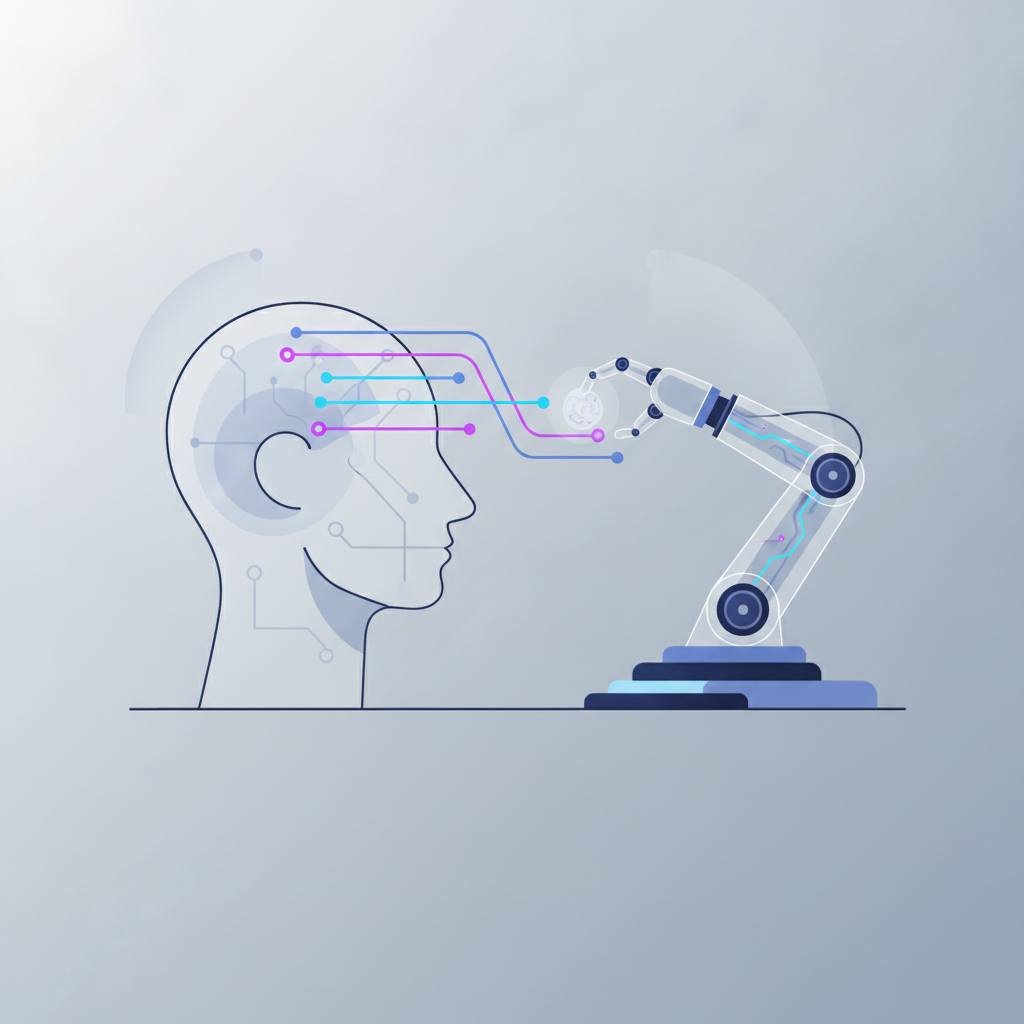
Advanced physical AI models will soon incorporate brain wave readings alongside extensive visual data to learn and perform tasks, marking a new era in AI development.
Get ready for a fascinating leap in AI! Brain waves are set to become a crucial new input for advanced physical AI models. What does this mean for you? It means the smart robots and systems interacting with our physical world are about to get a whole lot smarter and more attuned to understanding us. Up until now, many AI models rely heavily on vast amounts of visual data. Think of all those YouTube videos, for instance. But when it comes to cutting-edge physical AI, simple videos just don't cut it anymore. These advanced models require far more comprehensive information to truly learn and operate effectively.
To train these sophisticated systems, researchers need more than just casual video recordings. They are already using footage captured from multiple camera angles and incredibly detailed annotations that label everything happening within those videos. Imagine meticulously marking every movement and object with extreme precision. The exciting next step, however, is to incorporate brain wave readings into this mix. Why is this necessary? Because physical AI, the type of AI designed to interact with the physical world in a similar way humans do, needs a deeper level of understanding than visuals alone can provide.
While video footage shows 'what' is happening, brain waves could potentially reveal 'why' something is happening, or the underlying intention behind an action. For example, if an AI observes someone picking up a cup, the video shows the action. But brain waves might indicate if the person intends to drink, put it down, or even if they are surprised by something.
This development implies that future robots and intelligent assistants could become much more intuitive and responsive to our needs. They won't just react to what they see; they’ll start to 'understand' the complex intentions and emotions behind our actions. This could lead to smoother, more natural interactions between humans and machines. Imagine an automated helper that doesn't just follow voice commands but can anticipate what you need based on your mental state or focus. This isn't distant science fiction; it’s where frontier physical AI research is heading right now.
Leading AI researchers recognize that simply observing the world isn't enough to create AI that can truly act and reason within the physical realm. Integrating brain wave readings represents a significant jump towards enabling these systems to learn from human experiences in a more profound and comprehensive way. This will make robots much more capable of handling complex tasks that demand precise contextual understanding, not just mimicking movements. It's a clear step towards AI that understands the world closer to how we humans do.
To train these sophisticated systems, researchers need more than just casual video recordings. They are already using footage captured from multiple camera angles and incredibly detailed annotations that label everything happening within those videos. Imagine meticulously marking every movement and object with extreme precision. The exciting next step, however, is to incorporate brain wave readings into this mix. Why is this necessary? Because physical AI, the type of AI designed to interact with the physical world in a similar way humans do, needs a deeper level of understanding than visuals alone can provide.
While video footage shows 'what' is happening, brain waves could potentially reveal 'why' something is happening, or the underlying intention behind an action. For example, if an AI observes someone picking up a cup, the video shows the action. But brain waves might indicate if the person intends to drink, put it down, or even if they are surprised by something.
This development implies that future robots and intelligent assistants could become much more intuitive and responsive to our needs. They won't just react to what they see; they’ll start to 'understand' the complex intentions and emotions behind our actions. This could lead to smoother, more natural interactions between humans and machines. Imagine an automated helper that doesn't just follow voice commands but can anticipate what you need based on your mental state or focus. This isn't distant science fiction; it’s where frontier physical AI research is heading right now.
Leading AI researchers recognize that simply observing the world isn't enough to create AI that can truly act and reason within the physical realm. Integrating brain wave readings represents a significant jump towards enabling these systems to learn from human experiences in a more profound and comprehensive way. This will make robots much more capable of handling complex tasks that demand precise contextual understanding, not just mimicking movements. It's a clear step towards AI that understands the world closer to how we humans do.