Ever struggle with incomplete development tasks at week's end? A new approach suggests a smart way to preserve your work's actual state and carry it smoothly into the next cycle without falsely marking it as done.
Hello tech enthusiasts! Have you ever found yourself at the end of a work week, with your code perfectly ready, but mobile verification tests still unfinished? This is a common dilemma, where the pressure to close out the weekly cycle might push us to mark a task as 'done,' when in reality, it isn't. This can lead to confusion and make incomplete work appear as if it's finished.
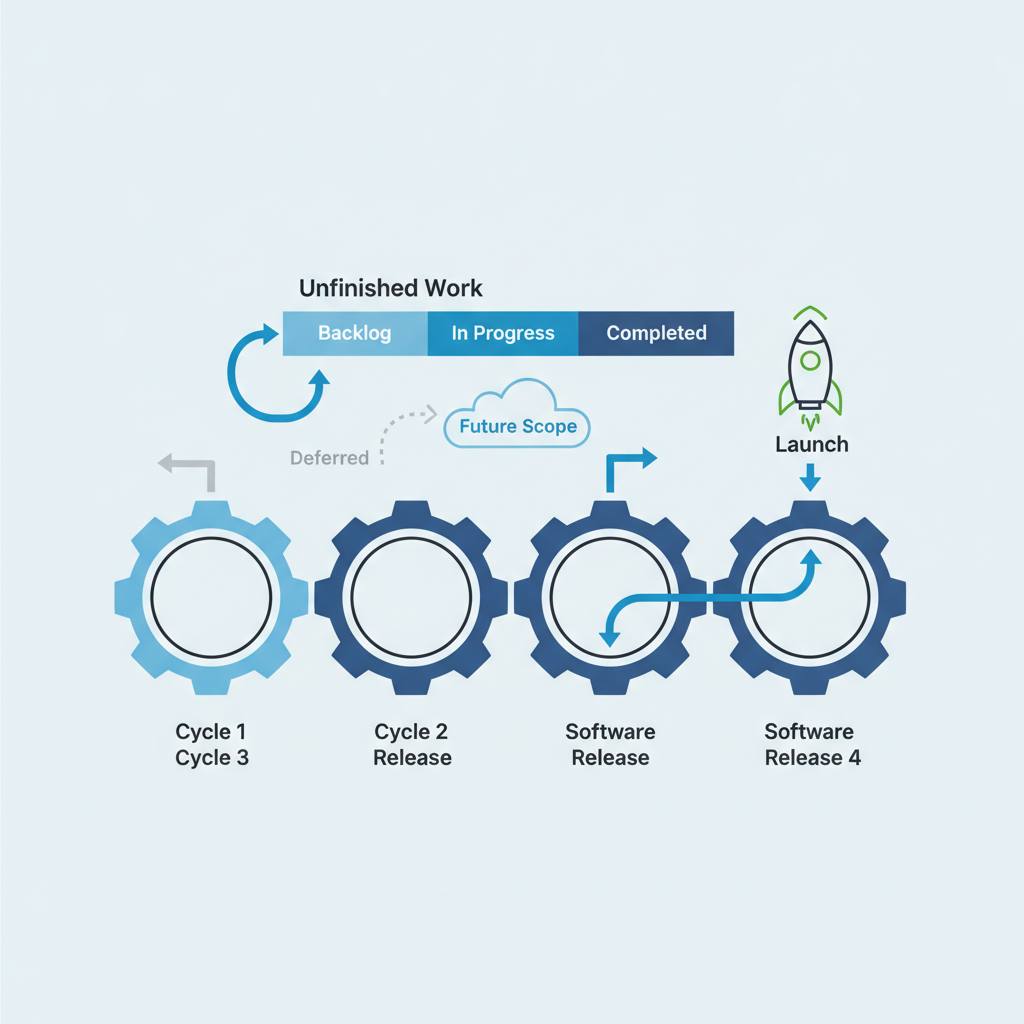
The good news is there's a proposed smart way to handle this situation. Instead of prematurely closing tasks, we can preserve the actual state of a work item and decide what needs to be carried over to the next work cycle. This means the end of a week doesn't necessarily mean everything must be stamped 'complete'; a feature's readiness for distribution is distinct from the end of the week.
Let's look at a real-world example: the 'trial-participant' feature in the SquadNote app. This feature, covering participant permissions, invitation URL compatibility, and more, requires consistent behavior across web, iOS, and Android platforms. When the implementation was ready, mobile verification checks remained unfinished. Documentation showed web checks were complete, and some mobile checks were done, but the final item confirming full mobile verification was still unchecked.
The key idea here is simple: the next cycle doesn't need to re-do the entire implementation. We should preserve the verified version and the results already obtained, then precisely identify what remains unchecked and on which device.
According to 'Plane' system documentation (used for work management), unfinished work items retain their state when a cycle ends and can be transferred to another cycle. While a work item can only belong to one cycle at a time, interestingly, it can belong to multiple 'modules,' such as a feature module and a release module.
So, instead of creating duplicate tasks, the solution is to keep one single work item and relate it to the appropriate time period and required deliverable. This ensures transparency and accountability, preventing any misunderstanding about the true progress status of a project. This proposed approach is built from real acceptance criteria and verification records, helping development teams manage their work more effectively and honestly.