Ensuring your SaaS product delivers generated files reliably after a Stripe payment is crucial, and it's trickier than it seems. This piece explains why thinking of Stripe webhooks as just 'sending a PDF' can lead to issues and how to design a more robust system for order fulfillment.
When a customer pays for a personalized file from your SaaS product, you’d expect a simple process: payment, then delivery. However, ensuring reliable order fulfillment with Stripe webhooks is trickier than it seems, a common challenge for many tech businesses.
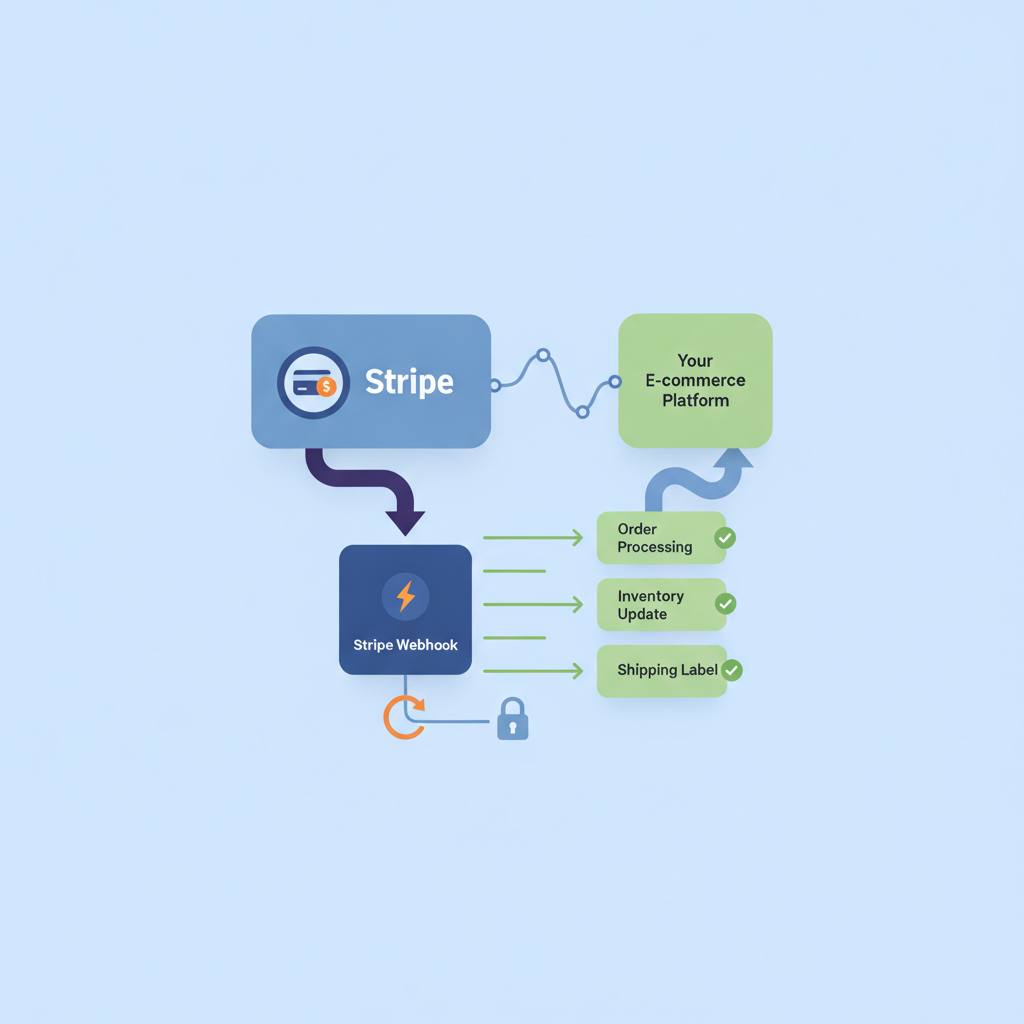
Here's why: A successful payment isn't the same as a successful order. Getting that personalized file to your customer involves many systems — your database, Stripe, a file generator, storage, email, and a download link. Any of these can fail independently.
Initially, it's tempting to set up your Stripe webhook to simply generate the file and send an email upon payment completion. This seems easy, but it relies on dangerous assumptions: that the webhook arrives once, that file generation is instant, and that all systems are always available. These assumptions often break, leading to problems like duplicate emails or lost orders if a system goes down or a customer closes their browser.
The key lesson is to stop thinking of the webhook as just 'the function that sends the file.' Instead, view it as an event that advances a carefully tracked internal process, a 'state machine.'
To build a truly reliable system, store all crucial order information *before* sending your customer to Stripe for payment. This means saving project IDs, chosen plans, and complete document data in your system first. Only after this data is safely persisted should the customer proceed to Stripe. This creates a solid recovery point: even if their browser crashes, your system has everything needed to find the order and ensure fulfillment.
Finally, your webhook endpoint must rigorously verify the incoming Stripe signature. If the signature is missing or invalid, reject the webhook without altering the order state. This prevents bad data and helps pinpoint failures. By adopting this approach, you create a much more resilient system, ensuring customers always receive what they paid for, even amidst minor technical hitches.
Here's why: A successful payment isn't the same as a successful order. Getting that personalized file to your customer involves many systems — your database, Stripe, a file generator, storage, email, and a download link. Any of these can fail independently.
Initially, it's tempting to set up your Stripe webhook to simply generate the file and send an email upon payment completion. This seems easy, but it relies on dangerous assumptions: that the webhook arrives once, that file generation is instant, and that all systems are always available. These assumptions often break, leading to problems like duplicate emails or lost orders if a system goes down or a customer closes their browser.
The key lesson is to stop thinking of the webhook as just 'the function that sends the file.' Instead, view it as an event that advances a carefully tracked internal process, a 'state machine.'
To build a truly reliable system, store all crucial order information *before* sending your customer to Stripe for payment. This means saving project IDs, chosen plans, and complete document data in your system first. Only after this data is safely persisted should the customer proceed to Stripe. This creates a solid recovery point: even if their browser crashes, your system has everything needed to find the order and ensure fulfillment.
Finally, your webhook endpoint must rigorously verify the incoming Stripe signature. If the signature is missing or invalid, reject the webhook without altering the order state. This prevents bad data and helps pinpoint failures. By adopting this approach, you create a much more resilient system, ensuring customers always receive what they paid for, even amidst minor technical hitches.