The tech world is sharpening its focus on precision and reliability. From diverse hardware offerings to rigorous, data-driven AI evaluation, the future demands deeply understood, meticulously tested, and highly tailored technological solutions.
We are witnessing a significant transformation in the tech world today, with a clear shift towards precision, reliability, and carefully tailored solutions. It is no longer enough to simply launch new products; the emphasis is now on their quality, our understanding of how they work, and their ability to meet specific needs.
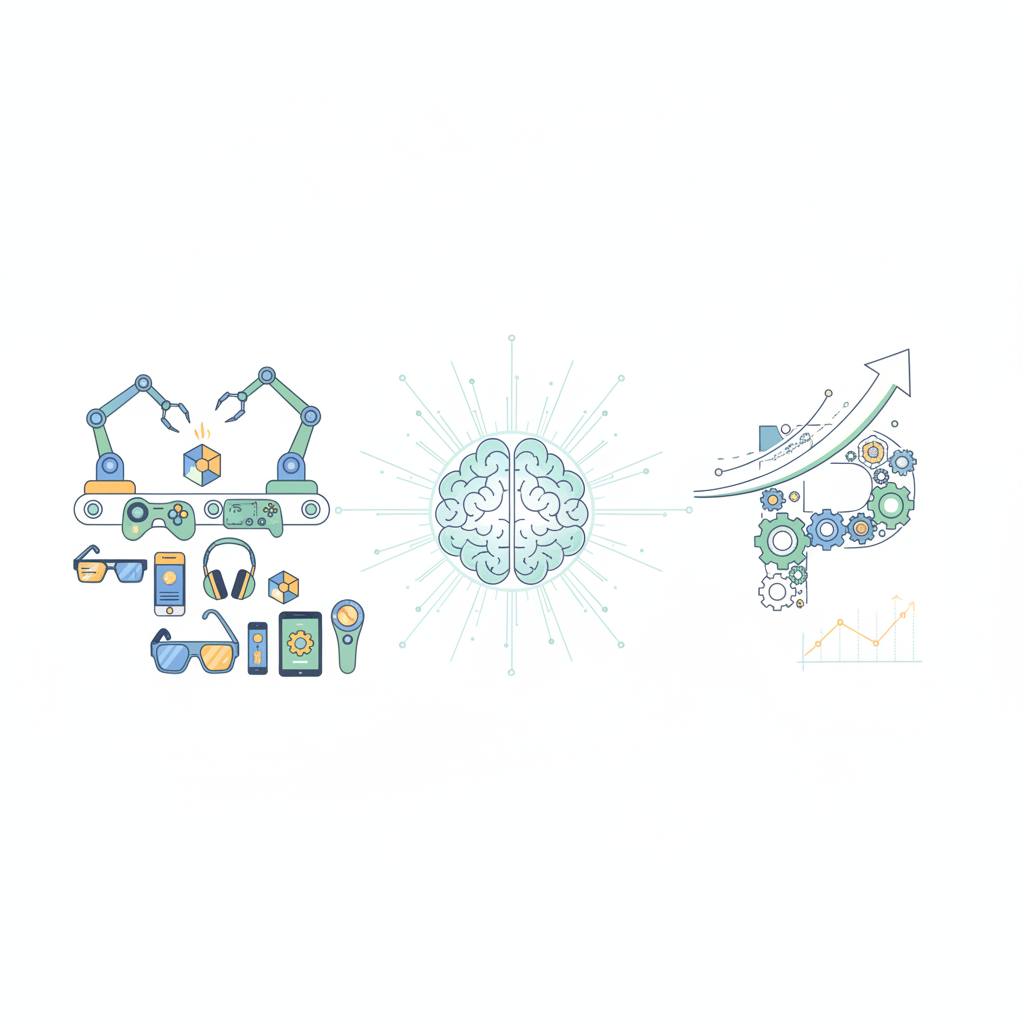
In the realm of hardware, companies are showing new trends towards diversifying their products and customizing them for specific markets. For example, we might see multiple models of flagship devices, such as a phone series with three main variants, with a focus on earlier launches in key regions. This reflects a strategy aiming to capture a broader user base by offering more precise options that align with different market demands, rather than relying on a single 'Ultra' model. This trend suggests a coming period where devices are more intricately designed to suit diverse requirements, potentially with faster release cycles for certain markets.
On the software side, engineers are moving towards a deeper understanding of underlying technologies. It is no longer just about building software; the passion now lies in exploring what happens beneath the surface, how the complete request flow works, and searching for better, more efficient solutions. This deep curiosity drives software engineers to explore new areas like AI architecture and its underlying infrastructure. We expect this trend to intensify, with a greater focus on architectural quality and foundational solutions that support complex applications, especially those relying on artificial intelligence.
When it comes to AI itself, we are seeing a crucial shift from mere 'good vibes' to 'precise metrics.' Building robust evaluation pipelines for large language models (LLMs) has become essential before deploying them in production environments. This means replacing casual, subjective assessments with automated evaluation systems capable of accurately detecting errors or 'hallucinations' before they reach users. This move towards systematic, automated evaluation indicates that future AI will be more reliable and trustworthy, as it will pass through stringent quality filters ensuring its expected performance in the real world.
In summary, the future of technology is heading towards precision in design, depth in engineering understanding, and reliability achieved through rigorous evaluation. These aspects will make tech products and services more responsive, more efficient, and ultimately, more worthy of user trust.
In the realm of hardware, companies are showing new trends towards diversifying their products and customizing them for specific markets. For example, we might see multiple models of flagship devices, such as a phone series with three main variants, with a focus on earlier launches in key regions. This reflects a strategy aiming to capture a broader user base by offering more precise options that align with different market demands, rather than relying on a single 'Ultra' model. This trend suggests a coming period where devices are more intricately designed to suit diverse requirements, potentially with faster release cycles for certain markets.
On the software side, engineers are moving towards a deeper understanding of underlying technologies. It is no longer just about building software; the passion now lies in exploring what happens beneath the surface, how the complete request flow works, and searching for better, more efficient solutions. This deep curiosity drives software engineers to explore new areas like AI architecture and its underlying infrastructure. We expect this trend to intensify, with a greater focus on architectural quality and foundational solutions that support complex applications, especially those relying on artificial intelligence.
When it comes to AI itself, we are seeing a crucial shift from mere 'good vibes' to 'precise metrics.' Building robust evaluation pipelines for large language models (LLMs) has become essential before deploying them in production environments. This means replacing casual, subjective assessments with automated evaluation systems capable of accurately detecting errors or 'hallucinations' before they reach users. This move towards systematic, automated evaluation indicates that future AI will be more reliable and trustworthy, as it will pass through stringent quality filters ensuring its expected performance in the real world.
In summary, the future of technology is heading towards precision in design, depth in engineering understanding, and reliability achieved through rigorous evaluation. These aspects will make tech products and services more responsive, more efficient, and ultimately, more worthy of user trust.