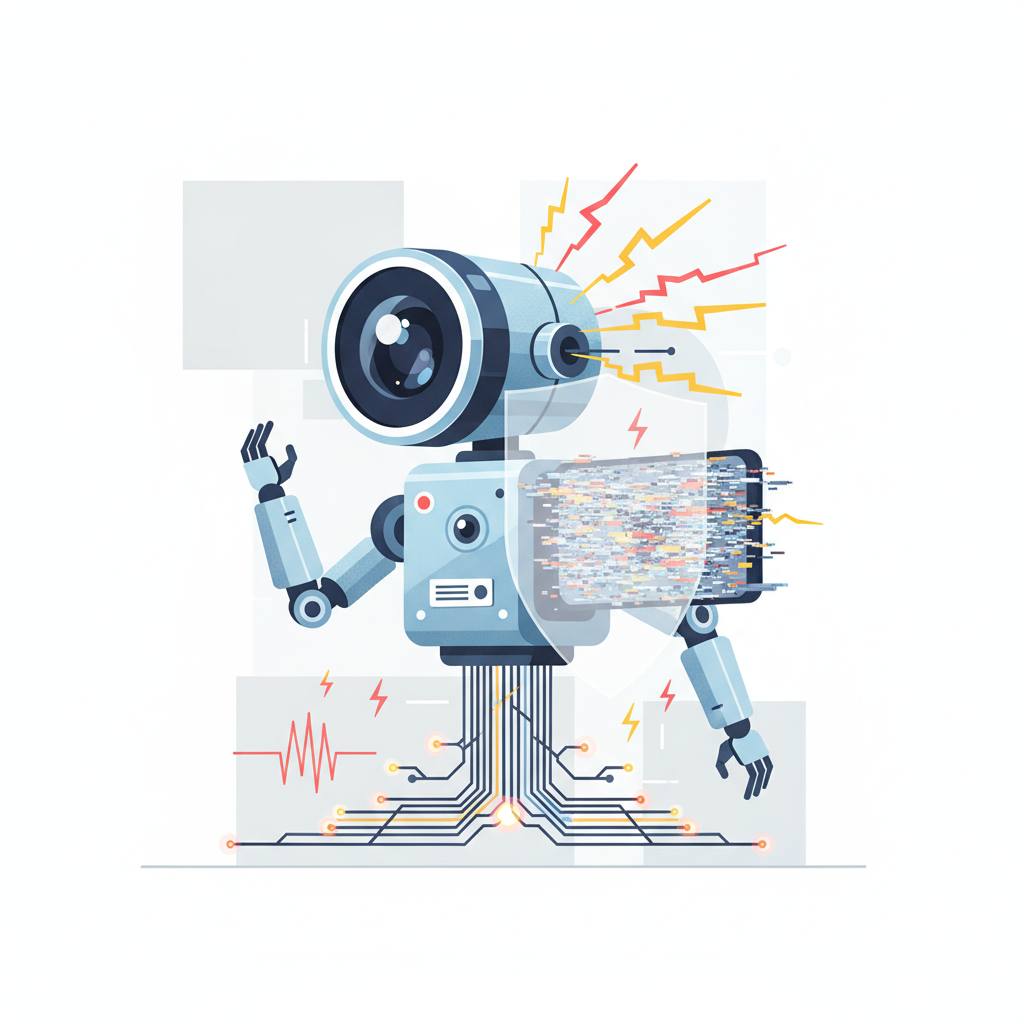
New insights explain why camera interfaces in robots, despite advanced technology like MIPI CSI-2, often suffer from poor image reliability. The problem comes from electrical noise from nearby components like motors and power converters, interfering with high-speed camera signals.
Ever wonder why the camera feed from your advanced robot sometimes looks glitchy or unreliable, even though the connection seems okay? It turns out that even with high-tech camera interfaces like MIPI CSI-2, which are great for fast data with few wires and low power, there's a silent culprit at play: electrical noise.
This is especially important if you're involved in building or using robots, because these cameras often operate right next to things that create a lot of electrical buzz. Think motors, power converters, high-current battery wiring, and wireless gadgets – all common in robots, and all potential sources of trouble.
The MIPI CSI-2 system, a popular way to link camera sensors to a robot's brain, is designed for high speeds, carrying several gigabits of data each second. Because these signals are so fast, they carry a lot of high-frequency energy. This means we can't treat the camera's wiring like simple electrical cables; it needs to be seen as a special high-speed path, much more sensitive to interference.
Noise can cause problems in two ways. Firstly, the fast-changing camera signals themselves can accidentally broadcast energy to other nearby circuits, creating their own interference. Secondly, outside electrical fields from those noisy robot components – like the switching of motors or power supplies – can mess with the camera's delicate data lines. These noisy components often create harmonics, which are higher-frequency disturbances that can travel surprisingly far and really disrupt the camera's high-speed operations.
Camera interfaces use what's called 'differential signaling', which is a clever way to reject noise by sending signals across two wires that are supposed to pick up noise equally. The problem is, this only works perfectly if everything is perfectly symmetrical. Even tiny differences in how the wires are laid out, how connectors are made, or how cables are constructed can throw off this balance. When that happens, part of the clean signal turns into 'common-mode energy', which is exactly the kind of noise that can radiate out and cause images to become unreliable. So, while the interface might *seem* functional, the image quality you get might not be what you expect, all because of invisible electrical interference.
This is especially important if you're involved in building or using robots, because these cameras often operate right next to things that create a lot of electrical buzz. Think motors, power converters, high-current battery wiring, and wireless gadgets – all common in robots, and all potential sources of trouble.
The MIPI CSI-2 system, a popular way to link camera sensors to a robot's brain, is designed for high speeds, carrying several gigabits of data each second. Because these signals are so fast, they carry a lot of high-frequency energy. This means we can't treat the camera's wiring like simple electrical cables; it needs to be seen as a special high-speed path, much more sensitive to interference.
Noise can cause problems in two ways. Firstly, the fast-changing camera signals themselves can accidentally broadcast energy to other nearby circuits, creating their own interference. Secondly, outside electrical fields from those noisy robot components – like the switching of motors or power supplies – can mess with the camera's delicate data lines. These noisy components often create harmonics, which are higher-frequency disturbances that can travel surprisingly far and really disrupt the camera's high-speed operations.
Camera interfaces use what's called 'differential signaling', which is a clever way to reject noise by sending signals across two wires that are supposed to pick up noise equally. The problem is, this only works perfectly if everything is perfectly symmetrical. Even tiny differences in how the wires are laid out, how connectors are made, or how cables are constructed can throw off this balance. When that happens, part of the clean signal turns into 'common-mode energy', which is exactly the kind of noise that can radiate out and cause images to become unreliable. So, while the interface might *seem* functional, the image quality you get might not be what you expect, all because of invisible electrical interference.