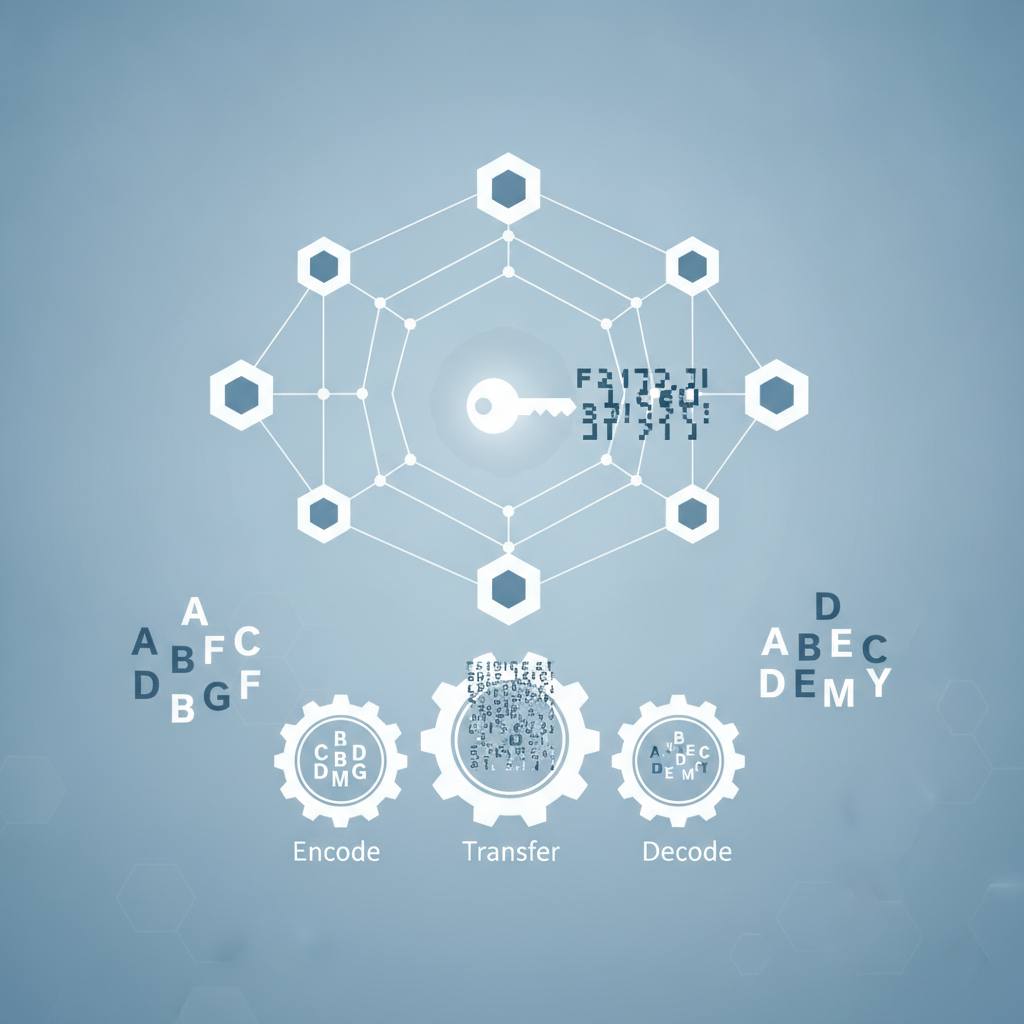
Base64 is a common method for encoding various data types into a plain text format, making it safe for transmission across different systems like email or web URLs. It's crucial to remember that Base64 is for formatting, not for hiding information or ensuring security.
Have you ever wondered how websites can embed tiny images directly into their code, or how emails safely send attachments without breaking? Today's news about Base64 encoding tools gives us a great opportunity to explore this handy digital helper!
Imagine you want to send a delicate glass sculpture across the country. You wouldn't just toss it in a regular cardboard box, would you? You'd carefully pack it in a custom-fitted, sturdy container, making sure it can travel safely through various handling systems without damage.
In the digital world, Base64 does something similar for data. Our computers speak in binary (zeros and ones), which can represent all sorts of information, from simple text to complex images. But certain systems, like older email programs or parts of web addresses (URLs), are designed to handle only a limited set of 'safe' characters – usually just plain letters, numbers, and a few symbols. If you try to send raw binary data through these systems, it might get corrupted, misinterpreted, or simply break the system.
That's where Base64 comes in. It's a method to convert *any* kind of binary data (like an image, an emoji, or text with special characters) into a format that uses *only* those basic, 'safe' English letters, numbers, and two specific symbols (+ and /). Think of it as putting your delicate digital data into that sturdy, custom-fitted container. This makes it safe to transmit through almost any text-based system without fear of corruption.
So, when you see a long string of seemingly random letters and numbers in a web address or email, it might just be Base64-encoded data! Common uses include embedding small images directly into web pages (data URIs), ensuring email content doesn't get messed up, and sending data to APIs that only accept text.
However, and this is super important, Base64 is *not* encryption. It doesn't hide your data; it just repackages it. Anyone can easily 'unpack' or decode Base64-encoded data back to its original form. The news hook correctly warns us: 'Do not use it to hide passwords or keys.' If you need to secure information, you need real encryption. Base64 is a fantastic tool for safe data *transport*, but never for data *security*. It's like putting a label on your carefully packed glass sculpture – everyone can see what's inside if they unpack it.