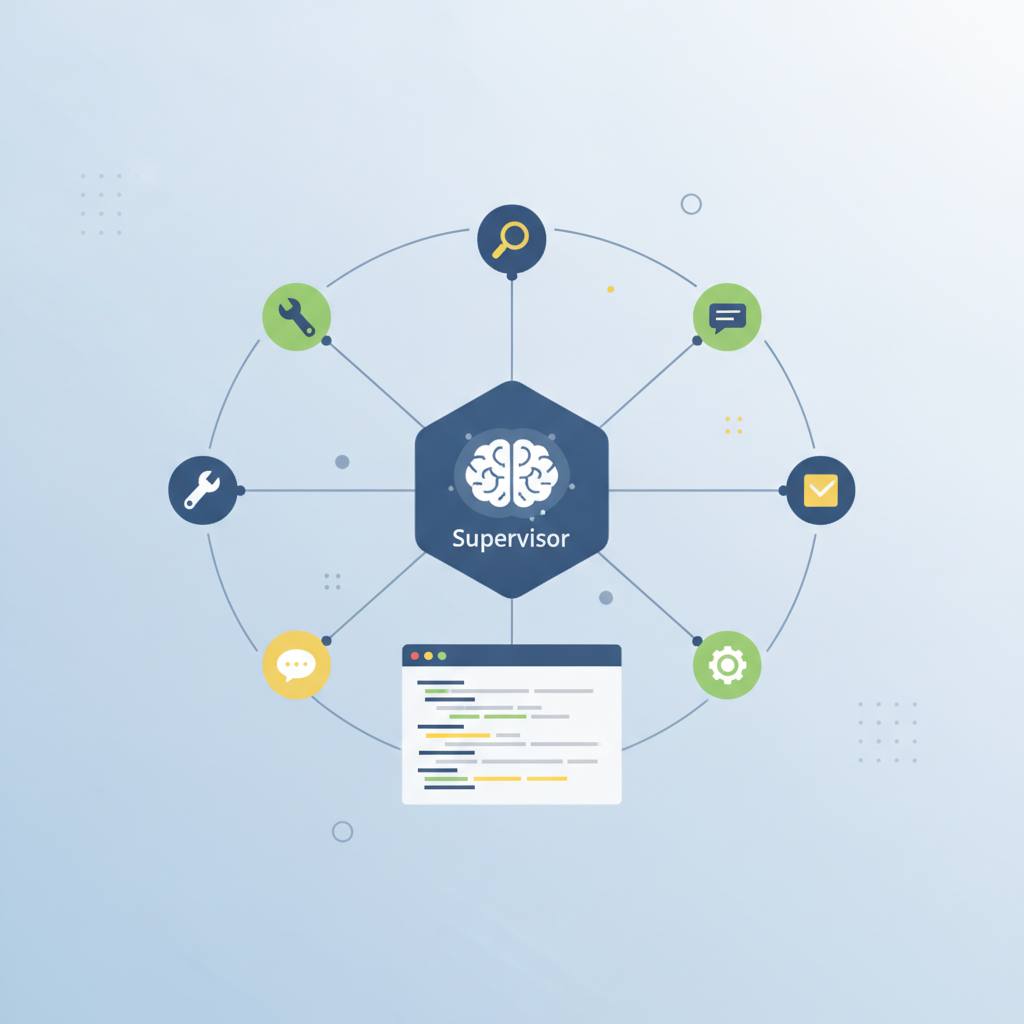
A new article reveals a practical method for building a true multi-agent AI supervisor in Python, enabling complex tasks to be intelligently routed to specialized agents for better, more accurate responses. This approach overcomes the limitations of single-agent systems masquerading as multi-agent.
Tired of AI systems claiming to be "multi-agent" but actually just being one smart agent trying to do everything? Well, we have exciting news! A fresh article shares a practical approach to building a real multi-agent AI supervisor using Python. What this means for you is access to more effective and accurate AI systems that can intelligently route your requests instead of trying to answer everything themselves, leading to a much better experience and saving you from frustrating, inaccurate responses.
The author points out that most "multi-agent" demos aren't truly multi-agent. They're just a single agent with a longer prompt. This approach often leads to poorer answers, especially when different types of tasks require distinct instructions, tools, or permissions – like billing questions versus technical support issues. A real supervisor, as explained in the article, does something simpler and more useful: it decides who should handle a specific request, passes the correct context to that specialized agent, and knows when to stop. This method ensures each task is handled by the most appropriate agent.
The article advises splitting work only when two jobs truly need different instructions, different tools, or different permissions. For example, a billing question and a product bug are good illustrations; the former needs financial knowledge, the latter technical. Trying to combine them in one prompt makes both answers worse. The system comprises three main parts: a «router» that picks the best specialist, the «specialists» themselves (like a billing agent and a tech support agent), and a «loop» that limits how many handoffs can occur to prevent endless transfers. Specialists communicate with the supervisor using a simple protocol: if a specialist realizes the request isn't its job, it replies with "HANDOFF:" followed by a line explaining what's needed. The supervisor reads this and re-routes the task.
This design reduces complexity and improves accuracy, though the author cautions that every extra agent adds latency, cost, and potential points of failure. Therefore, this technique should be used judiciously and only when true specialization is required. It's a significant step towards smarter, more efficient AI systems.