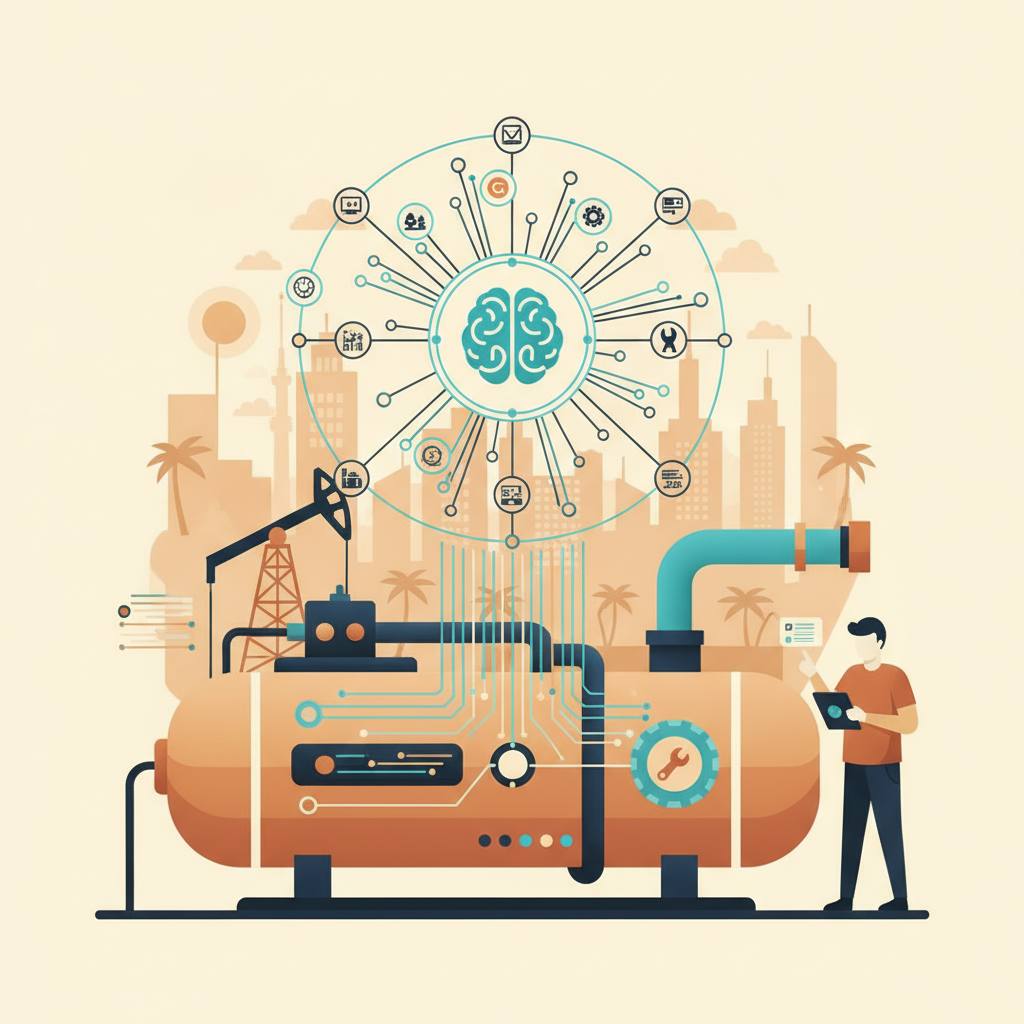
A new self-improving AI system is automatically learning and enhancing maintenance decisions for a gas compressor fleet in Saudi Arabia. This promises more efficient and reliable upkeep for critical energy infrastructure.
A new AI system is making a significant difference in how a gas compressor fleet is maintained in Saudi Arabia. What does this mean for you? Simply put, it ensures the gas plants our country relies on for energy production are more stable and efficient, reducing waste and increasing reliability.
This new system isn't just regular software; it's smart and learns on its own. Every time a work order or maintenance task closes, the system records what was predicted and what was actually found. This real-world information is then used to improve its future decisions, rather than just 'retraining' its data. Imagine this: instead of engineers having to relearn the same things repeatedly for each compressor, this system gathers that experience and automatically applies it across the entire fleet.
Previously, reliability engineers relied on manually reading historical logs, vibration data, oil results, and old inspection reports to make maintenance decisions. When an inspection was done, information about what was found—whether better or worse than expected—often didn't flow back into the system to inform future decisions. This meant that the knowledge of the best engineers often stayed in their heads, and the fleet experienced both unnecessary inspections and surprise breakdowns.
An unplanned shutdown of a compressor can cut plant throughput and lead to gas flaring, while an unnecessary inspection takes a compressor offline for days. With limited refurbishment capacity, every scheduled overhaul slot is crucial. But with this AI, maintenance decisions can be made based on real, continuously improving data, reducing these problems.
A case study from a similar operator showed that moving from fixed maintenance intervals to an 'extend and inspect' approach – inspecting based on actual need using data like exhaust temperature, compressor discharge, and bearing temperature – extended inspection intervals by 20 to 34 percent. This means machines run longer without needing unnecessary downtime, saving significant time and money and making our energy operations more efficient and safer.