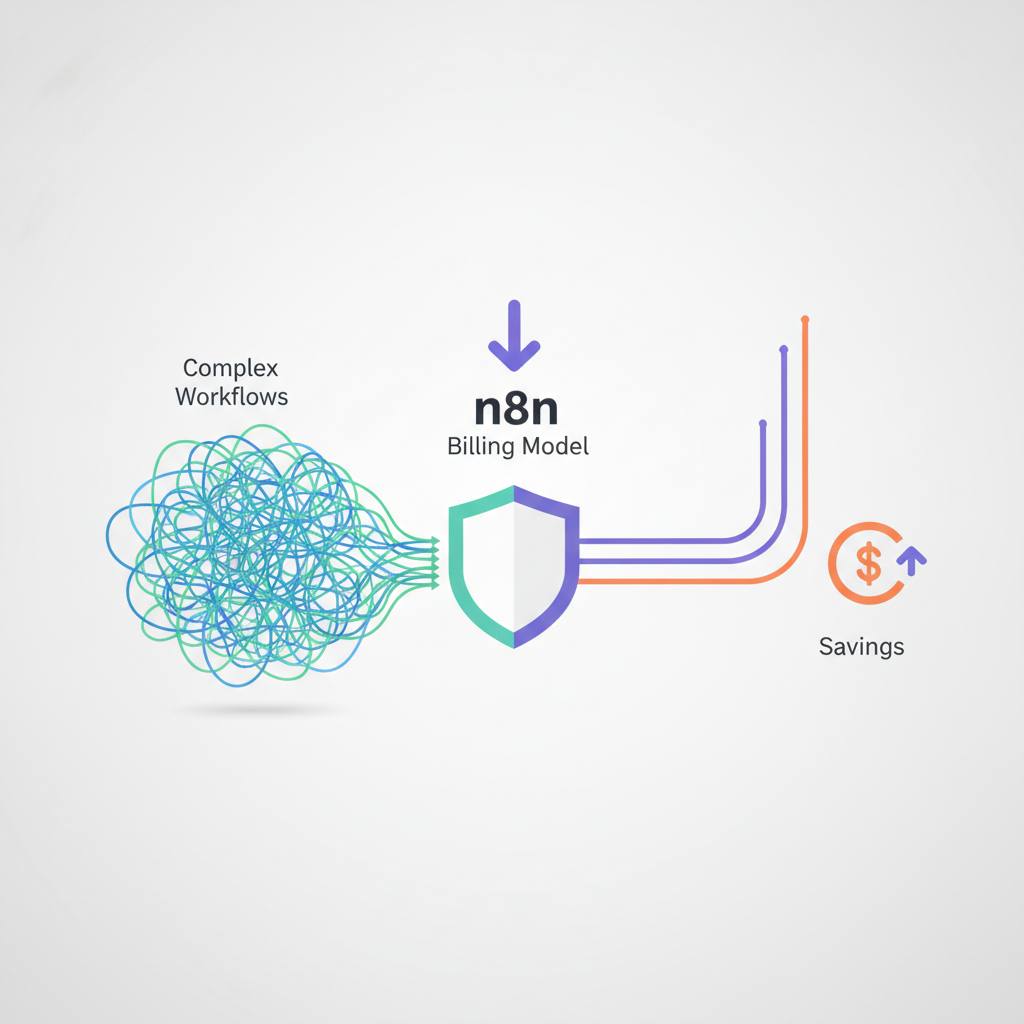
A recent deep dive into workflow automation pricing reveals a crucial difference between tools like n8n and Zapier: their billing units. This often overlooked detail, whether billing by 'execution' or 'task,' can lead to vastly different costs, especially for complex, multi-step automated pipelines.
Have you ever wondered why some automation tools seem cheaper than others, even with similar features? Well, a recent analysis highlights that the real difference-maker isn't usually the bells and whistles, but something much more basic: how they bill you. This is huge for anyone using or planning to use workflow automation, because it directly impacts your wallet.
Most automation tools, like Zapier and Make, charge you 'per task' or 'per operation.' This means every single step your automated workflow takes, no matter how small, counts as a separate billable item. Think of it like paying for each ingredient in a recipe. On the other hand, tools like n8n bill you 'per execution.' With n8n, one full run of an entire workflow, even if it has hundreds of steps, counts as just one billable event. This is like paying a single price for the whole cooked meal.
One tech blogger, who manages a sophisticated content pipeline with 209 nodes using self-hosted n8n, decided to model the cost difference. He found that a workflow with 27 steps, which costs him '1 execution' on n8n, would easily translate to around '27 tasks' on a per-task billing platform. Imagine that across dozens of workflows running frequently! A simple sequence of actions – like receiving data, fetching from a database, making an LLM call, parsing, and writing back – becomes a stack of individual charges on a per-task model.
What this means for you is simple: if your automation needs involve long, multi-step workflows, a 'per-execution' model can save you a significant amount of money. While 'per-task' tools might seem easier to get started with due to their hosted nature, the hidden cost of those individual steps can quickly add up, turning convenience into an unexpected expense. So, next time you're evaluating an automation solution, look past the feature list and focus on the billing unit – it could be the biggest factor in your long-term costs.
Most automation tools, like Zapier and Make, charge you 'per task' or 'per operation.' This means every single step your automated workflow takes, no matter how small, counts as a separate billable item. Think of it like paying for each ingredient in a recipe. On the other hand, tools like n8n bill you 'per execution.' With n8n, one full run of an entire workflow, even if it has hundreds of steps, counts as just one billable event. This is like paying a single price for the whole cooked meal.
One tech blogger, who manages a sophisticated content pipeline with 209 nodes using self-hosted n8n, decided to model the cost difference. He found that a workflow with 27 steps, which costs him '1 execution' on n8n, would easily translate to around '27 tasks' on a per-task billing platform. Imagine that across dozens of workflows running frequently! A simple sequence of actions – like receiving data, fetching from a database, making an LLM call, parsing, and writing back – becomes a stack of individual charges on a per-task model.
What this means for you is simple: if your automation needs involve long, multi-step workflows, a 'per-execution' model can save you a significant amount of money. While 'per-task' tools might seem easier to get started with due to their hosted nature, the hidden cost of those individual steps can quickly add up, turning convenience into an unexpected expense. So, next time you're evaluating an automation solution, look past the feature list and focus on the billing unit – it could be the biggest factor in your long-term costs.