Today's tech news points to a future where technology evolves to be intensely personal and capable, with AI assistants custom-built for individual needs and browsers pushing beyond their traditional limits.
Today, we see developers building tech tools to help friends and colleagues solve real daily problems. These aren't just isolated individual projects; they are glimpses into larger trends that will shape the future of technology. At WondTech, we anticipate a future where digital tools are intensely personalized and increasingly powerful, from web browsers to intelligent assistants.
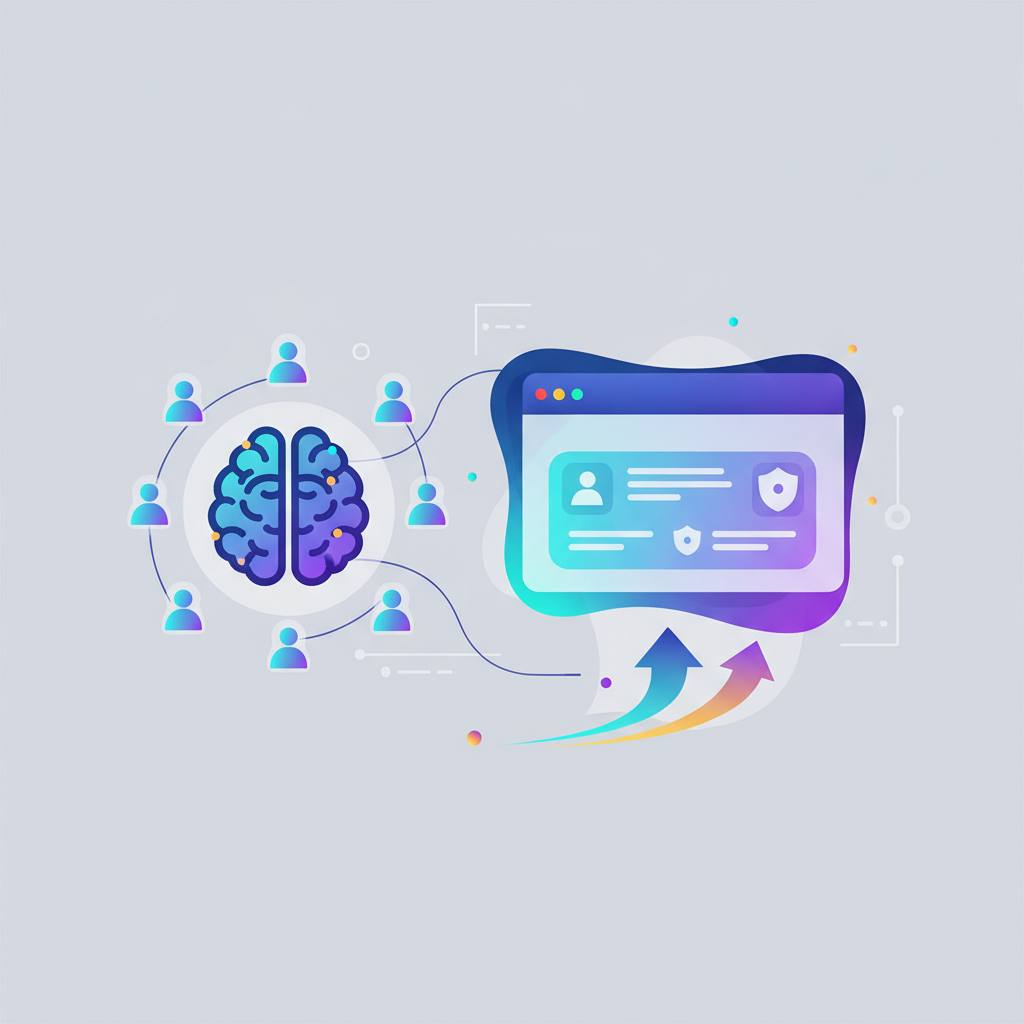
Stories like 'Ask Iche' illustrate how individuals are creating 'mini-me' digital versions of themselves to assist colleagues with recurring technical challenges, such as 'git' issues. This isn't just a temporary fix; it represents the next wave of AI assistance. We expect these hyper-specialized personal AI helpers to become integral to our work environments. They will act as dedicated 'expert twins' available 24/7, reducing mundane tasks and freeing professionals to focus on creativity and more complex assignments. We won't need to interrupt our colleagues for answers to repetitive problems; the expert's intelligent 'clone' will always be ready to assist.
In another context, the experience of fine-tuning a 'Qwen3.5-4B' model to assist a friend with ADHD demonstrates AI's potential for deeply personalized cognitive support. We are moving towards AI that transcends generic assistants to become a true 'cognitive companion' that adapts to individual thinking patterns. Whether someone struggles with focus, difficulty organizing thoughts, or needs help maintaining concentration, AI will be capable of translating 'messy brain-dumps' into clear, structured tasks. This means an invisible layer of technological assistance that moulds itself to how each person's brain works, ensuring ideas and tasks don't get lost in the shuffle of the day.
Finally, the problem encountered by the browser video compressor with a large AVI file highlights both the current limits and the vast potential of browser-based tools. This leads us to predict that browsers will continue to evolve into far more powerful computing platforms. Thanks to emerging technologies like WebAssembly and advanced web APIs, browsers will be capable of processing complex tasks that previously required robust servers. This means the applications we use daily on the web will be faster, more efficient, and capable of handling larger file types and intricate processes directly on the user's device. The web experience will become more seamless and capable, with less likelihood of 'choking' on substantial tasks.
In conclusion, these trends point to an exciting future where technology is not just a collection of tools, but an extension of ourselves, custom-designed to meet our unique individual needs, and operating seamlessly within the digital environments we use daily. It's a future being built by developers solving real problems, one ingenious solution at a time.
Stories like 'Ask Iche' illustrate how individuals are creating 'mini-me' digital versions of themselves to assist colleagues with recurring technical challenges, such as 'git' issues. This isn't just a temporary fix; it represents the next wave of AI assistance. We expect these hyper-specialized personal AI helpers to become integral to our work environments. They will act as dedicated 'expert twins' available 24/7, reducing mundane tasks and freeing professionals to focus on creativity and more complex assignments. We won't need to interrupt our colleagues for answers to repetitive problems; the expert's intelligent 'clone' will always be ready to assist.
In another context, the experience of fine-tuning a 'Qwen3.5-4B' model to assist a friend with ADHD demonstrates AI's potential for deeply personalized cognitive support. We are moving towards AI that transcends generic assistants to become a true 'cognitive companion' that adapts to individual thinking patterns. Whether someone struggles with focus, difficulty organizing thoughts, or needs help maintaining concentration, AI will be capable of translating 'messy brain-dumps' into clear, structured tasks. This means an invisible layer of technological assistance that moulds itself to how each person's brain works, ensuring ideas and tasks don't get lost in the shuffle of the day.
Finally, the problem encountered by the browser video compressor with a large AVI file highlights both the current limits and the vast potential of browser-based tools. This leads us to predict that browsers will continue to evolve into far more powerful computing platforms. Thanks to emerging technologies like WebAssembly and advanced web APIs, browsers will be capable of processing complex tasks that previously required robust servers. This means the applications we use daily on the web will be faster, more efficient, and capable of handling larger file types and intricate processes directly on the user's device. The web experience will become more seamless and capable, with less likelihood of 'choking' on substantial tasks.
In conclusion, these trends point to an exciting future where technology is not just a collection of tools, but an extension of ourselves, custom-designed to meet our unique individual needs, and operating seamlessly within the digital environments we use daily. It's a future being built by developers solving real problems, one ingenious solution at a time.