Imagine AI programs not just working alone, but as a team, each with a special job. This post explores how these digital teams, like the FORGE system, can solve complex problems by sharing tasks and information.
Have you ever tackled a big project, like writing a detailed report or planning a complex event? Usually, you don't do everything alone. You might have one person research, another write, and someone else proofread. This is exactly the brilliant idea behind a new system called FORGE, mentioned in today's news!
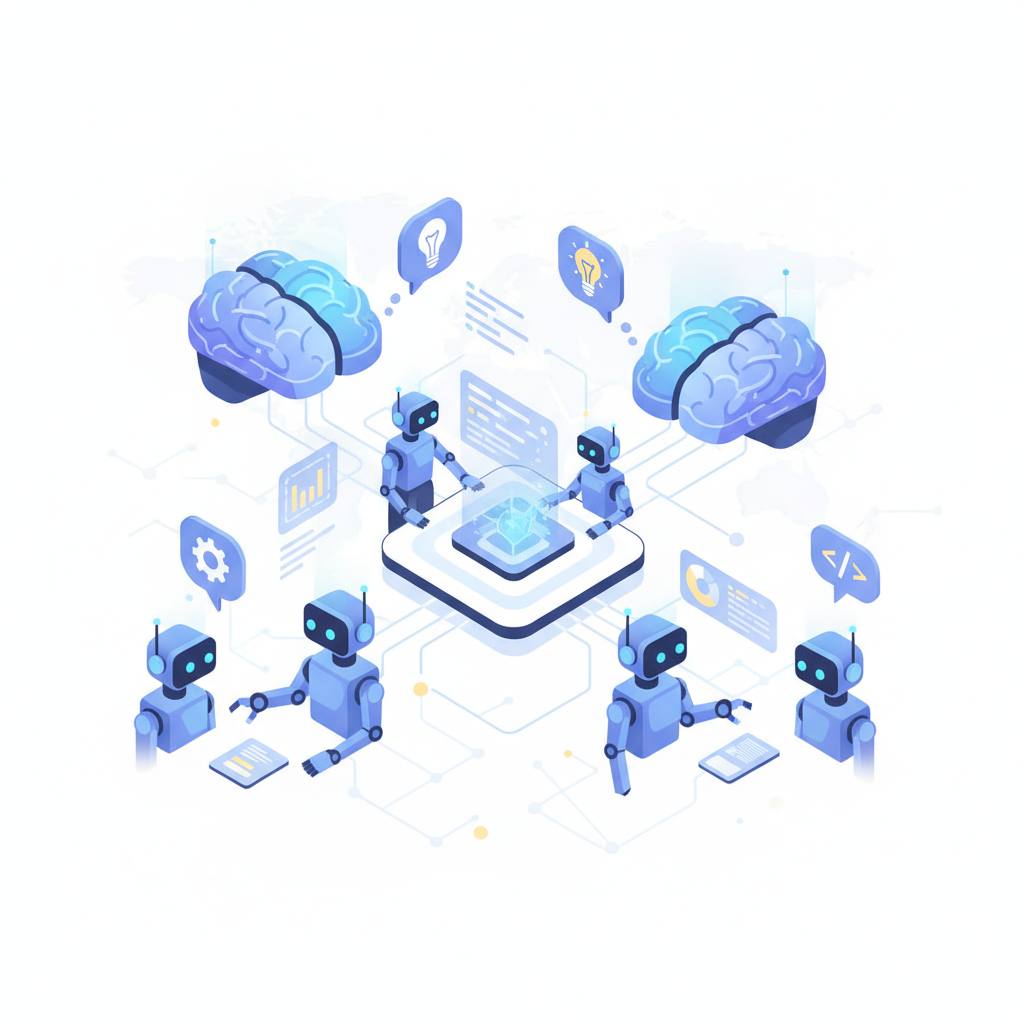
FORGE wanted to create a team of AI programs that work together just like people do. Instead of one massive AI trying to do everything, it breaks down the job into smaller, specialized roles. Imagine a planner AI, a web-searching AI, a writing AI, and even a checking AI. Each one focuses on its specific task, then passes its work to the next agent in the 'team'. This concept is called a 'multi-agent system' – it’s simply several intelligent programs collaborating to achieve a larger goal.
Think of it like a relay race. Each runner (AI agent) has a specific segment to run. They specialize in that part, and then skillfully hand off the baton (information or results) to the next runner. This makes the whole process much more efficient and allows for tackling far more complicated tasks than a single runner could manage alone.
What’s really clever about systems like FORGE, as the news highlights, is the way they're built to be transparent. Every action, every piece of information passed, every 'thought' an agent has, is logged as an event. This is like having a detailed diary of the entire team's work. It lets the developers (and you, if you're watching) see exactly which agent is doing what, when, and how. This 'event log' is crucial for understanding how the system is performing, spotting problems, and improving it. It even allowed FORGE’s creators to build a full dashboard with fake agents first, making sure the 'interface' worked perfectly before the 'real' AI agents were plugged in.
So, when you hear about AI, don't just think of one super-smart program. Picture a symphony orchestra, where each instrument (AI agent) plays its part beautifully, guided by a conductor (the system's workflow), to create something truly impressive. This collaborative approach is making AI much more powerful and capable of solving real-world challenges.
FORGE wanted to create a team of AI programs that work together just like people do. Instead of one massive AI trying to do everything, it breaks down the job into smaller, specialized roles. Imagine a planner AI, a web-searching AI, a writing AI, and even a checking AI. Each one focuses on its specific task, then passes its work to the next agent in the 'team'. This concept is called a 'multi-agent system' – it’s simply several intelligent programs collaborating to achieve a larger goal.
Think of it like a relay race. Each runner (AI agent) has a specific segment to run. They specialize in that part, and then skillfully hand off the baton (information or results) to the next runner. This makes the whole process much more efficient and allows for tackling far more complicated tasks than a single runner could manage alone.
What’s really clever about systems like FORGE, as the news highlights, is the way they're built to be transparent. Every action, every piece of information passed, every 'thought' an agent has, is logged as an event. This is like having a detailed diary of the entire team's work. It lets the developers (and you, if you're watching) see exactly which agent is doing what, when, and how. This 'event log' is crucial for understanding how the system is performing, spotting problems, and improving it. It even allowed FORGE’s creators to build a full dashboard with fake agents first, making sure the 'interface' worked perfectly before the 'real' AI agents were plugged in.
So, when you hear about AI, don't just think of one super-smart program. Picture a symphony orchestra, where each instrument (AI agent) plays its part beautifully, guided by a conductor (the system's workflow), to create something truly impressive. This collaborative approach is making AI much more powerful and capable of solving real-world challenges.