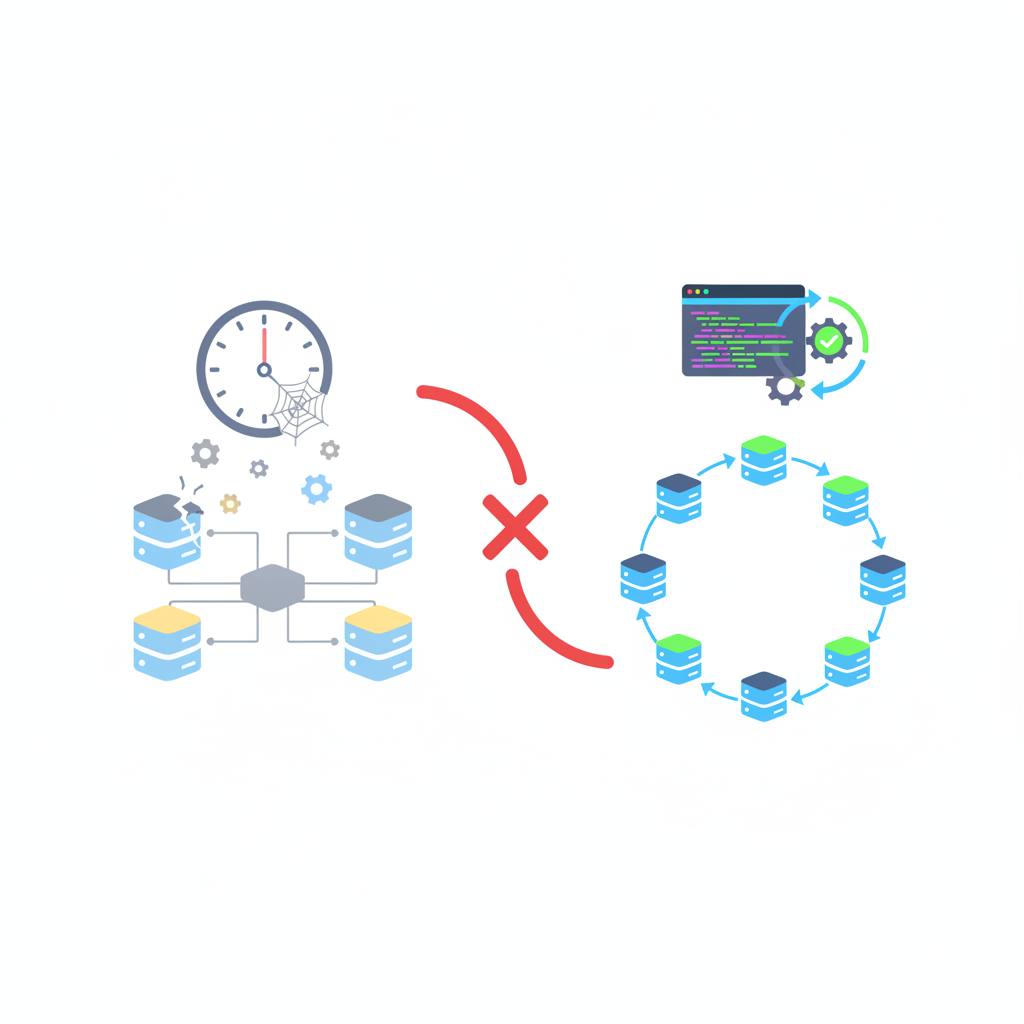
Is your AI agent budget disappearing too fast? It turns out the real cost issue isn't always the expensive AI models themselves, but rather the unmeasured steps defaulting to them unnecessarily.
Are you constantly surprised by high AI agent bills? Well, good news: the problem might not be the AI models themselves, but rather the unmeasured steps your agents are taking. You might think the biggest, most expensive model is the sole culprit draining your budget, but that's not always the right diagnosis.
Often, when people see their budget vanish quickly due to AI agents, their first instinct is to blame the expensive 'frontier models.' They immediately suggest switching to a smaller, cheaper model. But what experts have found is that the costly model itself isn't the problem. Instead, the real issue is that every single step an agent takes — whether it's a trivial classification, a text summary, or even a complex reasoning task — often defaults silently to the most expensive model. Even worse, nobody can see which step is actually responsible for this consumption.
When it comes to AI agents, cost isn't just one line item on a bill. It's more like a complex tree, where each branch (step) calls a model, perhaps a tool, maybe a retry, or even a sub-step that calls other models again. The final bill is the sum of costs across this entire tree. If you only ever see the total, you're trying to optimize cost blindly. When you're told to 'make it cheaper' with only a total in front of you, you'll often guess, and the usual guess is 'use a smaller model everywhere.' This throws away quality on steps that genuinely needed the more powerful model, while leaving the real waste untouched.
Most agent frameworks allow you to set 'the model' just once, at the very top. This means a routing decision that should be made per-step becomes a single, global choice. So, a simple classification step that a small model could handle perfectly well ends up using an expensive model. Summarizing text that the agent just produced? Also using the priciest model. Even the one genuinely hard reasoning call that truly needs the powerful model gets lost in this noise.
The waste here isn't that frontier models are pricey. It's that approximately 80% of those calls never needed them in the first place. And without per-step cost attribution, you can't even prove which 80% we're talking about. You're paying a premium on steps whose output quality wouldn't have changed with a cheaper model. There's no clever trick to solve this. All you need to do is log data for every call: step ID, tool, model used, input/output tokens, latency, and retry count. Once that data exists, you can truly see where your money is going.
Often, when people see their budget vanish quickly due to AI agents, their first instinct is to blame the expensive 'frontier models.' They immediately suggest switching to a smaller, cheaper model. But what experts have found is that the costly model itself isn't the problem. Instead, the real issue is that every single step an agent takes — whether it's a trivial classification, a text summary, or even a complex reasoning task — often defaults silently to the most expensive model. Even worse, nobody can see which step is actually responsible for this consumption.
When it comes to AI agents, cost isn't just one line item on a bill. It's more like a complex tree, where each branch (step) calls a model, perhaps a tool, maybe a retry, or even a sub-step that calls other models again. The final bill is the sum of costs across this entire tree. If you only ever see the total, you're trying to optimize cost blindly. When you're told to 'make it cheaper' with only a total in front of you, you'll often guess, and the usual guess is 'use a smaller model everywhere.' This throws away quality on steps that genuinely needed the more powerful model, while leaving the real waste untouched.
Most agent frameworks allow you to set 'the model' just once, at the very top. This means a routing decision that should be made per-step becomes a single, global choice. So, a simple classification step that a small model could handle perfectly well ends up using an expensive model. Summarizing text that the agent just produced? Also using the priciest model. Even the one genuinely hard reasoning call that truly needs the powerful model gets lost in this noise.
The waste here isn't that frontier models are pricey. It's that approximately 80% of those calls never needed them in the first place. And without per-step cost attribution, you can't even prove which 80% we're talking about. You're paying a premium on steps whose output quality wouldn't have changed with a cheaper model. There's no clever trick to solve this. All you need to do is log data for every call: step ID, tool, model used, input/output tokens, latency, and retry count. Once that data exists, you can truly see where your money is going.