Many developers struggle when AI models generate incorrect information due to a lack of context. Harness Engineering offers a solution by creating controlled environments for AI, ensuring they have the right information and tools to be truly effective.
Ever asked an AI model for help with a bug, only to get an answer based on information that doesn't even exist in your systems? It's frustrating, and it's a common issue when AI lacks the necessary context. This problem highlights why 'Harness Engineering' is becoming essential for anyone working with AI models.
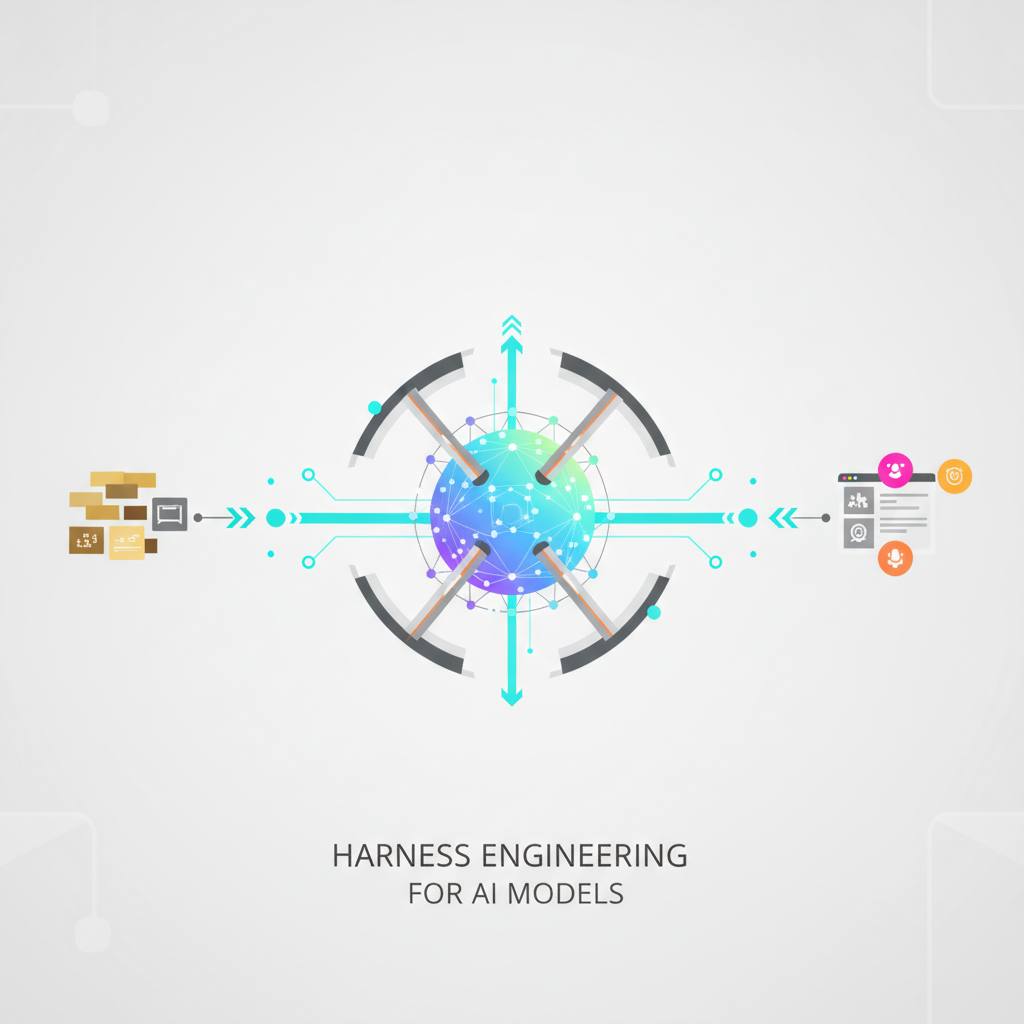
So, what exactly is Harness Engineering? It's about building the environment that guides how AI models operate. Think of it as creating a custom playground for your AI, dictating which tools it can use, what information it receives, and how it accesses resources. It's not about choosing the “best” AI model; it's about setting up the 'right environment' so your chosen model can perform reliably and accurately within your specific domain. This approach prevents those “hallucinations” and wasted time, ensuring the AI is genuinely helpful.
Many developers are already doing basic Harness Engineering without even realizing it. If you're setting up rules for how your AI agent behaves, connecting it to external systems like Jira or your database, or allowing it to read your project's code for context, you're on the right track. Tools like Cursor, Kiro, or Claude Code often provide this foundational level, acting as a 'harness' themselves.
However, the field has evolved beyond these basics. A 'mature' Harness Engineering approach brings in sophisticated governance. This means implementing granular permissions – for instance, your AI can run tests but 'cannot' delete files, or it can read your database but 'cannot' make changes. It also involves building 'human-in-the-loop' safeguards, where sensitive actions 'always' require human confirmation, not just when the AI decides to ask. Crucially, mature harnesses include detailed observability, logging every tool call, providing an audit trail, and tracking costs. This allows you to reconstruct precisely what the AI did and how much it cost, moving from simply 'trusting' your AI to being able to 'audit' its actions.
Ultimately, understanding Harness Engineering means recognizing that a powerful AI model alone isn't enough. The real power comes from how you integrate it into a controlled, context-rich environment. It's the difference between hoping your AI gets it right and ensuring it has everything it needs to succeed.
So, what exactly is Harness Engineering? It's about building the environment that guides how AI models operate. Think of it as creating a custom playground for your AI, dictating which tools it can use, what information it receives, and how it accesses resources. It's not about choosing the “best” AI model; it's about setting up the 'right environment' so your chosen model can perform reliably and accurately within your specific domain. This approach prevents those “hallucinations” and wasted time, ensuring the AI is genuinely helpful.
Many developers are already doing basic Harness Engineering without even realizing it. If you're setting up rules for how your AI agent behaves, connecting it to external systems like Jira or your database, or allowing it to read your project's code for context, you're on the right track. Tools like Cursor, Kiro, or Claude Code often provide this foundational level, acting as a 'harness' themselves.
However, the field has evolved beyond these basics. A 'mature' Harness Engineering approach brings in sophisticated governance. This means implementing granular permissions – for instance, your AI can run tests but 'cannot' delete files, or it can read your database but 'cannot' make changes. It also involves building 'human-in-the-loop' safeguards, where sensitive actions 'always' require human confirmation, not just when the AI decides to ask. Crucially, mature harnesses include detailed observability, logging every tool call, providing an audit trail, and tracking costs. This allows you to reconstruct precisely what the AI did and how much it cost, moving from simply 'trusting' your AI to being able to 'audit' its actions.
Ultimately, understanding Harness Engineering means recognizing that a powerful AI model alone isn't enough. The real power comes from how you integrate it into a controlled, context-rich environment. It's the difference between hoping your AI gets it right and ensuring it has everything it needs to succeed.