Most webhook tools only confirm delivery attempts, but as webhooks become vital for critical systems, this isn't enough to prove what actually happened or satisfy strict compliance needs.
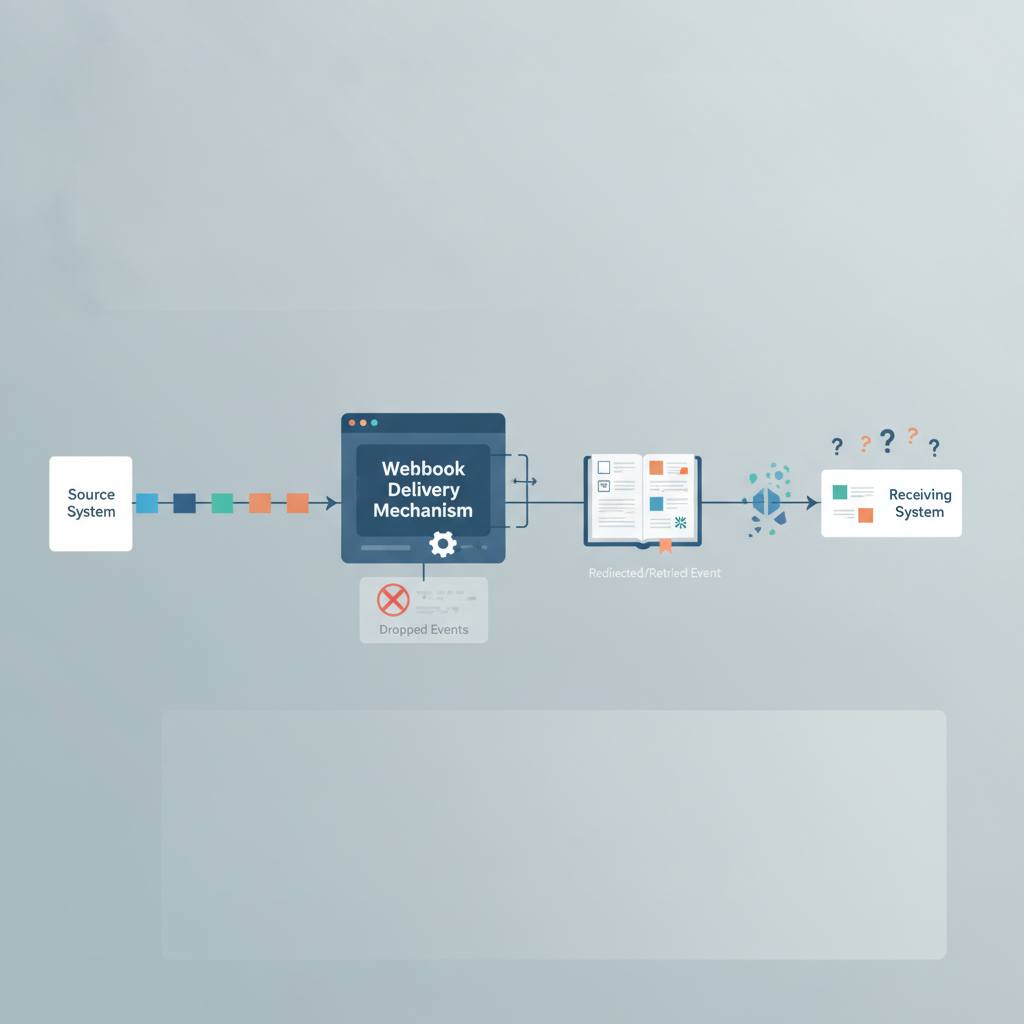
Are you relying on a '200 OK' message from your webhook tool to tell you everything's fine? The unfortunate news is that it's not telling you the whole story, and this means a lot for you and your systems. Imagine your webhook tool sends a notification and confirms delivery, but it can't actually tell you if the payload arrived intact, if the receiving service truly processed it, or even if a duplicate was silently accepted. It also can't tell you the full delivery path or who might have observed the payload in transit.
Why does this matter now? Because webhooks are no longer just simple notifications. They're moving deeper into critical infrastructure, triggering payments, driving compliance workflows, and feeding internal AI pipelines. In these cases, just 'we got a 200' isn't enough. The gap between that and 'we can prove what happened' starts to matter enormously. When your compliance team asks tough questions, or a security audit demands concrete proof, traditional delivery logs simply won't be enough to provide the answers.
The problem isn't that webhook tools are flawed; it's that they were designed for a simpler world – one where webhooks were notifications, not critical transactions. But that world is rapidly changing. In today's distributed systems, 'proof of delivery' means something entirely different; it's not just a log entry, but a verifiable artifact. It needs to be something that can be independently checked against a known state. This difference is crucial when disputes arise about whether data was sent and received, or when auditors need to see signed evidence that specific events reached specific endpoints at specific times, with a clear chain of custody. It's time to expect more than just a status code.
Why does this matter now? Because webhooks are no longer just simple notifications. They're moving deeper into critical infrastructure, triggering payments, driving compliance workflows, and feeding internal AI pipelines. In these cases, just 'we got a 200' isn't enough. The gap between that and 'we can prove what happened' starts to matter enormously. When your compliance team asks tough questions, or a security audit demands concrete proof, traditional delivery logs simply won't be enough to provide the answers.
The problem isn't that webhook tools are flawed; it's that they were designed for a simpler world – one where webhooks were notifications, not critical transactions. But that world is rapidly changing. In today's distributed systems, 'proof of delivery' means something entirely different; it's not just a log entry, but a verifiable artifact. It needs to be something that can be independently checked against a known state. This difference is crucial when disputes arise about whether data was sent and received, or when auditors need to see signed evidence that specific events reached specific endpoints at specific times, with a clear chain of custody. It's time to expect more than just a status code.