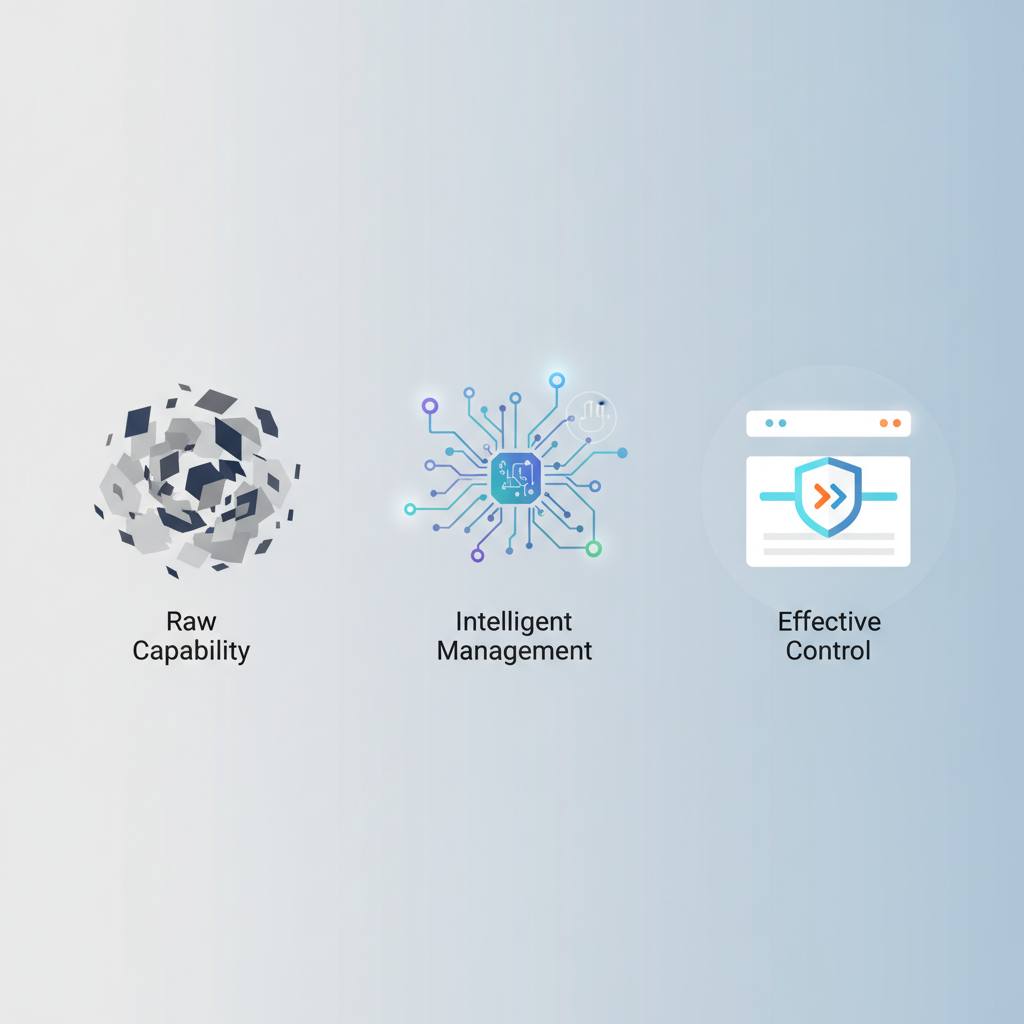
We are moving towards a future where AI is integrated and managed with greater intelligence, focusing on understanding probabilistic outcomes, meeting precise content strategies, and strict cost control.
Recent tech reports reveal a critical shift in how we approach AI systems and their applications. It's no longer just about AI's ability to 'do' tasks, but rather how we effectively 'manage' these capabilities, understand their complexities, and control their impacts.
In the realm of predictive models, we are witnessing a significant transformation. Single-number forecasts are proving insufficient, especially in volatile market environments or complex systems. Instead, there will be an increased reliance on probabilistic simulations, such as Monte Carlo models, to provide 'distributions of outcomes' rather than a single point. This means that risk analysis and decision-making tools will become more accurate and realistic, accounting for the non-linear and uncertain nature of the real world. This trend won't be confined to finance; it will extend to project management, resource planning, and even the design of complex systems where comprehensive foresight is essential.
For automated content creation, the predictions move beyond mere text or image generation. While AI agents can already produce visual content, the challenge now is ensuring this capability is used strategically and effectively. The future will feature AI agents with a deeper understanding of context and more precise execution of 'commit gates' to ensure specific content goals are met, such as a certain proportion of images or videos. This implies that AI tools will need a more profound grasp of business objectives and how to fulfill them through their output, moving past simple generation power.
Finally, managing AI API costs has become a major concern for developers. Unexpected spending spikes, caused by technical glitches or erratic user behavior, highlight an urgent need for more robust control mechanisms. We anticipate the emergence of a new generation of tools, built into frameworks like Next.js 15, that offer granular control over AI API consumption. These mechanisms will include intelligent throttling, sophisticated retry management, and real-time spend monitoring. The focus will shift from simply consuming AI to consuming it efficiently and with financial accountability, making AI-powered application development more stable and cost-predictable.
In the realm of predictive models, we are witnessing a significant transformation. Single-number forecasts are proving insufficient, especially in volatile market environments or complex systems. Instead, there will be an increased reliance on probabilistic simulations, such as Monte Carlo models, to provide 'distributions of outcomes' rather than a single point. This means that risk analysis and decision-making tools will become more accurate and realistic, accounting for the non-linear and uncertain nature of the real world. This trend won't be confined to finance; it will extend to project management, resource planning, and even the design of complex systems where comprehensive foresight is essential.
For automated content creation, the predictions move beyond mere text or image generation. While AI agents can already produce visual content, the challenge now is ensuring this capability is used strategically and effectively. The future will feature AI agents with a deeper understanding of context and more precise execution of 'commit gates' to ensure specific content goals are met, such as a certain proportion of images or videos. This implies that AI tools will need a more profound grasp of business objectives and how to fulfill them through their output, moving past simple generation power.
Finally, managing AI API costs has become a major concern for developers. Unexpected spending spikes, caused by technical glitches or erratic user behavior, highlight an urgent need for more robust control mechanisms. We anticipate the emergence of a new generation of tools, built into frameworks like Next.js 15, that offer granular control over AI API consumption. These mechanisms will include intelligent throttling, sophisticated retry management, and real-time spend monitoring. The focus will shift from simply consuming AI to consuming it efficiently and with financial accountability, making AI-powered application development more stable and cost-predictable.