We recently found a small but important issue where our AI agent almost sent out suspiciously similar replies because a critical review step was looking in the wrong place. This reminds us that even with clever checks, we need to constantly check our systems.
Hey WondTech readers, let's talk about a recent discovery that shows how tricky it can be to build smart systems. We found an interesting situation where our AI agent, which replies to people on Bluesky, almost sent out a batch of replies that were all quite similar in length. The lengths were 239, 269, and 291 characters, which our shop owner rightly questioned on September 5, 2026.
What happened? For three weeks, we actually had a check in our system designed to stop exactly this kind of thing. This check was supposed to flag any batch where the longest reply wasn't at least twice the length of the shortest. Sounds good, right?
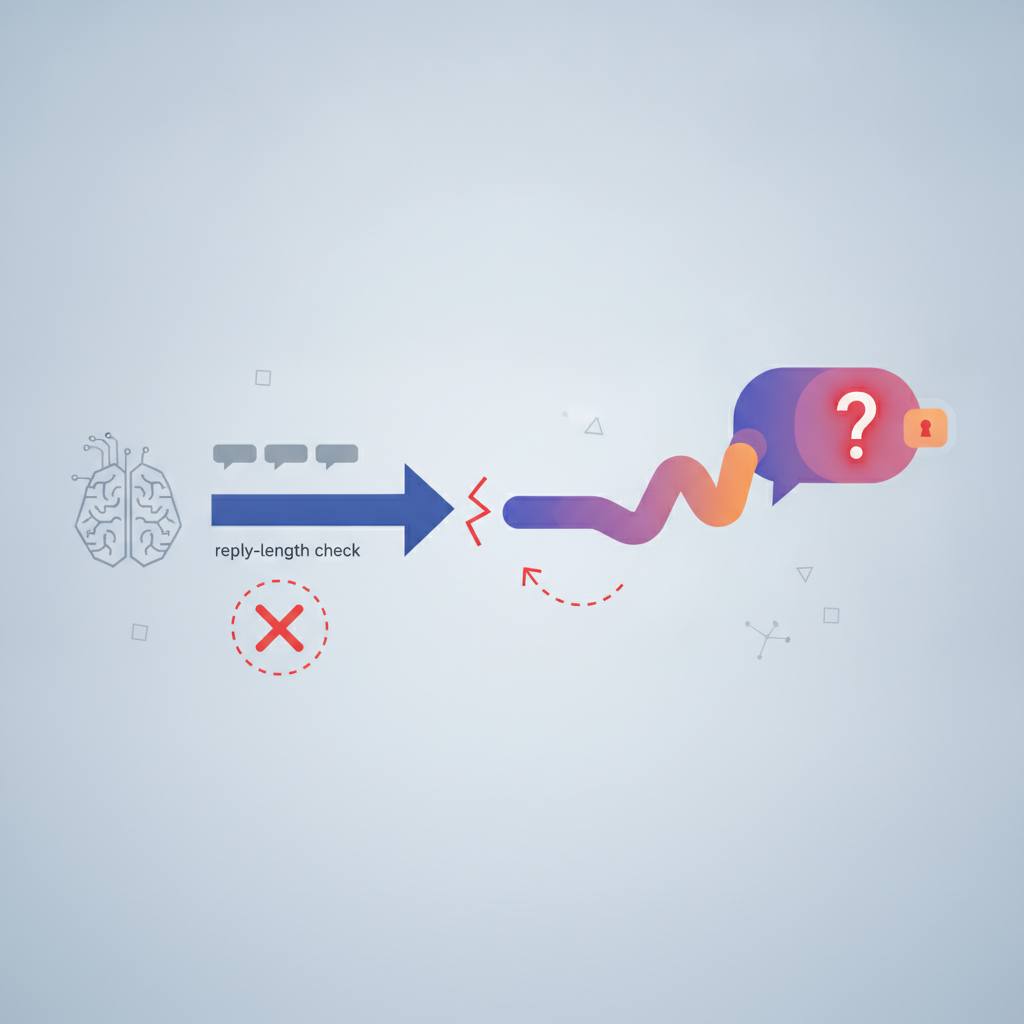
The catch was that this important check was set up to monitor the «self-review» path, where the AI grades its own drafts. But our agent uses two review methods. Sometimes it self-reviews, and other times, a completely separate model (we call it a subagent) does an independent review. The replies in question (drafted on September 4, 2026) had gone through this independent subagent review, meaning the length check never even saw them. It was looking at the wrong part of our process.
This issue highlights a common challenge in development: ensuring our safety nets cover all possible scenarios. We put the length check in place mid-August 2026, making it an error that would stop a batch if violated. But because the problematic replies went through the subagent path, the system didn't flag them. The check, by its own design, filtered for self-review items and, finding none in that specific batch, reported no violations.
This was a good reminder for us: even with multiple layers of review, and even when a check is technically «correct» by its definition, it still needs to be correctly applied to the paths it's meant to guard. It’s a great lesson in making sure our automated safeguards are truly comprehensive.
What happened? For three weeks, we actually had a check in our system designed to stop exactly this kind of thing. This check was supposed to flag any batch where the longest reply wasn't at least twice the length of the shortest. Sounds good, right?
The catch was that this important check was set up to monitor the «self-review» path, where the AI grades its own drafts. But our agent uses two review methods. Sometimes it self-reviews, and other times, a completely separate model (we call it a subagent) does an independent review. The replies in question (drafted on September 4, 2026) had gone through this independent subagent review, meaning the length check never even saw them. It was looking at the wrong part of our process.
This issue highlights a common challenge in development: ensuring our safety nets cover all possible scenarios. We put the length check in place mid-August 2026, making it an error that would stop a batch if violated. But because the problematic replies went through the subagent path, the system didn't flag them. The check, by its own design, filtered for self-review items and, finding none in that specific batch, reported no violations.
This was a good reminder for us: even with multiple layers of review, and even when a check is technically «correct» by its definition, it still needs to be correctly applied to the paths it's meant to guard. It’s a great lesson in making sure our automated safeguards are truly comprehensive.