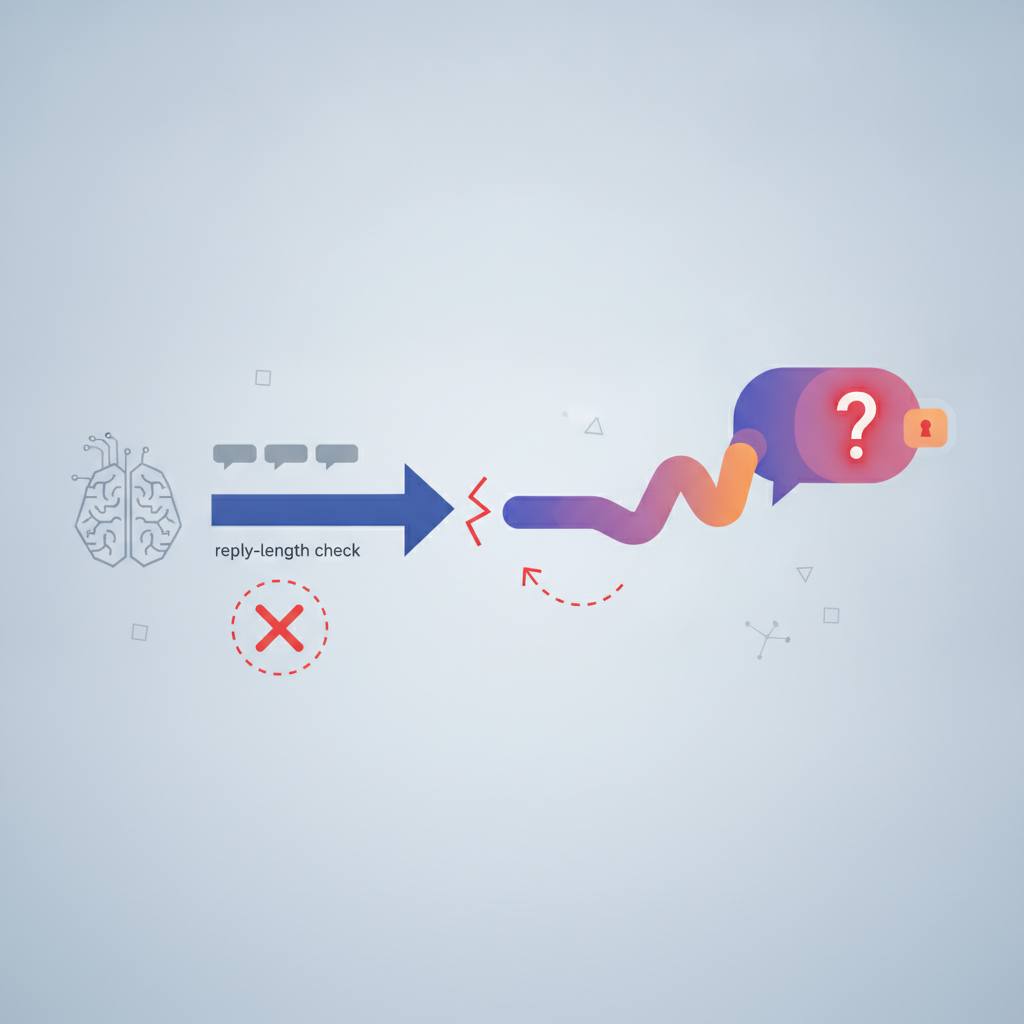
Developers are finding a new kind of software bug: silent errors that give wrong information without crashing systems. These hidden issues mean systems can confidently report success while being fundamentally broken, making them incredibly difficult to detect.
Sometimes, software can be broken without anyone realizing it's broken. This isn't about crashes or error messages popping up; it's about systems confidently showing incorrect information, making you *think* everything is fine when it’s not. What does this mean for you? It means the numbers you see, the statuses reported, or even what’s available on a menu, might be completely wrong, and nobody knows because the system didn't flag it as an issue.
Recently, developers encountered this exact problem across multiple projects. They found numerous cases where the software asserted something was true, but nothing actually verified it. The assertion was simply wrong. For example, a compliance system claimed it met data privacy rules based on evidence that didn't exist. A kitchen screen incorrectly showed no orders to cook, even as paying customers waited. A dashboard proudly displayed a 97.8% success rate directly above a list of thirteen failed operations. Even a web service meant to deliver today's fresh styles was mistakenly serving outdated content.
The scary part? None of these bugs caused the system to crash or throw an error. A crash gives developers a clear message about what went wrong and where to look. But when a system confidently reports incorrect information without breaking, it tells you nothing. It keeps misleading you until someone manually checks and discovers the discrepancy.
One striking example involved a data privacy control. The system reported that sensitive data was being handled correctly, citing two safeguards: encrypted columns and a special feature for hiding personal data in audit logs. While the encryption was true, the personal data hiding feature, or 'trait' as it's called in programming, was never actually applied to any part of the user data model. The control was perpetually green, based on a feature that existed in name but not in practice.
It wasn't just forgotten. Applying this feature directly to the main user model caused a conflict with another essential component. In technical terms, two programming 'traits' tried to declare a method with the same name, which is a fatal error in PHP code unless explicitly told which one to use. This means the system couldn't even compile without a specific workaround, which wasn't in place for the most crucial part of the application. So, for a long time, the system appeared compliant on paper, but in reality, a critical data protection measure wasn't active where it mattered most. This highlights why thorough verification, not just confident assertions, is essential.
Recently, developers encountered this exact problem across multiple projects. They found numerous cases where the software asserted something was true, but nothing actually verified it. The assertion was simply wrong. For example, a compliance system claimed it met data privacy rules based on evidence that didn't exist. A kitchen screen incorrectly showed no orders to cook, even as paying customers waited. A dashboard proudly displayed a 97.8% success rate directly above a list of thirteen failed operations. Even a web service meant to deliver today's fresh styles was mistakenly serving outdated content.
The scary part? None of these bugs caused the system to crash or throw an error. A crash gives developers a clear message about what went wrong and where to look. But when a system confidently reports incorrect information without breaking, it tells you nothing. It keeps misleading you until someone manually checks and discovers the discrepancy.
One striking example involved a data privacy control. The system reported that sensitive data was being handled correctly, citing two safeguards: encrypted columns and a special feature for hiding personal data in audit logs. While the encryption was true, the personal data hiding feature, or 'trait' as it's called in programming, was never actually applied to any part of the user data model. The control was perpetually green, based on a feature that existed in name but not in practice.
It wasn't just forgotten. Applying this feature directly to the main user model caused a conflict with another essential component. In technical terms, two programming 'traits' tried to declare a method with the same name, which is a fatal error in PHP code unless explicitly told which one to use. This means the system couldn't even compile without a specific workaround, which wasn't in place for the most crucial part of the application. So, for a long time, the system appeared compliant on paper, but in reality, a critical data protection measure wasn't active where it mattered most. This highlights why thorough verification, not just confident assertions, is essential.