A tech blogger found that the biggest challenge in debugging free AI models wasn't the model or server, but the inability to quickly classify failures. The solution? Building a simple system to categorize issues before attempting fixes.
Ever spent hours debugging an AI system, only to find out later the problem wasn't your code at all? That's exactly what one developer recently learned the hard way. And the lesson here is crucial for you: before you dive into fixing any AI system failure, make sure you first pinpoint its true source.
During his recent audits, this developer noticed that watching a free AI model drift for 48 hours was easy, but deciding whose fault a failure was often took longer than the failure itself. Every dropped call triggered the same old ritual: open the logs, check status codes, re-read retry loops, curse the network, and eventually... guess. After two days of this frustration, he realized the real bottleneck wasn't the model or the server. It was his own inability to classify failures quickly.
So, he decided to build a «tiny verdict machine» that transformed twenty-one messy incidents into three clear buckets. When you run a small experiment on a free model endpoint and a free server, you expect some instability. But you rarely expect that instability to be your own judgment. He kept treating every failure as if it were his code, which led him to rewrite a perfectly fine serialization function three times, when the real problem was simply a server that occasionally hiccuped for five seconds.
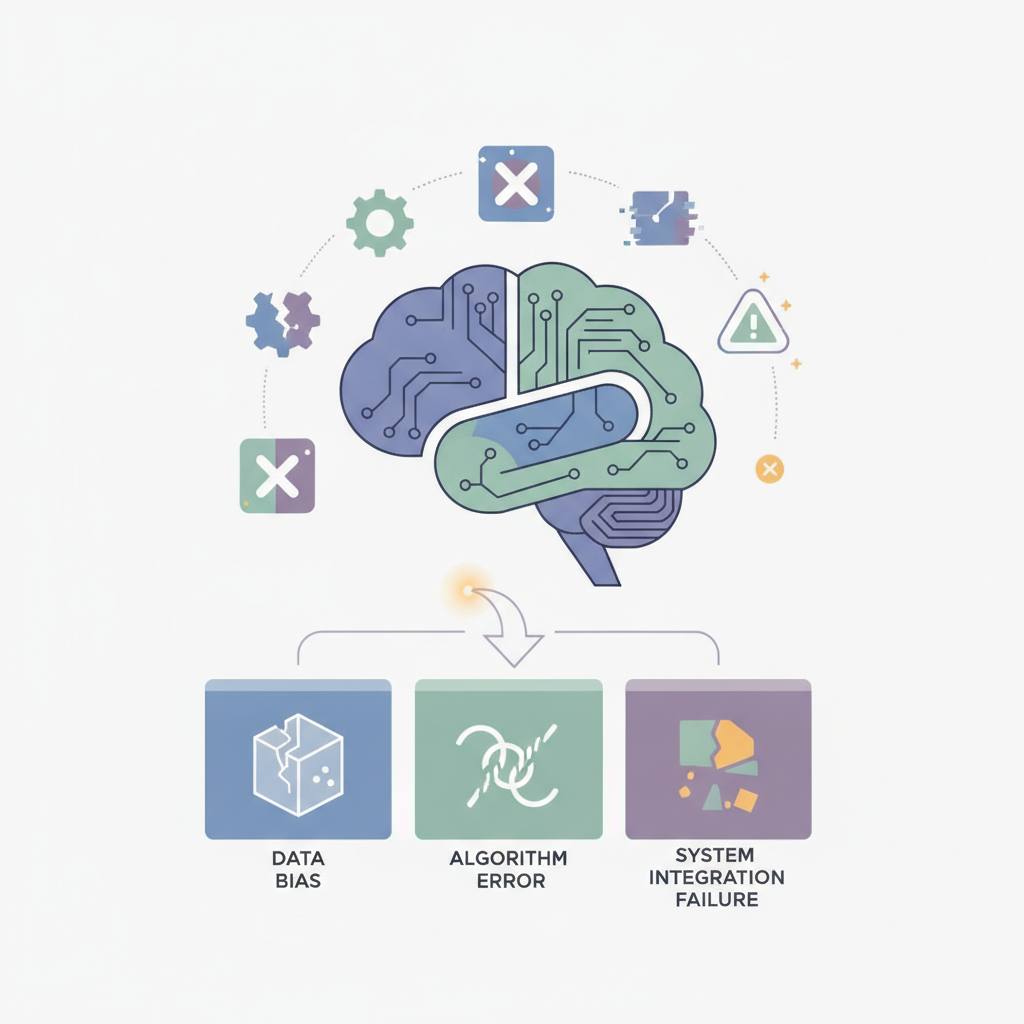
The turning point came on day two. He looked back at his manual notes and found contradictions: he had called the exact same symptom a quota issue in the morning and a bug by lunchtime. He desperately needed a repeatable way to answer one core question before touching anything: is this failure coming from my code, from the model/API tier, or from the server infrastructure? That single, simple question turned his debugging process from a guessing game into a straightforward checklist.
The experiment he ran was deliberately boring: a Python worker made roughly timed calls to a free model endpoint, asked it to return strict JSON for a fixed schema, and recorded every retry round with its status code and request hash. The result was an effective system for quickly pinpointing the source of problems, saving valuable time and effort.
During his recent audits, this developer noticed that watching a free AI model drift for 48 hours was easy, but deciding whose fault a failure was often took longer than the failure itself. Every dropped call triggered the same old ritual: open the logs, check status codes, re-read retry loops, curse the network, and eventually... guess. After two days of this frustration, he realized the real bottleneck wasn't the model or the server. It was his own inability to classify failures quickly.
So, he decided to build a «tiny verdict machine» that transformed twenty-one messy incidents into three clear buckets. When you run a small experiment on a free model endpoint and a free server, you expect some instability. But you rarely expect that instability to be your own judgment. He kept treating every failure as if it were his code, which led him to rewrite a perfectly fine serialization function three times, when the real problem was simply a server that occasionally hiccuped for five seconds.
The turning point came on day two. He looked back at his manual notes and found contradictions: he had called the exact same symptom a quota issue in the morning and a bug by lunchtime. He desperately needed a repeatable way to answer one core question before touching anything: is this failure coming from my code, from the model/API tier, or from the server infrastructure? That single, simple question turned his debugging process from a guessing game into a straightforward checklist.
The experiment he ran was deliberately boring: a Python worker made roughly timed calls to a free model endpoint, asked it to return strict JSON for a fixed schema, and recorded every retry round with its status code and request hash. The result was an effective system for quickly pinpointing the source of problems, saving valuable time and effort.