We previously miscalculated the cost of spawning a Claude Code subagent, believing it to be 436,000 tokens, but it's actually just 54,000 tokens. This means AI agents could be much more affordable than we thought.
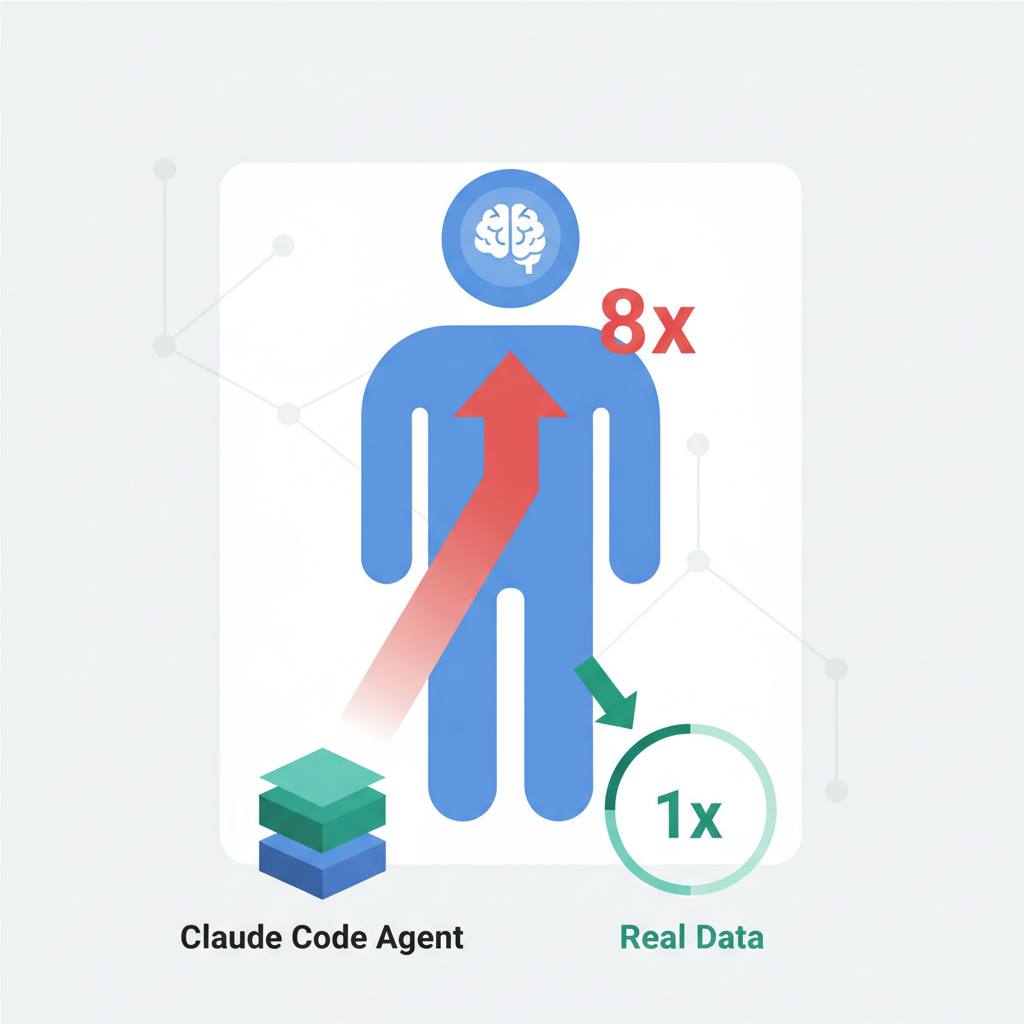
We have big news for you regarding the cost of running Claude Code subagents! Just two weeks ago, we published a number: a Claude Code subagent cost around 436,000 tokens before it even read a single file. We built routing rules and break-even formulas around this figure. However, it turns out that number was significantly incorrect. After re-measuring with a cleaner method, we discovered that the true cost to spawn a Claude Code subagent is actually just 54,154 tokens. That's right, our old number was off by roughly 8 times!
So, what caused this huge discrepancy? Our original method involved running the same review task with three agents versus one, attributing the difference to per-agent overhead. This felt rigorous, but it had a critical flaw. A working agent makes many requests, and each request re-sends its entire context. Token accounting that simply summed a run's total input tokens counted the same 54k context at face value 'once per request'. So, an agent that iterated eight times appeared to 'cost' 8 × 54k, or about 430k, under that accounting. Even though seven of those eight sends were actually cached reads, billed at a tenth of the rate, and the content itself was only ever stored once. Therefore, 436k wasn't the actual spawning cost. It was the spawning cost multiplied by the number of times our specific reviewer 'thought' at face-value prices.
The cleaner, embarrassingly direct way to measure the spawn cost was simple: we spawned a minimal subagent that did nothing but return the two characters 'ok'. Then, we read the agent's transcript file. It showed exactly one request with 2 input tokens, 54,154 'cache_creation_input_tokens', and 4 output tokens. That 54,154 tokens is what furnishes the child's context window initially — including the system prompt, tool schemas, CLAUDE.md chain, and skills listing — written once into the prompt cache. There's no hidden second payment. This revised understanding means that the cost of using Claude Code AI agents could be significantly lower than we previously thought. This could open up new possibilities and make this powerful technology much more accessible and cost-effective for your projects.
So, what caused this huge discrepancy? Our original method involved running the same review task with three agents versus one, attributing the difference to per-agent overhead. This felt rigorous, but it had a critical flaw. A working agent makes many requests, and each request re-sends its entire context. Token accounting that simply summed a run's total input tokens counted the same 54k context at face value 'once per request'. So, an agent that iterated eight times appeared to 'cost' 8 × 54k, or about 430k, under that accounting. Even though seven of those eight sends were actually cached reads, billed at a tenth of the rate, and the content itself was only ever stored once. Therefore, 436k wasn't the actual spawning cost. It was the spawning cost multiplied by the number of times our specific reviewer 'thought' at face-value prices.
The cleaner, embarrassingly direct way to measure the spawn cost was simple: we spawned a minimal subagent that did nothing but return the two characters 'ok'. Then, we read the agent's transcript file. It showed exactly one request with 2 input tokens, 54,154 'cache_creation_input_tokens', and 4 output tokens. That 54,154 tokens is what furnishes the child's context window initially — including the system prompt, tool schemas, CLAUDE.md chain, and skills listing — written once into the prompt cache. There's no hidden second payment. This revised understanding means that the cost of using Claude Code AI agents could be significantly lower than we previously thought. This could open up new possibilities and make this powerful technology much more accessible and cost-effective for your projects.