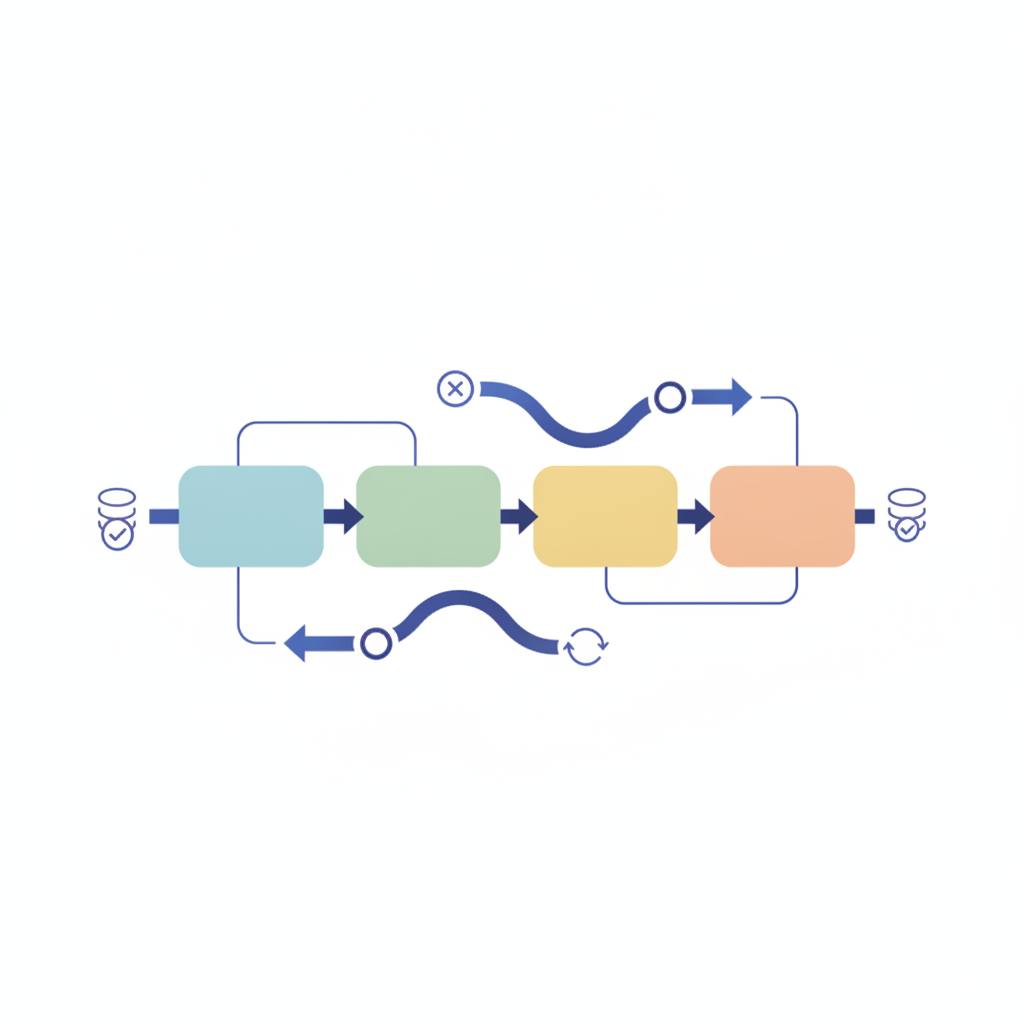
Microservices can make data consistency tricky across different services. The Saga pattern helps by breaking complex operations into smaller steps, ensuring everything stays aligned even if something goes wrong.
Hey WondTech readers! Ever wondered how your online orders stay perfectly synced across different systems, especially when a website uses many small, independent services? Keeping data consistent in these 'microservices' can be a real headache, because unlike old-school 'monolith' applications, you can't just wrap everything in one big database transaction.
In a traditional application, if you confirm an order, deduct inventory, and process payment, it all happens inside a single database transaction. Either every step succeeds, or everything fails and rolls back – it's an 'all or nothing' deal. Simple, right? But microservices are different. Each service, like your Order Service, Inventory Service, and Payment Service, has its own dedicated database. You can't just tell all these separate databases to act as one. So, what happens if an order is created, inventory is reserved, but then the payment fails? You're left with an inventory deduction for an order that was never paid for – a mess!
This is where the 'Saga pattern' comes to the rescue. Think of a Saga as a carefully planned sequence of smaller, local transactions. Instead of one giant, cross-service transaction, each step in a Saga is a separate action within its own service. For example, when you place an order:
1. The Order Service creates a pending order.
2. It then tells the Inventory Service to reserve your items.
3. Next, the Payment Service charges your card.
4. Finally, the Shipping Service schedules delivery, and the Order Service marks your order as confirmed.
The clever part? Each step communicates by publishing an event, triggering the next step. If everything goes smoothly, great! But what if the payment fails? No problem! The Saga pattern includes 'compensating transactions.' If the payment service reports a failure, other services react. The Inventory Service might then release the reserved items, and the Order Service could cancel the pending order. This way, your system efficiently undoes previous actions, bringing everything back to a consistent state.
Sagas are awesome because they keep services independent and remove a single point of failure. Each service only cares about its own part of the puzzle. However, tracking the overall progress of a complex Saga can sometimes be tricky, and you need to be careful to avoid services becoming too dependent on each other in a loop. Whether services react to events or a dedicated 'Saga Orchestrator' guides each step, this pattern is a fundamental way WondTech and many others ensure your data stays accurate in the world of microservices. It's about smart coordination, not magic!
In a traditional application, if you confirm an order, deduct inventory, and process payment, it all happens inside a single database transaction. Either every step succeeds, or everything fails and rolls back – it's an 'all or nothing' deal. Simple, right? But microservices are different. Each service, like your Order Service, Inventory Service, and Payment Service, has its own dedicated database. You can't just tell all these separate databases to act as one. So, what happens if an order is created, inventory is reserved, but then the payment fails? You're left with an inventory deduction for an order that was never paid for – a mess!
This is where the 'Saga pattern' comes to the rescue. Think of a Saga as a carefully planned sequence of smaller, local transactions. Instead of one giant, cross-service transaction, each step in a Saga is a separate action within its own service. For example, when you place an order:
1. The Order Service creates a pending order.
2. It then tells the Inventory Service to reserve your items.
3. Next, the Payment Service charges your card.
4. Finally, the Shipping Service schedules delivery, and the Order Service marks your order as confirmed.
The clever part? Each step communicates by publishing an event, triggering the next step. If everything goes smoothly, great! But what if the payment fails? No problem! The Saga pattern includes 'compensating transactions.' If the payment service reports a failure, other services react. The Inventory Service might then release the reserved items, and the Order Service could cancel the pending order. This way, your system efficiently undoes previous actions, bringing everything back to a consistent state.
Sagas are awesome because they keep services independent and remove a single point of failure. Each service only cares about its own part of the puzzle. However, tracking the overall progress of a complex Saga can sometimes be tricky, and you need to be careful to avoid services becoming too dependent on each other in a loop. Whether services react to events or a dedicated 'Saga Orchestrator' guides each step, this pattern is a fundamental way WondTech and many others ensure your data stays accurate in the world of microservices. It's about smart coordination, not magic!