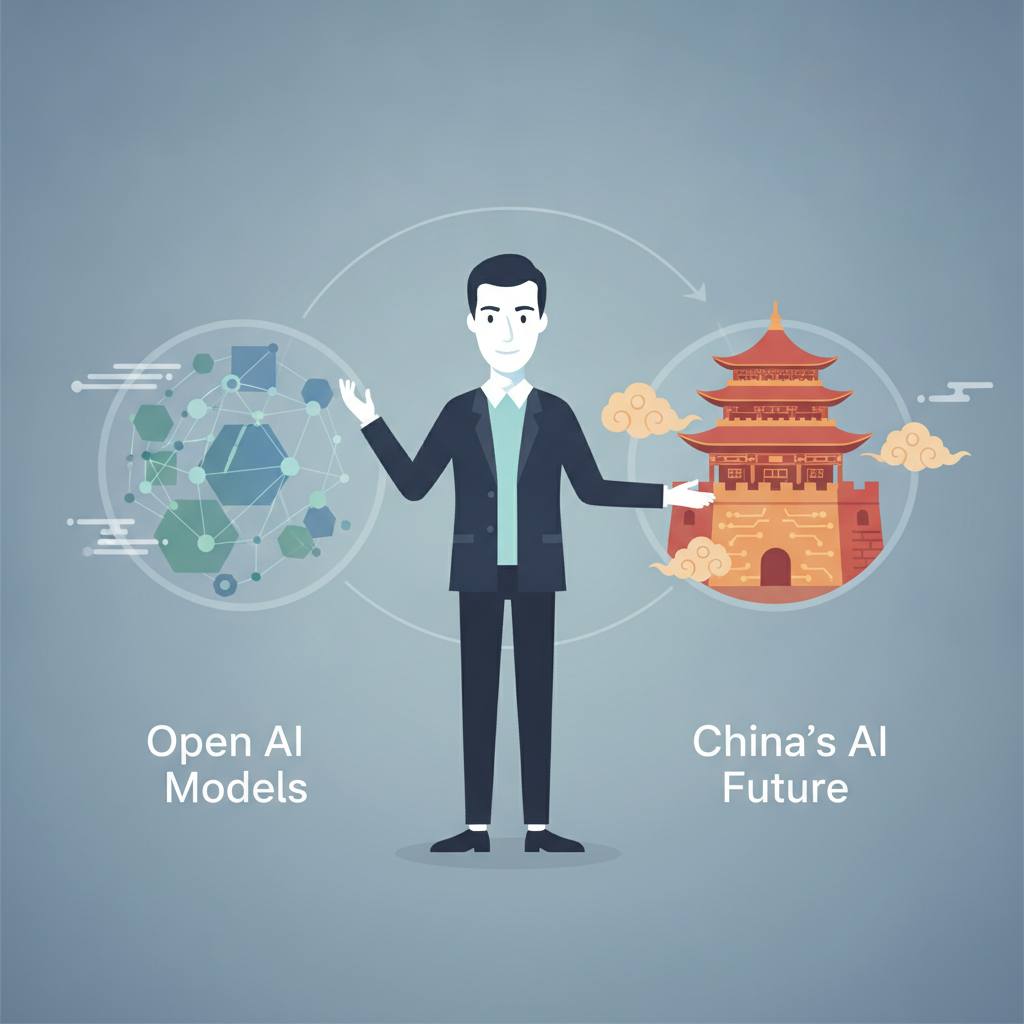
Anthropic CEO Dario Amodei recently shared his perspective on open-weight AI models, stating he doesn't oppose them, but expressed concerns about the rapid development of AI in China.
Hey WondTech readers! Anthropic CEO Dario Amodei recently made waves by clarifying his stance on open-weight AI models, and he also voiced some serious concerns about China's growing AI capabilities. What does this mean for you? Well, it tells us a lot about the big discussions happening behind the scenes in the AI world, shaping the future of the technology we use every day.
First off, let's talk about open-weight models. These are AI systems where the core code and 'weights' (the learned parameters that make the AI work) are made publicly available. This allows other developers and researchers to inspect, modify, and build upon them. You might think a leader from a company like Anthropic, known for its advanced proprietary AI, would naturally be against this idea. However, Amodei has made it clear he doesn't actually oppose open-weight models. This is a pretty significant point, showing that even major players see some value in the collaborative spirit of open development, or at least don't see it as an inherent threat. It means that the debate isn't simply 'open versus closed' but rather more nuanced, focusing on *how* and *when* to open up these powerful tools.
But here's where things get interesting: while he doesn't oppose open models, Amodei did express significant fears about China's rapidly advancing AI. He didn't go into specific details about the nature of these fears, but the message is clear: the speed and scale of AI development in China are a major topic of concern for leaders in the Western AI industry. This isn't just about technological competition; it also brings up bigger questions about global AI governance, ethical standards, and national security in an era where AI is becoming increasingly powerful.
For us, as users and enthusiasts of technology, Amodei's comments highlight the complex challenges and ethical considerations that come with building the future of AI. It's a reminder that while AI offers incredible possibilities, its development also involves strategic thinking, international dynamics, and a constant effort to balance innovation with responsibility. It's not just about building smarter machines; it's about navigating a rapidly changing global landscape.
First off, let's talk about open-weight models. These are AI systems where the core code and 'weights' (the learned parameters that make the AI work) are made publicly available. This allows other developers and researchers to inspect, modify, and build upon them. You might think a leader from a company like Anthropic, known for its advanced proprietary AI, would naturally be against this idea. However, Amodei has made it clear he doesn't actually oppose open-weight models. This is a pretty significant point, showing that even major players see some value in the collaborative spirit of open development, or at least don't see it as an inherent threat. It means that the debate isn't simply 'open versus closed' but rather more nuanced, focusing on *how* and *when* to open up these powerful tools.
But here's where things get interesting: while he doesn't oppose open models, Amodei did express significant fears about China's rapidly advancing AI. He didn't go into specific details about the nature of these fears, but the message is clear: the speed and scale of AI development in China are a major topic of concern for leaders in the Western AI industry. This isn't just about technological competition; it also brings up bigger questions about global AI governance, ethical standards, and national security in an era where AI is becoming increasingly powerful.
For us, as users and enthusiasts of technology, Amodei's comments highlight the complex challenges and ethical considerations that come with building the future of AI. It's a reminder that while AI offers incredible possibilities, its development also involves strategic thinking, international dynamics, and a constant effort to balance innovation with responsibility. It's not just about building smarter machines; it's about navigating a rapidly changing global landscape.