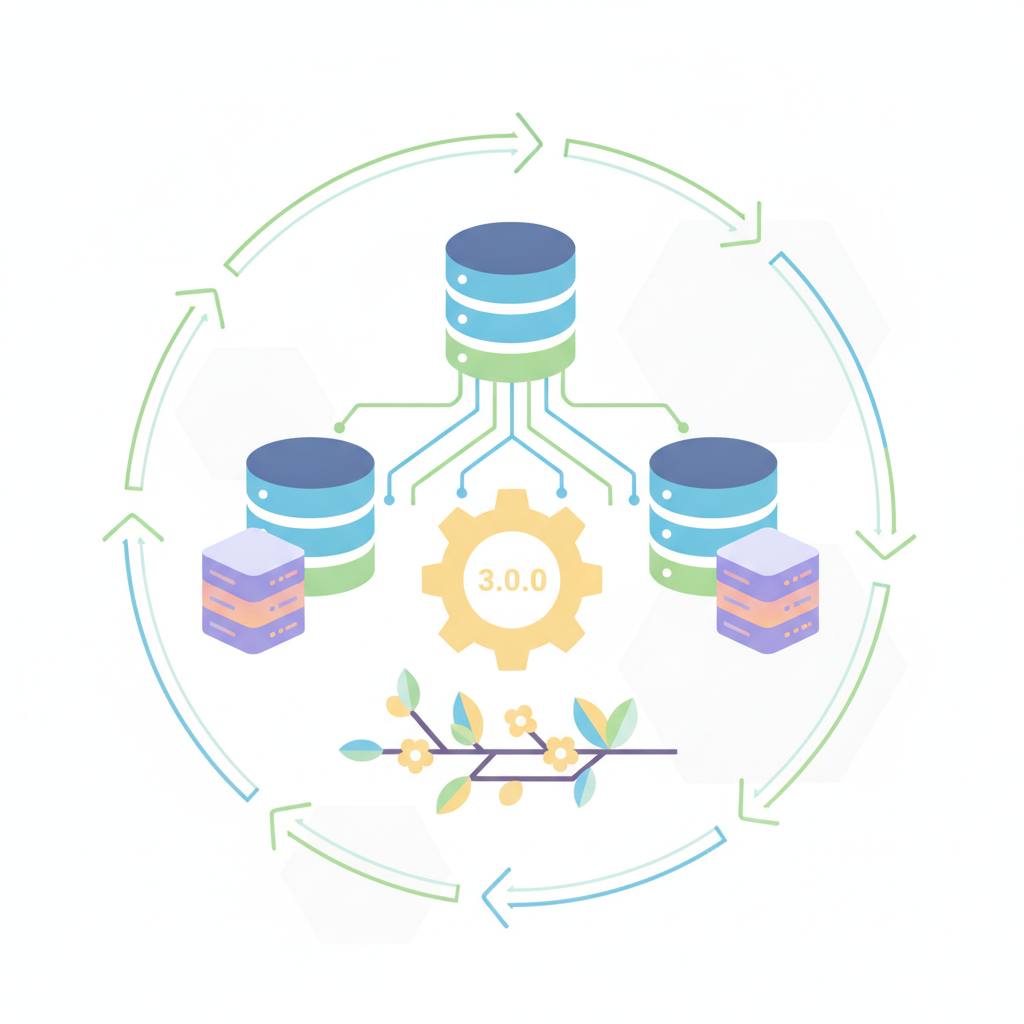
Spring Batch DB Cluster Partitioning 3.0.0 is here, letting you run distributed Spring Batch jobs across multiple servers using only your existing database for coordination. This release brings significant improvements and support for the latest Spring Boot 4 and Java 21 technologies.
Hey WondTech readers, we have exciting news for Spring Batch developers! The major Spring Batch DB Cluster Partitioning 3.0.0 release is out, and it means managing your distributed jobs just got much easier and smarter.
The core idea here is simple yet powerful: you can now run partitioned Spring Batch jobs across multiple JVM nodes, coordinated entirely through your existing relational database. Yes, you read that right – no need for additional services like Kafka, RabbitMQ, or ZooKeeper. Your database itself handles all the coordination, which removes a layer of complexity and makes setup and maintenance significantly simpler.
This 3.0.0 release is the biggest in the project’s history, representing a full platform upgrade. The project has moved entirely to support Spring Boot 4.1, Spring Batch 6, and Spring Framework 7, with a Java 21 baseline. This means you're leveraging the very latest technologies and features within the Spring ecosystem.
But the update isn't just about new version support. There are fantastic improvements in performance and reliability. Now, worker steps run on virtual threads, making parallel task processing much more efficient. Also, the master node's completion and orphan monitors no longer use the shared ForkJoinPool, ensuring that a busy master coordinating many jobs won't starve the common pool.
One of the cool new features is the 'LEAST_LOADED' work distribution strategy. Instead of blindly round-robin assignment, this strategy assigns each partition to the node with the lowest live load, steering work away from already busy nodes. This ensures a fairer and more efficient distribution of resources. And if a node goes down, it now cancels its own in-progress tasks rather than plowing ahead, preventing surprises and making recovery smoother when the master assigns those tasks elsewhere.
The project is open-source under the Apache-2.0 license and has been peer-reviewed and published, reflecting its quality and trustworthiness. In short, if you're dealing with large, distributed Spring Batch jobs, this update will make your life much easier, and your jobs more stable and efficient. Let's give it a try!
The core idea here is simple yet powerful: you can now run partitioned Spring Batch jobs across multiple JVM nodes, coordinated entirely through your existing relational database. Yes, you read that right – no need for additional services like Kafka, RabbitMQ, or ZooKeeper. Your database itself handles all the coordination, which removes a layer of complexity and makes setup and maintenance significantly simpler.
This 3.0.0 release is the biggest in the project’s history, representing a full platform upgrade. The project has moved entirely to support Spring Boot 4.1, Spring Batch 6, and Spring Framework 7, with a Java 21 baseline. This means you're leveraging the very latest technologies and features within the Spring ecosystem.
But the update isn't just about new version support. There are fantastic improvements in performance and reliability. Now, worker steps run on virtual threads, making parallel task processing much more efficient. Also, the master node's completion and orphan monitors no longer use the shared ForkJoinPool, ensuring that a busy master coordinating many jobs won't starve the common pool.
One of the cool new features is the 'LEAST_LOADED' work distribution strategy. Instead of blindly round-robin assignment, this strategy assigns each partition to the node with the lowest live load, steering work away from already busy nodes. This ensures a fairer and more efficient distribution of resources. And if a node goes down, it now cancels its own in-progress tasks rather than plowing ahead, preventing surprises and making recovery smoother when the master assigns those tasks elsewhere.
The project is open-source under the Apache-2.0 license and has been peer-reviewed and published, reflecting its quality and trustworthiness. In short, if you're dealing with large, distributed Spring Batch jobs, this update will make your life much easier, and your jobs more stable and efficient. Let's give it a try!