Many of us fall into the trap of saying 'just use Redis' when asked about databases in system design interviews. This answer, however, fails to demonstrate deep understanding; you need to know when to pick the appropriate key-value store for your project.
Do you find yourself saying 'just use Redis' in system design interviews? That answer might not be enough to prove your deep understanding, and for this reason, knowing the differences between various key-value stores is vital for you as an engineer.
Many of us have been there: you sketch out a great high-level architecture on the whiteboard, and the interviewer leans in, «Alright, what database are we using for this component, and why?» The common, often nervous, response used to be, «Uh, Redis? Because it’s fast?» But let me tell you from experience, that answer will get you a red flag faster than a race condition. 'Key-Value store' is a massive umbrella. Caching, configuration management, petabyte-scale storage—they all fall under KV, but choosing the wrong one exposes a lack of depth to your interviewer.
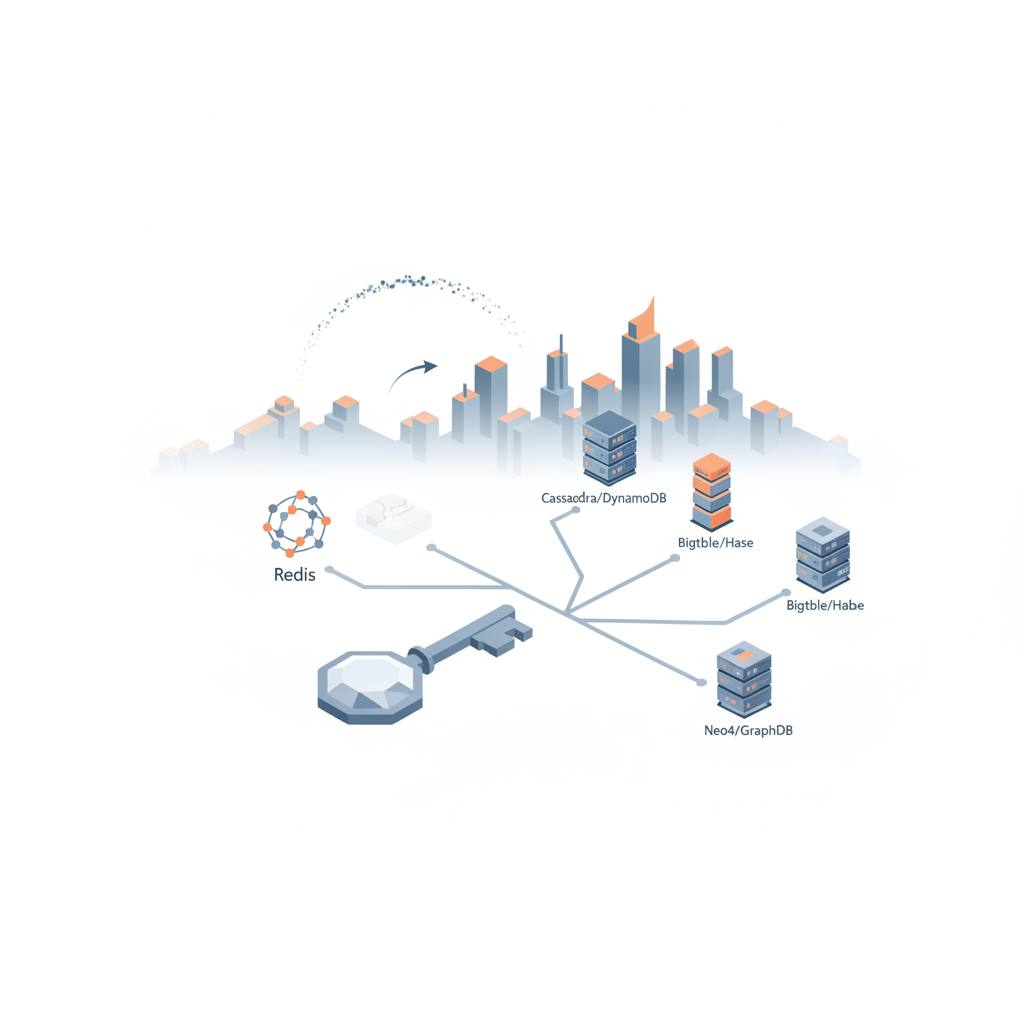
With so many databases out there, it’s easy to get tired comparing their nuances. So, a quick cheat sheet was put together to help. Here are some key-value stores you must understand for your next system design interview:
**Redis:** isn’t just a cache; it’s an in-memory data structure store that natively understands lists, sets, sorted sets, and hashes. Deploy when: Building rate limiters, leaderboards, or job queues where data structures matter and you need persistence across restarts. Avoid when: Your dataset vastly exceeds available RAM.
**DynamoDB (AWS):** Amazon’s fully managed NoSQL database guarantees single-digit millisecond latency whether you have 1 megabyte or 1 petabyte of data. Deploy when: You’re entrenched in AWS, need predictable performance at massive TPS, and want zero infrastructure management. Avoid when: You require complex aggregations or joins.
**FoundationDB:** While most NoSQL databases sacrifice consistency for availability, FoundationDB maintains strict ACID transactions. Deploy when: You need absolute correctness at scale (e.g., financial systems). Avoid when: You just need a simple cache.
**Cassandra:** Technically a wide-column store, Cassandra thrives on massive ingest rates using LSM trees. Deploy when: Handling write-heavy workloads (IoT sensors, chat logs) where high availability and eventual consistency are acceptable. Avoid when: Your workload involves frequent updates/deletes or requires ACID transactions.
Knowing these nuances won't just help you in your interviews, but will make you a better system engineer in your daily work. Choose the right tool for the job, not just the most popular one!
Many of us have been there: you sketch out a great high-level architecture on the whiteboard, and the interviewer leans in, «Alright, what database are we using for this component, and why?» The common, often nervous, response used to be, «Uh, Redis? Because it’s fast?» But let me tell you from experience, that answer will get you a red flag faster than a race condition. 'Key-Value store' is a massive umbrella. Caching, configuration management, petabyte-scale storage—they all fall under KV, but choosing the wrong one exposes a lack of depth to your interviewer.
With so many databases out there, it’s easy to get tired comparing their nuances. So, a quick cheat sheet was put together to help. Here are some key-value stores you must understand for your next system design interview:
**Redis:** isn’t just a cache; it’s an in-memory data structure store that natively understands lists, sets, sorted sets, and hashes. Deploy when: Building rate limiters, leaderboards, or job queues where data structures matter and you need persistence across restarts. Avoid when: Your dataset vastly exceeds available RAM.
**DynamoDB (AWS):** Amazon’s fully managed NoSQL database guarantees single-digit millisecond latency whether you have 1 megabyte or 1 petabyte of data. Deploy when: You’re entrenched in AWS, need predictable performance at massive TPS, and want zero infrastructure management. Avoid when: You require complex aggregations or joins.
**FoundationDB:** While most NoSQL databases sacrifice consistency for availability, FoundationDB maintains strict ACID transactions. Deploy when: You need absolute correctness at scale (e.g., financial systems). Avoid when: You just need a simple cache.
**Cassandra:** Technically a wide-column store, Cassandra thrives on massive ingest rates using LSM trees. Deploy when: Handling write-heavy workloads (IoT sensors, chat logs) where high availability and eventual consistency are acceptable. Avoid when: Your workload involves frequent updates/deletes or requires ACID transactions.
Knowing these nuances won't just help you in your interviews, but will make you a better system engineer in your daily work. Choose the right tool for the job, not just the most popular one!