Recent news highlights the critical importance of testing even minor database changes before deploying them to live systems. Here, we learn why «rehearsing» updates is essential to prevent problems and protect our applications from downtime.
Have you ever heard about the importance of «rehearsing» before a big launch in the software world? That's exactly what a recent discussion in the developer community regarding Postgres databases is all about. The news points out that a small database change, like adding a new column or an index, might look tiny in a code review, but it could be the riskiest line of an entire release.
Imagine your application is being used by thousands of people simultaneously. You make a 'minor' change to the database's structure, thinking it won't have much impact. But suddenly, requests start piling up, the application slows down, and it might even crash completely! This happens because the database, while busy, can't handle the new change efficiently, leading to parts becoming locked or extremely sluggish.
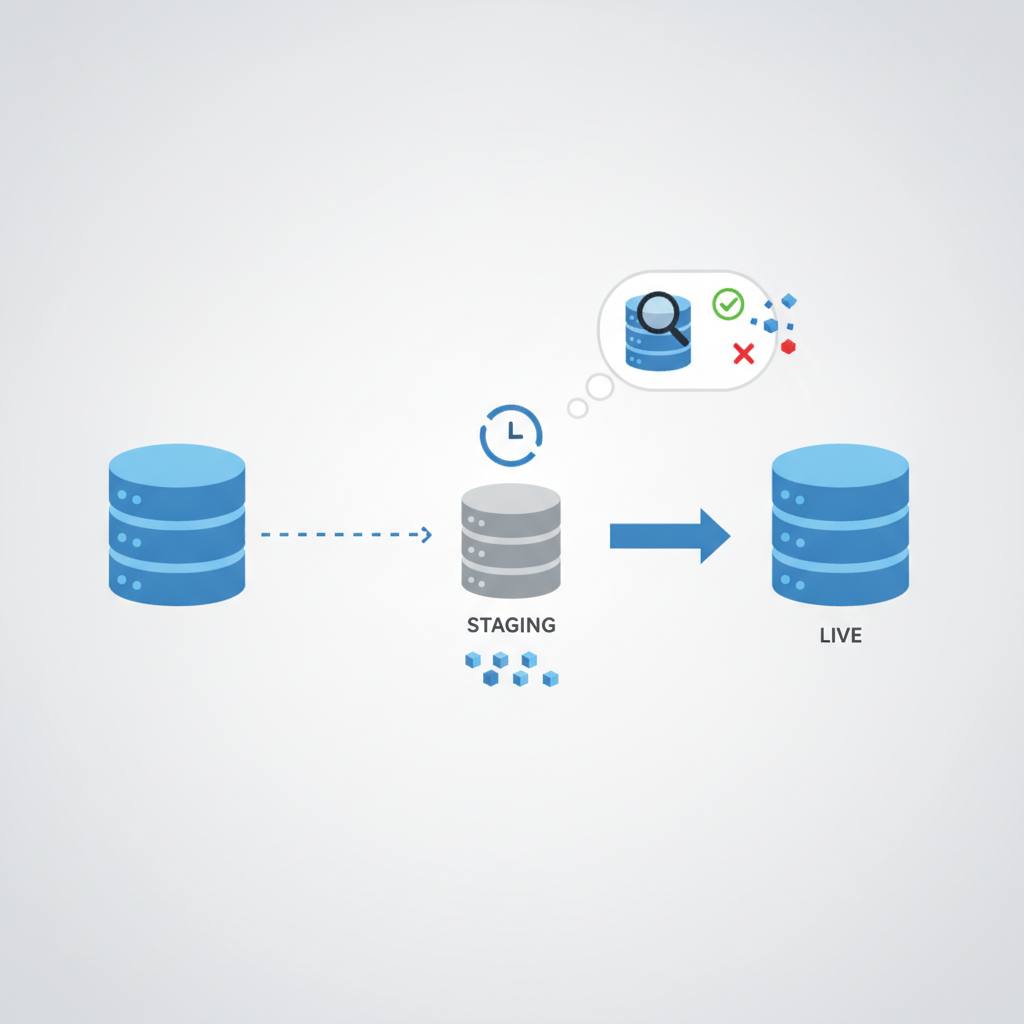
This is where «migration rehearsal» comes in. Think of it like building a new bridge or adding a lane to a major highway. You can't just close the road and start working without a plan. You need to test how these changes will affect the existing traffic flow. In the database world, a «rehearsal» means creating a clone of your live database environment, complete with placeholder data that mimics your real data and user activity.
During this rehearsal, you run the planned change (the migration) and observe exactly what happens. Are there locks preventing users from accessing data? Is performance degrading? This allows developers to discover potential issues *before* they reach real users and cause a disaster. The goal isn't to say the update is 100% safe in production, but rather to reveal potential problems and the assumptions underlying the change plan.
In short, these «rehearsals» are the shield for our applications. They ensure that changes to underlying infrastructure, like databases, are implemented smoothly and with minimal risk. This cautious approach is key to maintaining robust and reliable applications that are always available to serve users.
Imagine your application is being used by thousands of people simultaneously. You make a 'minor' change to the database's structure, thinking it won't have much impact. But suddenly, requests start piling up, the application slows down, and it might even crash completely! This happens because the database, while busy, can't handle the new change efficiently, leading to parts becoming locked or extremely sluggish.
This is where «migration rehearsal» comes in. Think of it like building a new bridge or adding a lane to a major highway. You can't just close the road and start working without a plan. You need to test how these changes will affect the existing traffic flow. In the database world, a «rehearsal» means creating a clone of your live database environment, complete with placeholder data that mimics your real data and user activity.
During this rehearsal, you run the planned change (the migration) and observe exactly what happens. Are there locks preventing users from accessing data? Is performance degrading? This allows developers to discover potential issues *before* they reach real users and cause a disaster. The goal isn't to say the update is 100% safe in production, but rather to reveal potential problems and the assumptions underlying the change plan.
In short, these «rehearsals» are the shield for our applications. They ensure that changes to underlying infrastructure, like databases, are implemented smoothly and with minimal risk. This cautious approach is key to maintaining robust and reliable applications that are always available to serve users.