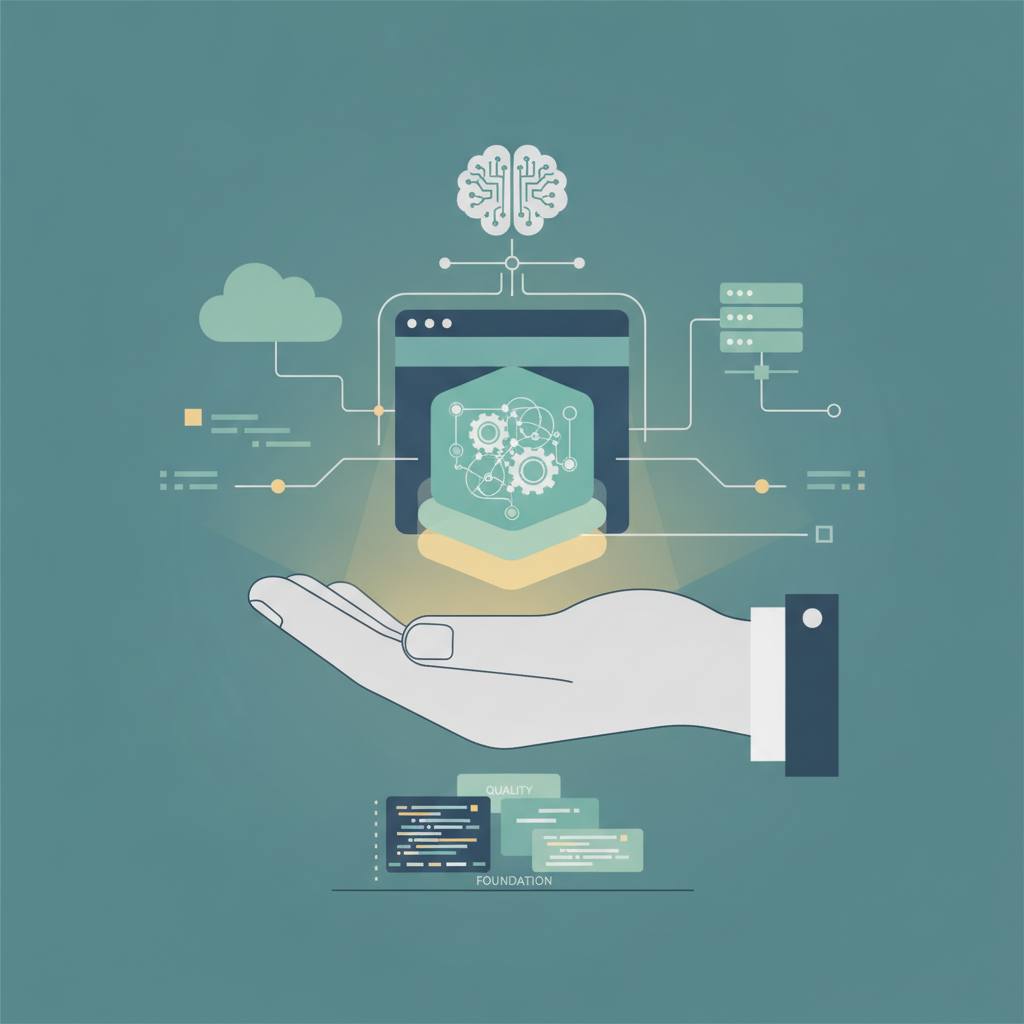
A CEO's claim that AI replaced developers for internal software sparked widespread debate, but engineers inspecting the system uncovered critical security flaws. This incident highlights that building a truly robust software system demands far more than just generating initial code.
Recently, an interesting story spread quickly through the tech community. A CEO in Vietnam claimed that AI, for a very low cost, had completely replaced developers in his company for internal software development. Essentially, he argued you could just describe what you wanted, and AI would build it. This news made many people wonder about the future of software development, asking: 'Can AI truly replace us?'
However, the story didn't end there. Curious engineers sought out this application and opened their developer tools (DevTools) to examine how it was built. What they found was both surprising and concerning. They discovered sensitive credentials exposed in the frontend, unprotected admin pages, and other serious security vulnerabilities. This meant that while the system 'worked' in a basic sense, it was neither secure nor properly designed for real-world use.
AI is an incredible tool that can help us write parts of code quickly. It can generate basic structures or simple functions based on descriptions. Think of it like someone sketching a preliminary blueprint for a house. It gives you an idea of the general shape and layout.
But building a real house requires architects to ensure structural safety, plumbers to install pipes correctly, electricians to ensure safe wiring, and construction workers to make sure everything is sturdy and up to code. They ensure the house isn't just beautiful from the outside but safe to live in, that water won't leak, and electricity works without problems.
Similarly, professional software development goes far beyond simply writing code. Human developers perform many critical tasks:
* **Security:** Protecting sensitive data and information.
* **Reliability:** Ensuring the software works correctly and doesn't crash.
* **Performance:** Making it fast and efficient, even with many users.
* **Maintainability:** Designing it so others can easily understand and modify it.
* **User Experience:** Making it intuitive and enjoyable to use.
* **Error Handling:** Anticipating potential problems and building robust solutions.
So, while AI can be a powerful assistant, it is not a replacement for the human expertise and critical thinking needed to build secure, reliable, and high-quality software systems. Professional software is a complex blend of art and engineering, requiring deep knowledge and a thorough understanding of real user needs and security.
However, the story didn't end there. Curious engineers sought out this application and opened their developer tools (DevTools) to examine how it was built. What they found was both surprising and concerning. They discovered sensitive credentials exposed in the frontend, unprotected admin pages, and other serious security vulnerabilities. This meant that while the system 'worked' in a basic sense, it was neither secure nor properly designed for real-world use.
AI is an incredible tool that can help us write parts of code quickly. It can generate basic structures or simple functions based on descriptions. Think of it like someone sketching a preliminary blueprint for a house. It gives you an idea of the general shape and layout.
But building a real house requires architects to ensure structural safety, plumbers to install pipes correctly, electricians to ensure safe wiring, and construction workers to make sure everything is sturdy and up to code. They ensure the house isn't just beautiful from the outside but safe to live in, that water won't leak, and electricity works without problems.
Similarly, professional software development goes far beyond simply writing code. Human developers perform many critical tasks:
* **Security:** Protecting sensitive data and information.
* **Reliability:** Ensuring the software works correctly and doesn't crash.
* **Performance:** Making it fast and efficient, even with many users.
* **Maintainability:** Designing it so others can easily understand and modify it.
* **User Experience:** Making it intuitive and enjoyable to use.
* **Error Handling:** Anticipating potential problems and building robust solutions.
So, while AI can be a powerful assistant, it is not a replacement for the human expertise and critical thinking needed to build secure, reliable, and high-quality software systems. Professional software is a complex blend of art and engineering, requiring deep knowledge and a thorough understanding of real user needs and security.