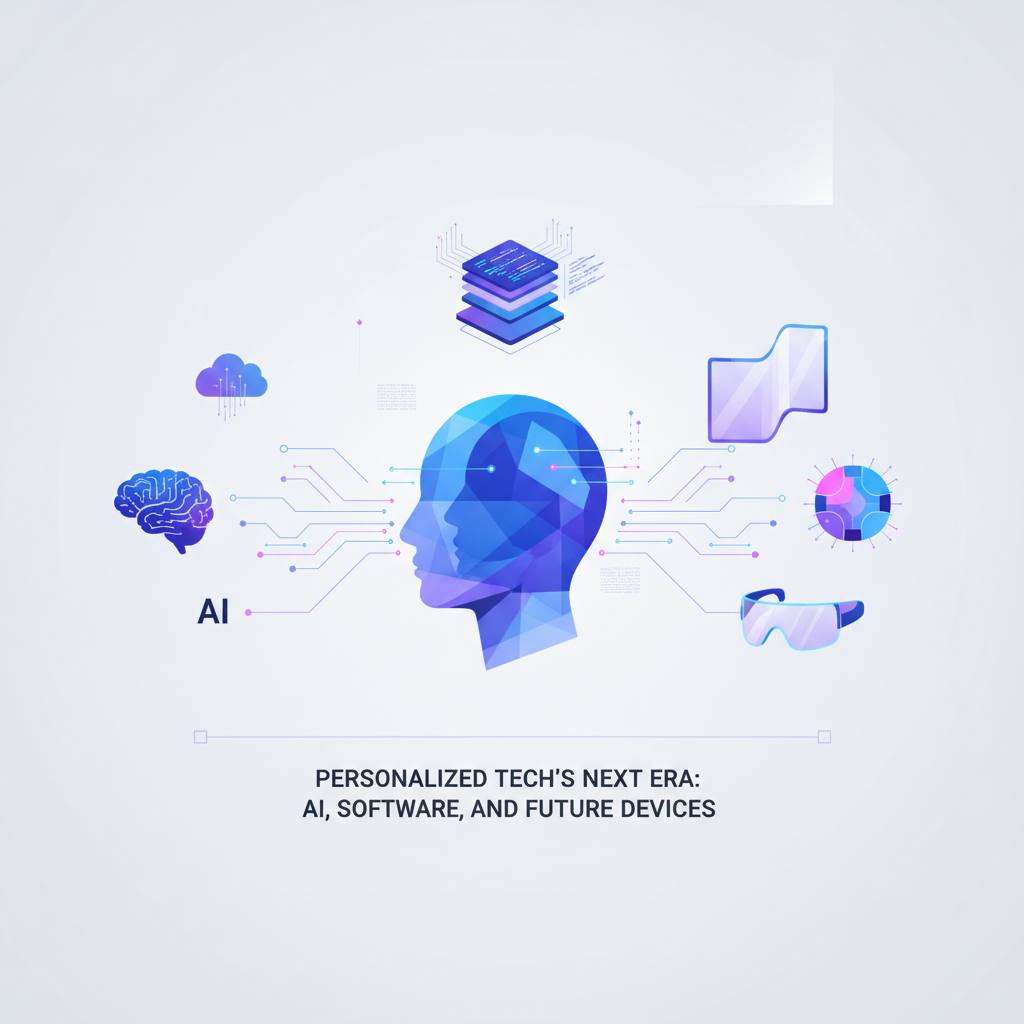
The latest developments in programming, AI health assistants, and foldable devices point to a future where technology is deeply integrated and hyper-personalized, adapting seamlessly to individual needs.
Current technological developments are charting a clear course towards a future where our devices, software, and artificial intelligence converge to deliver increasingly personalized and integrated experiences. What we are seeing today in programming, digital health, and device design paints a vivid picture of what's next in our daily lives.
In the programming world, the evolution towards 'Extension Blocks' in C# 14 is more than just a syntax update. It reflects a clear trend toward creating more organized and user-friendly Application Programming Interfaces (APIs), making it easier for developers to build clean, reusable software components. This foundational development paves the way for a more seamless integration of different technologies, meaning we will see more robust and cohesive applications working together without friction.
On the AI front, Samsung's unveiling of its AI-powered Health Assistant marks a significant stride. This assistant doesn't just collect health data; it provides insights that empower users to better understand their health and ask questions. This is the beginning of a new wave of smart assistants that will move beyond simple command execution to become personal advisors, offering proactive, tailored advice based on our data and lifestyle patterns. We anticipate this model of personalized AI assistance to extend far beyond health, into areas like productivity, education, and entertainment.
As for hardware, the focus on redesigned foldable devices, as expected at Samsung's upcoming event, is not merely a pursuit of novelty. These innovations in device design, such as flexible screens and changing form factors, will provide exciting new platforms to host these personalized, AI-driven experiences. Such devices will allow us to interact with AI in more natural and intuitive ways, leveraging flexibility and multiple screens to present information or interactive interfaces.
Ultimately, these trends are not isolated. They are converging towards a future where improved software tooling, personal AI, and innovative hardware work together to deliver an invaluable technological experience. Expect our devices to become not just tools, but digital companions that constantly adapt to our evolving needs and understand our context, making technology a smarter, more personalized part of our everyday lives.
In the programming world, the evolution towards 'Extension Blocks' in C# 14 is more than just a syntax update. It reflects a clear trend toward creating more organized and user-friendly Application Programming Interfaces (APIs), making it easier for developers to build clean, reusable software components. This foundational development paves the way for a more seamless integration of different technologies, meaning we will see more robust and cohesive applications working together without friction.
On the AI front, Samsung's unveiling of its AI-powered Health Assistant marks a significant stride. This assistant doesn't just collect health data; it provides insights that empower users to better understand their health and ask questions. This is the beginning of a new wave of smart assistants that will move beyond simple command execution to become personal advisors, offering proactive, tailored advice based on our data and lifestyle patterns. We anticipate this model of personalized AI assistance to extend far beyond health, into areas like productivity, education, and entertainment.
As for hardware, the focus on redesigned foldable devices, as expected at Samsung's upcoming event, is not merely a pursuit of novelty. These innovations in device design, such as flexible screens and changing form factors, will provide exciting new platforms to host these personalized, AI-driven experiences. Such devices will allow us to interact with AI in more natural and intuitive ways, leveraging flexibility and multiple screens to present information or interactive interfaces.
Ultimately, these trends are not isolated. They are converging towards a future where improved software tooling, personal AI, and innovative hardware work together to deliver an invaluable technological experience. Expect our devices to become not just tools, but digital companions that constantly adapt to our evolving needs and understand our context, making technology a smarter, more personalized part of our everyday lives.