A development team re-engineered their RAG system's retrieval layer, achieving significant performance gains by cutting latency by 40% and boosting retrieval accuracy to 95%. This translates to a faster, more reliable experience for RAG users.
Are you working with RAG (Retrieval Augmented Generation) systems and finding them slow or inaccurate? You're not alone! A tech team is sharing how they moved past common performance issues with RAG at scale, achieving impressive results by cutting response time by 40% and greatly improving retrieval accuracy. This means a faster, more reliable experience for you and your users.
Many people start building RAG systems the same way: chunking text into 512 tokens, embedding it, and fetching the top 5 results. While this works for demos, it often breaks down in production. Imagine splitting a legal contract mid-sentence, drowning API documentation in irrelevant noise, or missing the conversational context of customer tickets. All these issues contribute to a bigger problem: slowness. A single query can easily take over a second, which is far too long.
To tackle these challenges, the team completely rebuilt their retrieval layer from the ground up. It wasn't just 'semantic search and hope' anymore, but a precise, tunable approach. They focused on different chunking strategies for texts, moving beyond the one-size-fits-all model. They used a 'recursive' chunker that respects document structure for things like contracts or API docs, a 'semantic' chunker based on meaning similarity, and even an 'agentic' chunker where a large language model decides boundaries, though more costly.
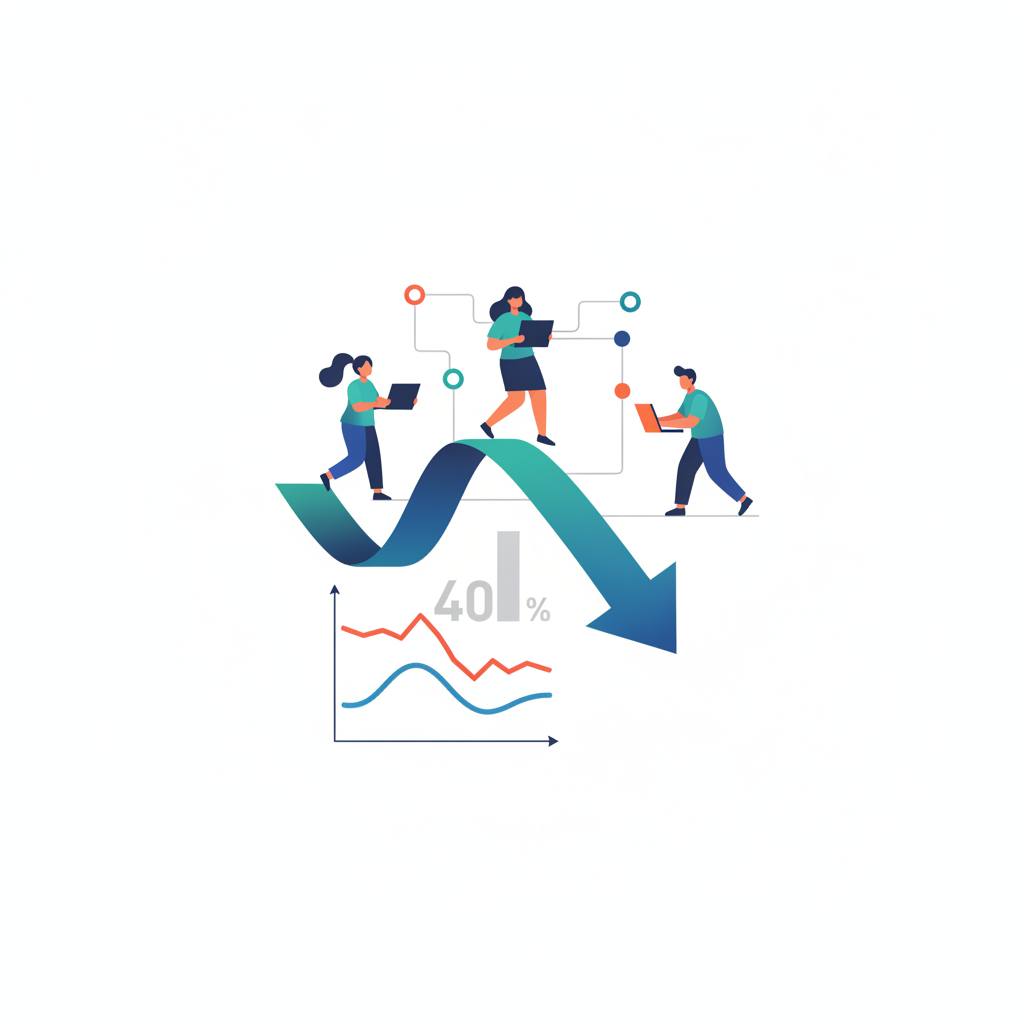
The results were remarkable: by using the right chunking strategy and optimal chunk size for each document type, alongside an improved Bayesian search method, they managed to reduce query latency by a solid 40%. They also hit an excellent 95% recall for the top single result. This approach shows that a deep understanding of how you handle your data is key to building powerful, fast, and reliable RAG systems in the real world.
Many people start building RAG systems the same way: chunking text into 512 tokens, embedding it, and fetching the top 5 results. While this works for demos, it often breaks down in production. Imagine splitting a legal contract mid-sentence, drowning API documentation in irrelevant noise, or missing the conversational context of customer tickets. All these issues contribute to a bigger problem: slowness. A single query can easily take over a second, which is far too long.
To tackle these challenges, the team completely rebuilt their retrieval layer from the ground up. It wasn't just 'semantic search and hope' anymore, but a precise, tunable approach. They focused on different chunking strategies for texts, moving beyond the one-size-fits-all model. They used a 'recursive' chunker that respects document structure for things like contracts or API docs, a 'semantic' chunker based on meaning similarity, and even an 'agentic' chunker where a large language model decides boundaries, though more costly.
The results were remarkable: by using the right chunking strategy and optimal chunk size for each document type, alongside an improved Bayesian search method, they managed to reduce query latency by a solid 40%. They also hit an excellent 95% recall for the top single result. This approach shows that a deep understanding of how you handle your data is key to building powerful, fast, and reliable RAG systems in the real world.