Knowledge graphs often struggle to recognize the same company when its name appears in various languages, leading to incomplete data. A new method involving converting names to a common script before comparison helps resolve this issue, making global data searches more accurate.
Ever wondered why your favorite knowledge graph might miss crucial information about a big global company? This is a real problem, and what it means for you as a user or for your business is that information searches become incomplete or inaccurate.
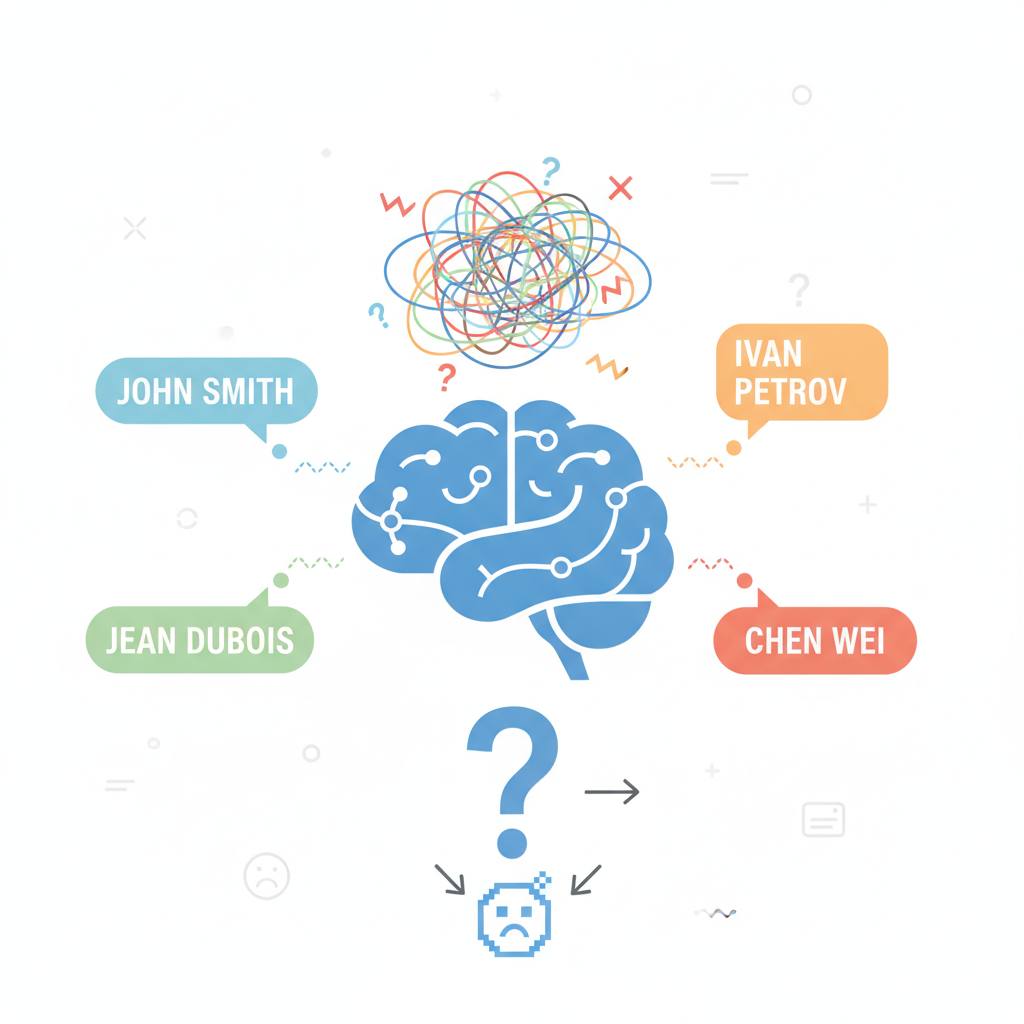
The reason is deceptively simple: when we have one real company, like Samsung Electronics, its name can appear in four different ways across source documents online. It might be «삼성전자» in Korean, «Samsung Electronics» in English, «サムスン電子» in Japanese, or «三星电子» in Chinese. In traditional knowledge graphs, each of these forms is stored as a completely separate data point. Imagine searching for 'Samsung Electronics' and missing three-quarters of the data because it's stored under other names in different languages. That one real company becomes four 'phantom entities,' making your search results incomplete and impacting the quality of any data analysis.
You might think fuzzy string matching, like comparing character similarities, could solve this. This method works well for typos or abbreviations within the same language. However, it completely fails across entirely different scripts. For instance, «Samsung Electronics» and «サムスン電子» share no character sequences, so no traditional metric would recognize them as the same thing.
Thankfully, experts are proposing a clever solution: convert all strings to a 'canonical Latin-ish form' before comparison. This process is known as transliteration. The idea is to take names written in scripts like Korean, Japanese, or Chinese and convert them into a Romanized (Latin-alphabet) version, making them as close as possible to their original pronunciation.
After transliteration, the forms that were once vastly different change. «삼성전자» becomes «samsung jeonja», «Samsung Electronics» remains «samsung electronics», «サムスン電子» turns into «samsung denshi», and even «三星电子» (after being translated to Korean then transliterated) becomes «samsung jeonja». Notice that these forms are not perfectly identical, but they are now close enough for similarity comparison tools to identify them as a single entity.
This means knowledge graphs can now accurately link these different names to the same actual company. It's a big step towards making global data more precise and easier to search and understand, helping us see the full picture of companies and entities worldwide, no matter what language their name is written in.
The reason is deceptively simple: when we have one real company, like Samsung Electronics, its name can appear in four different ways across source documents online. It might be «삼성전자» in Korean, «Samsung Electronics» in English, «サムスン電子» in Japanese, or «三星电子» in Chinese. In traditional knowledge graphs, each of these forms is stored as a completely separate data point. Imagine searching for 'Samsung Electronics' and missing three-quarters of the data because it's stored under other names in different languages. That one real company becomes four 'phantom entities,' making your search results incomplete and impacting the quality of any data analysis.
You might think fuzzy string matching, like comparing character similarities, could solve this. This method works well for typos or abbreviations within the same language. However, it completely fails across entirely different scripts. For instance, «Samsung Electronics» and «サムスン電子» share no character sequences, so no traditional metric would recognize them as the same thing.
Thankfully, experts are proposing a clever solution: convert all strings to a 'canonical Latin-ish form' before comparison. This process is known as transliteration. The idea is to take names written in scripts like Korean, Japanese, or Chinese and convert them into a Romanized (Latin-alphabet) version, making them as close as possible to their original pronunciation.
After transliteration, the forms that were once vastly different change. «삼성전자» becomes «samsung jeonja», «Samsung Electronics» remains «samsung electronics», «サムスン電子» turns into «samsung denshi», and even «三星电子» (after being translated to Korean then transliterated) becomes «samsung jeonja». Notice that these forms are not perfectly identical, but they are now close enough for similarity comparison tools to identify them as a single entity.
This means knowledge graphs can now accurately link these different names to the same actual company. It's a big step towards making global data more precise and easier to search and understand, helping us see the full picture of companies and entities worldwide, no matter what language their name is written in.