The TerraTier project highlights the complexities of building robust web infrastructure. Here, we learn how multi-tier architecture and tools like Terraform keep our websites and apps secure, scalable, and cost-effective.
Ever wondered what makes the websites and apps you use daily so robust, secure, and always available? Our news hook today features the TerraTier project, which built a 'production-grade' system on AWS using Terraform. This wasn't just about launching a basic server; it was about designing a sophisticated infrastructure to tackle critical questions about security, scalability, and cost-effectiveness.
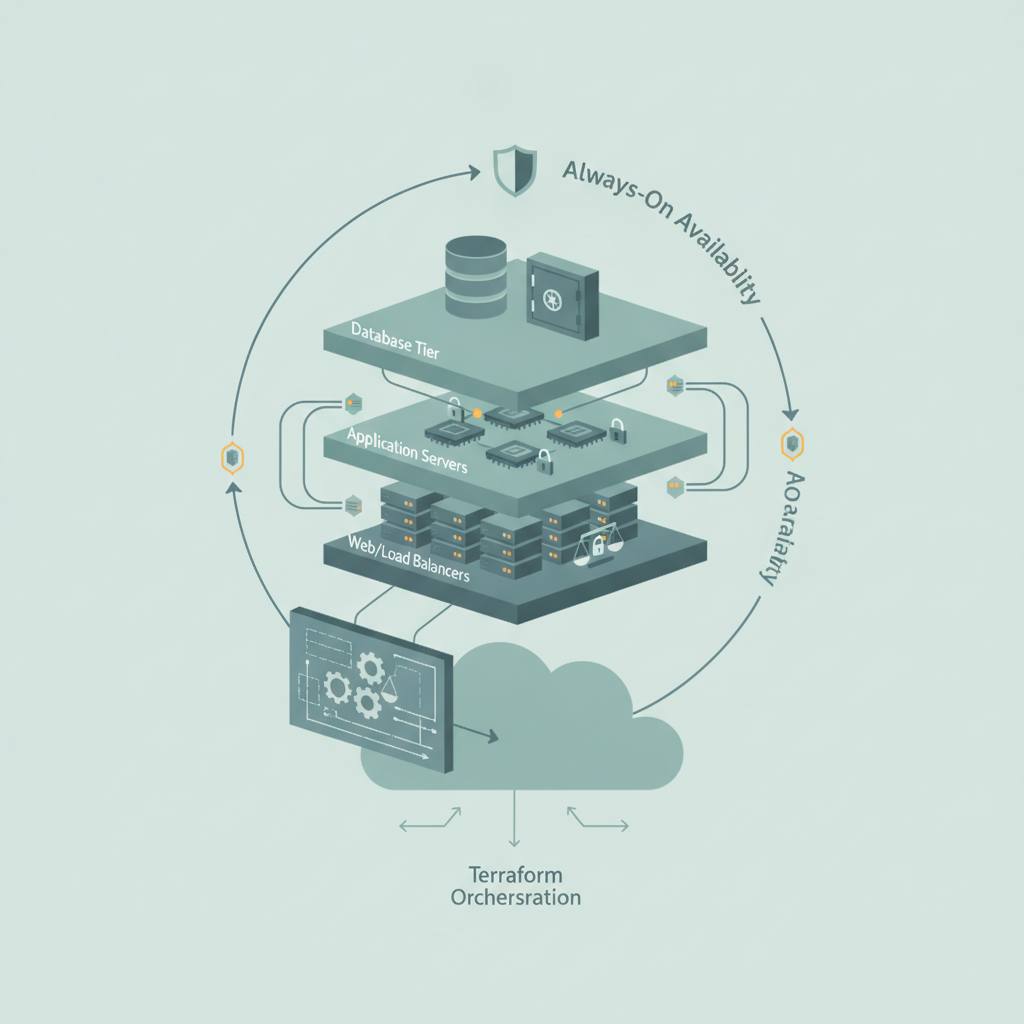
At its core, this project demonstrates «multi-tier architecture». Imagine a secure building with distinct floors, each with a specific function and strict access rules. That’s what a multi-tier architecture does for applications. Instead of putting everything on one server – a huge security risk and management challenge – we separate concerns into distinct 'tiers' or layers.
Typically, you’ll find at least three tiers:
1. **The Web/Presentation Tier:** This is what users directly interact with, like the friendly front-desk receptionist. It's public-facing, often behind a 'load balancer' to distribute traffic. It communicates with the next tier but holds no sensitive data.
2. **The Application Tier:** The 'brain' of your operation. It’s private, inaccessible to users directly. It processes requests from the web tier, handles business logic, and then talks to the database. Think of it as the office staff managing transactions.
3. **The Database Tier:** This is the most secure layer, holding all critical data. It’s completely private, and *only* the application tier can access it. This is your bank's highly protected vault.
The TerraTier project subtly shows that sometimes even the web/API layer might benefit from further separation from core application logic for enhanced security and isolation, moving towards a four-tier model. This layered approach ensures that if one part is compromised, deeper, more sensitive components remain protected. It also allows independent scaling; if website traffic surges, you can add more web servers without over-provisioning your database.
So, how do we construct such an organized, complex structure? This is where «Terraform» shines. Terraform is an 'Infrastructure as Code' tool. Instead of manually configuring servers, networks, and security rules in a cloud console, you write simple code describing your desired infrastructure. It’s like creating a detailed blueprint for your secure building; Terraform then automatically constructs it, ensuring consistency, reducing errors, and simplifying future changes. By understanding multi-tier architectures and tools like Terraform, you grasp how modern applications achieve impressive security, reliability, and efficiency – building robust platforms, not just simple apps.
At its core, this project demonstrates «multi-tier architecture». Imagine a secure building with distinct floors, each with a specific function and strict access rules. That’s what a multi-tier architecture does for applications. Instead of putting everything on one server – a huge security risk and management challenge – we separate concerns into distinct 'tiers' or layers.
Typically, you’ll find at least three tiers:
1. **The Web/Presentation Tier:** This is what users directly interact with, like the friendly front-desk receptionist. It's public-facing, often behind a 'load balancer' to distribute traffic. It communicates with the next tier but holds no sensitive data.
2. **The Application Tier:** The 'brain' of your operation. It’s private, inaccessible to users directly. It processes requests from the web tier, handles business logic, and then talks to the database. Think of it as the office staff managing transactions.
3. **The Database Tier:** This is the most secure layer, holding all critical data. It’s completely private, and *only* the application tier can access it. This is your bank's highly protected vault.
The TerraTier project subtly shows that sometimes even the web/API layer might benefit from further separation from core application logic for enhanced security and isolation, moving towards a four-tier model. This layered approach ensures that if one part is compromised, deeper, more sensitive components remain protected. It also allows independent scaling; if website traffic surges, you can add more web servers without over-provisioning your database.
So, how do we construct such an organized, complex structure? This is where «Terraform» shines. Terraform is an 'Infrastructure as Code' tool. Instead of manually configuring servers, networks, and security rules in a cloud console, you write simple code describing your desired infrastructure. It’s like creating a detailed blueprint for your secure building; Terraform then automatically constructs it, ensuring consistency, reducing errors, and simplifying future changes. By understanding multi-tier architectures and tools like Terraform, you grasp how modern applications achieve impressive security, reliability, and efficiency – building robust platforms, not just simple apps.