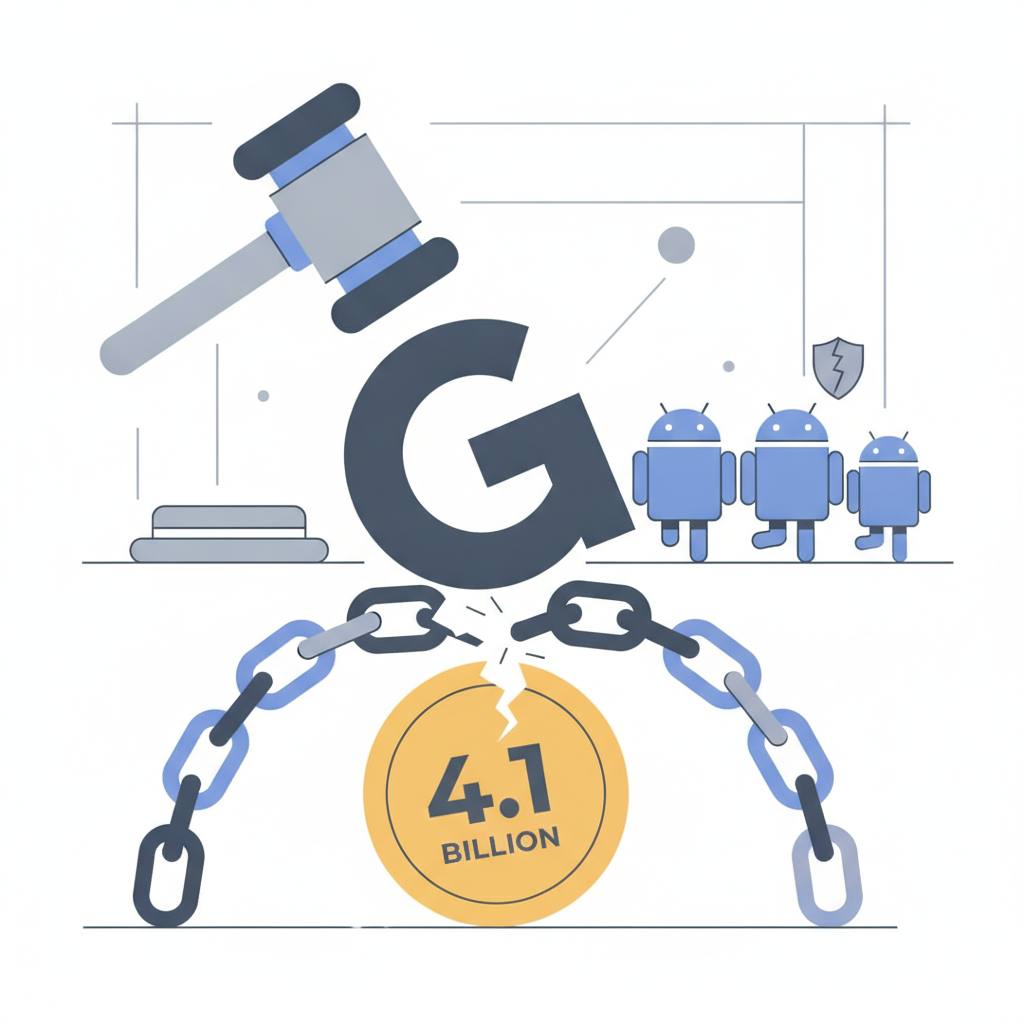
Google's final appeal against the massive €4.1 billion fine from the European Union has been rejected by Europe's highest court. This means Google must now pay for abusing Android's market dominance and favoring its own apps.
Big news just hit, and it could affect how we all use our Android phones! Google has just lost its final appeal in Europe, meaning it must pay a truly massive fine of €4.1 billion. But what does this actually mean for us, the users?
Picture this: this significant decision came from Europe's highest court, the European Court of Justice (ECJ). This was Google's very last chance to avoid this historic penalty. The story goes back to 2018, when the European Commission, the EU's executive arm, first imposed this fine on Google. Initially, the fine was a bit higher, around €4.34 billion, but it was later reduced to the current amount after review.
So, why all the fuss? The European Commission found that Google was taking advantage of its huge control over the Android mobile operating system. How did they do it? Simply put, Google was requiring phone manufacturers to pre-install its own apps like Google Search, Chrome, and the Play Store on new devices. From the European Union's perspective, this gave Google's apps an unfair advantage over competing applications, limiting user choice.
These practices restricted user choice and stifled innovation from other companies who couldn't fairly compete with Google. It's like being a strong player in the market and dictating the rules of the game so that you benefit the most. Not fair, right?
For us, Android phone users, this could mean that in the future, we might see more choices and freedom in the pre-installed apps on our new phones. This ruling might push Google to change its policies, potentially opening the door for other developers to compete more fairly and equally. This won't be an overnight change, but the verdict strongly reinforces the principle of fair competition in the tech world. This historic fine sends a clear message from the European Union to tech giants: they are not above the law, and fair competition is essential for a healthy, open market. This judgment reminds us that even the biggest companies need to play by the rules.
Picture this: this significant decision came from Europe's highest court, the European Court of Justice (ECJ). This was Google's very last chance to avoid this historic penalty. The story goes back to 2018, when the European Commission, the EU's executive arm, first imposed this fine on Google. Initially, the fine was a bit higher, around €4.34 billion, but it was later reduced to the current amount after review.
So, why all the fuss? The European Commission found that Google was taking advantage of its huge control over the Android mobile operating system. How did they do it? Simply put, Google was requiring phone manufacturers to pre-install its own apps like Google Search, Chrome, and the Play Store on new devices. From the European Union's perspective, this gave Google's apps an unfair advantage over competing applications, limiting user choice.
These practices restricted user choice and stifled innovation from other companies who couldn't fairly compete with Google. It's like being a strong player in the market and dictating the rules of the game so that you benefit the most. Not fair, right?
For us, Android phone users, this could mean that in the future, we might see more choices and freedom in the pre-installed apps on our new phones. This ruling might push Google to change its policies, potentially opening the door for other developers to compete more fairly and equally. This won't be an overnight change, but the verdict strongly reinforces the principle of fair competition in the tech world. This historic fine sends a clear message from the European Union to tech giants: they are not above the law, and fair competition is essential for a healthy, open market. This judgment reminds us that even the biggest companies need to play by the rules.