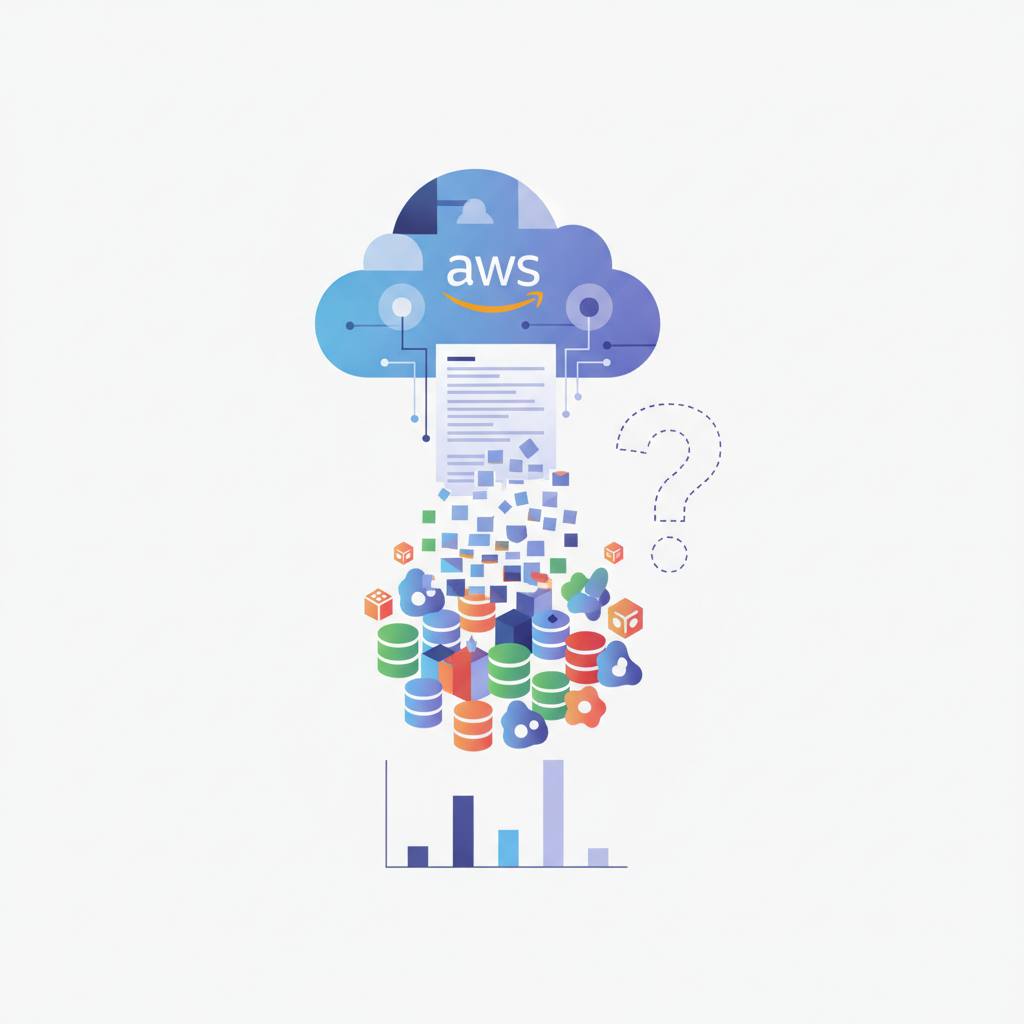
If you run multiple databases on a shared AWS instance, you know the struggle: your cloud bill shows a total, but never tells you which database used how much, making cost allocation a nightmare.
Ever stared at your AWS bill, seeing a large sum like $4,000, and wondered which database is truly responsible for the costs? If you're running multiple databases on a single shared cloud instance, you've likely faced this frustrating mystery. The bill is correct in its total, but completely useless when it comes to answering the one question everyone keeps asking: who actually used this?
The problem lies in how cloud providers, like AWS RDS and most managed database services, bill at the 'instance level' rather than the 'database level'. This means whether you have two databases or twenty on one SQL Server instance, it appears as a single line item on your bill. AWS doesn't differentiate between your sales team's database, your HR team's database, or your payroll; it just sees one tenant of one box, and the box costs what the box costs.
What this means for you:
**Finance Headaches for Chargebacks:** Finance teams can't accurately charge back costs to individual departments. Budgets get split by guesswork – headcount, equal shares, or outdated spreadsheets – which nobody can defend anymore. This makes true cost management impossible.
**Unprovable Performance Problems:** If one database starts hammering CPU or I/O, slowing down everyone else on the instance, you can feel the impact. But you can't prove who the 'noisy neighbor' is. The essential performance metrics live *inside* the database engine, not on your cloud bill.
**Fuzzy SaaS Margins:** For multi-tenant SaaS products where customers share infrastructure, you lose sight of your true cost-to-serve per tenant. Without that, understanding your profit margins becomes impossible.
The instinctive fix is to give every database its own instance for clear billing and isolation. However, this is expensive. You'd lose the major economic benefit of cloud consolidation – sharing and amortizing capacity – just for accounting convenience. Most teams correctly avoid this cost increase.
The good news is that solutions are emerging to help organizations untangle these complex bills, allowing them to track usage down to the individual database and solve these pervasive cloud cost challenges.
The problem lies in how cloud providers, like AWS RDS and most managed database services, bill at the 'instance level' rather than the 'database level'. This means whether you have two databases or twenty on one SQL Server instance, it appears as a single line item on your bill. AWS doesn't differentiate between your sales team's database, your HR team's database, or your payroll; it just sees one tenant of one box, and the box costs what the box costs.
What this means for you:
**Finance Headaches for Chargebacks:** Finance teams can't accurately charge back costs to individual departments. Budgets get split by guesswork – headcount, equal shares, or outdated spreadsheets – which nobody can defend anymore. This makes true cost management impossible.
**Unprovable Performance Problems:** If one database starts hammering CPU or I/O, slowing down everyone else on the instance, you can feel the impact. But you can't prove who the 'noisy neighbor' is. The essential performance metrics live *inside* the database engine, not on your cloud bill.
**Fuzzy SaaS Margins:** For multi-tenant SaaS products where customers share infrastructure, you lose sight of your true cost-to-serve per tenant. Without that, understanding your profit margins becomes impossible.
The instinctive fix is to give every database its own instance for clear billing and isolation. However, this is expensive. You'd lose the major economic benefit of cloud consolidation – sharing and amortizing capacity – just for accounting convenience. Most teams correctly avoid this cost increase.
The good news is that solutions are emerging to help organizations untangle these complex bills, allowing them to track usage down to the individual database and solve these pervasive cloud cost challenges.